
Unravelling Indonesia's Paradox: Investment and the Demographic Bonus
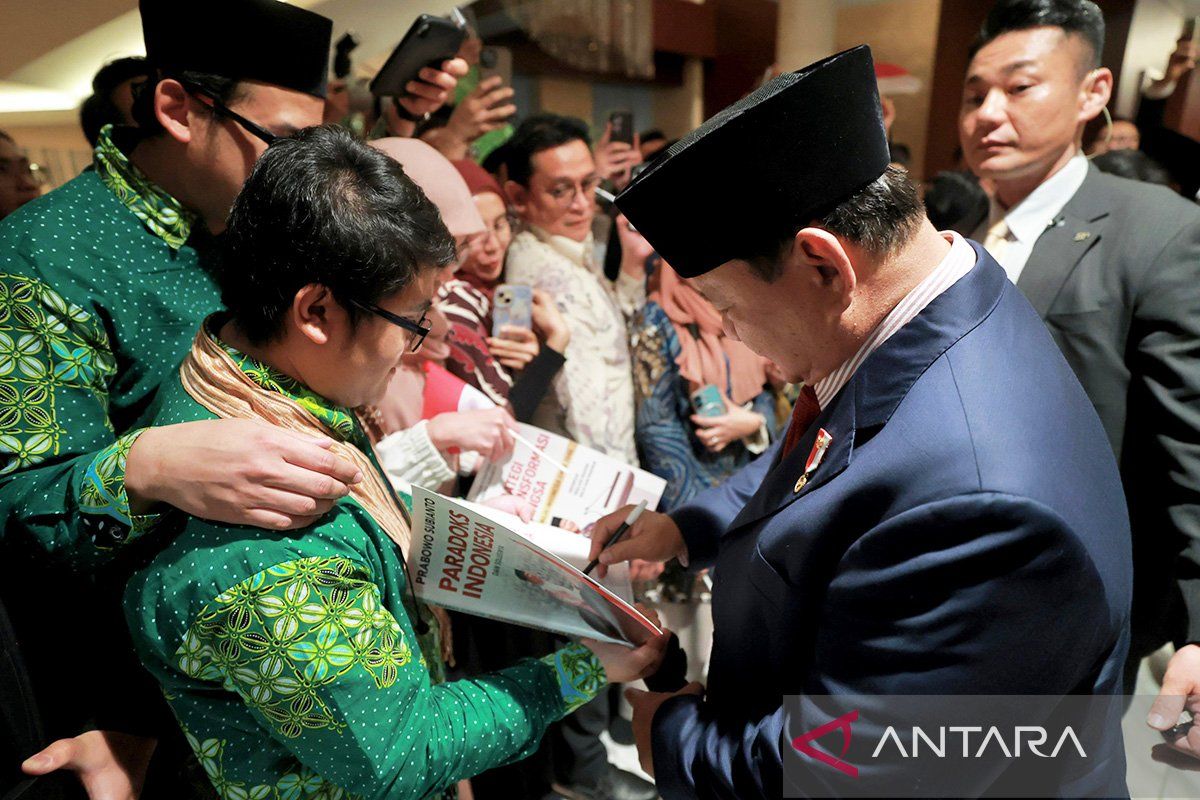
The government’s forward approach can be read as an effort to unravel and resolve the paradox, rather than denying it. Jakarta (ANTARA) - President Prabowo Subianto has repeatedly reminded the public about Indonesia’s paradox, a country rich in natural resources and large in economic size, yet still plagued by issues of poverty, unemployment, and inequality. During the Government Work Meeting (RKP) at the State Palace on Wednesday (8/4), the President once again emphasised this phenomenon. This paradox is not mere political rhetoric, but an accurate diagnosis of the structural challenges in national development. The latest economic data illustrate this paradox in more concrete terms. In 2025, Indonesia recorded the highest investment realisation in history, reaching around Rp1,931 trillion. Confidence from domestic and foreign investors has strengthened. Macroeconomic stability is maintained. The foundation for long-term growth is becoming increasingly solid. However, at the same time, millions of working-age citizens are still seeking employment. From this substantial investment, around 2.7 million jobs have been created, while the number of unemployed remains around 7.4 million. Moreover, over at least the past two decades, the economy has grown at 5-6%, but poverty rates have continued to rise. Furthermore, the middle class has declined, while fiscal leakages amount to Rp2,500 trillion annually. This is where Indonesia’s paradox operates; the economy grows, but its benefits have not yet been fully felt by the entire population and job seekers. Not ignored It is important to emphasise that this condition is not a policy failure, but a structural transition phase. Indonesia is moving from an economy based on raw commodities and cheap labour to an industrial and high value-added technology economy. This transition, in almost all countries, is always accompanied by employment challenges. Most of the 2025 investments are flowing into strategic sectors: mineral downstreaming, energy, processing industries, and infrastructure. These sectors are crucial for long-term economic sovereignty, exactly as emphasised by President Prabowo, but they are capital-intensive rather than labour-intensive. In other words, today’s investments are building the engine of the future economy, but that engine does not automatically absorb all available labour at present. This is the paradox that needs to be managed with the right policies, rather than simplified into a dichotomy of ‘pro or anti-government’. Indonesia is still within the demographic bonus window, where the working-age population dominates. President Prabowo has consistently emphasised that this bonus must be translated into national strength, not a social burden. This is where investment plays a strategic role. Without substantial investment, there will be no industrialisation, no technology transfer, and no productivity leap. The government has chosen the right path: strengthening the economic base first, while gradually improving the quality and quantity of jobs. However, to truly optimise the demographic bonus, investments need to be more closely linked to job creation. This does not mean hindering strategic investments, but complementing them with supportive policies. Transforming the paradox into synergy