
Unpad Implements Work From Home for Staff and Students
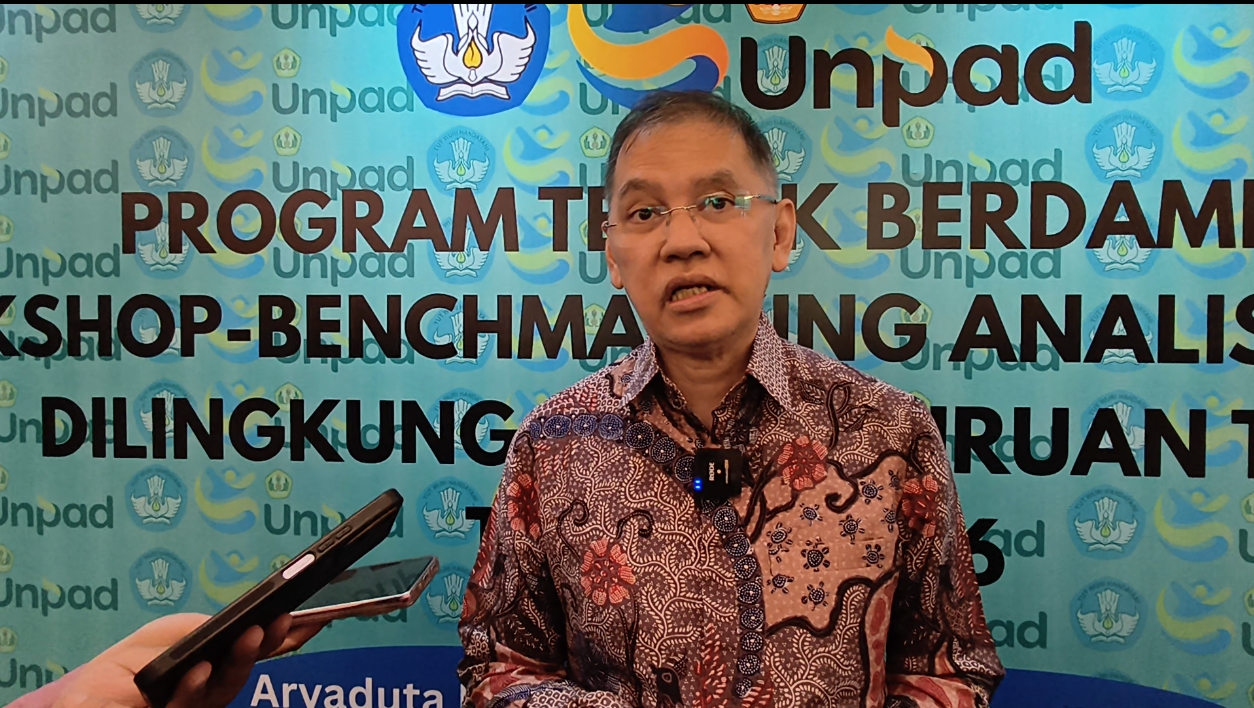
Universitas Padjadjaran (Unpad) will soon implement work from home (WFH) for staff and students in accordance with the central government’s circular. WFH is expected to have an impact on energy savings amid the crisis situation in the Middle East.
The central government’s policy to implement the WFH programme, including on campus, is hoped to anticipate the possibility of an energy crisis or any crisis due to external geopolitical conditions. Unpad will take steps; we will encourage that part or lectures not related to practicums will be conducted via WFH by Unpad in line with the said circular,” stated Unpad Rector Prof Arief Kartasasmita, at the workshop and benchmarking event for enhancing policy analysis competencies in higher education attended by 51 participants from universities on Tuesday (7/4).
According to Arief, those who will work from home for one day are in the administrative sector. Then, lectures that do not require direct skills or practicums and fieldwork can be done via WFH. So, to our educational personnel (tendik) and lecturers, we urge them to work from home. So, not working in cafes or elsewhere. If working in cafes and other places, it will not solve the problem related to reducing energy needs.
“We will implement it soon; the principle is that this WFH does not want to disrupt the essence of education. So, if students who indeed cannot be WFH-ed, they will remain as usual. Whereas lectures that can be done via WFH will be carried out to ensure energy resilience,” he said.
Regarding the workshop event, Arief continued that Unpad considers the importance of enhancing the competencies of educational personnel as the foundation in strengthening adaptive and competitive higher education governance.
The programme initiated by the Ministry of Higher Education, Science, and Technology through the Directorate of Human Resources is attended by 51 participants from 51 universities in Indonesia, consisting of public and private higher education institutions from 16 provinces, and Unpad is trusted as one of the partner universities organising the event.
“In the midst of technological disruptions and global dynamics, universities need educational personnel with data-based policy analysis capabilities. Policies taken must be evidence-based to be on target and able to respond to changes quickly,” he emphasised.
Arief mentioned that challenges such as technological developments, climate change, to geopolitical dynamics demand universities to be more adaptive. In this context, the role of policy analysts becomes crucial to avoid mistakes in decision-making and ensure the right policy direction.
Minister of Higher Education, Science and Technology Brian Yuliarto emphasised that educational personnel are a strategic element that is often unseen but very determining the quality of services and systems in higher education. He assessed that current tendik are not enough to just carry out administrative functions, but must also be able to become drivers of system improvements. Through this programme, the government encourages the creation of professional, adaptive, and collaborative higher education human resources.
“In addition to individual capacity building, this activity is also expected to give birth to good practices that can be implemented in each institution and strengthen networks among educational personnel throughout Indonesia,” he stated.