
UNM Data Science Students Involved in BRIN Nuclear Research, Set to Become National AI Experts
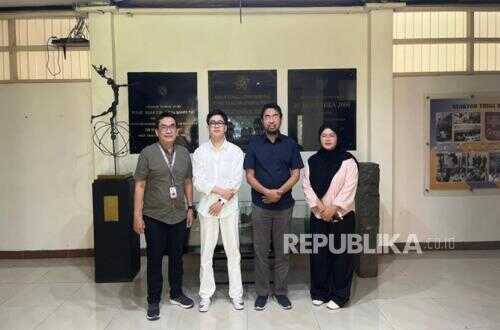
The involvement of students in national strategic research is once again demonstrated by Universitas Nusa Mandiri (UNM), long recognised as a Digital Business Campus. Students of the Data Science Programme at UNM are directly involved in a BRIN research project titled Development of an Artificial Intelligence and Generative AI Model for Optimising the Decommissioning of Indonesia’s Research Reactor Using Monte Carlo Simulation on BRIN’s HPC. The research is conducted under BRIN’s Centre for Nuclear Materials Technology and Radioactive Waste Research, which focuses on the management and optimisation of the decommissioning of research reactors in a safe, precise, and efficient manner. Decommissioning of a research reactor is a complex process requiring high-level calculations to ensure safety, cost efficiency, and radioactive waste management. In this project, artificial intelligence (AI) and Generative AI approaches are combined with Monte Carlo simulations run on BRIN’s High Performance Computing (HPC) infrastructure. The UNM Data Science Programme students play a role in developing data-driven analytical models to improve simulation accuracy while enhancing computational efficiency. The Head of the UNM Data Science Programme, Tati Mardiana, emphasised that this involvement demonstrates the readiness of students’ competencies in AI and advanced computing. “We encourage students not only to understand the theory of machine learning and artificial intelligence, but also to apply it in national strategic research. This collaboration with BRIN demonstrates that UNM’s Data Science students can contribute to high-technology research,” she said in a statement on Wednesday (4 March 2026). She added that synergy with national research institutions is an important part of building a research-based learning ecosystem. “Students gain direct experience in developing AI models that run on high-performance computing systems,” she continued. Meanwhile, BRIN researcher Sumarbagiono explained that the AI approach opens up new opportunities for optimising the decommissioning process. “Monte Carlo simulations require intensive computing. With AI and HPC support, the optimisation process can be conducted more efficiently and accurately. Collaborating with Data Science students brings a fresh perspective to developing adaptive models,” he said. Another BRIN researcher, Zico Putra Pratama, noted that developing Generative AI helps explore more varied calculation scenarios. “Generative AI enables the system to generate a range of possible decommissioning scenarios for comprehensive analysis. This speeds up evaluation and improves decision-making quality,” he said. The involvement of students in this project strengthens UNM’s position as a Digital Business Campus actively contributing to national AI-, big data-, and high-performance computing-based research. For young people wishing to study Artificial Intelligence, Data Science, and advanced technology research, UNM’s Data Science Programme is opening new student admissions via the official website https://pmb.nusamandiri.ac.id.