
Unlimited Term, National Police Chief Position Vulnerable to Political Dependency
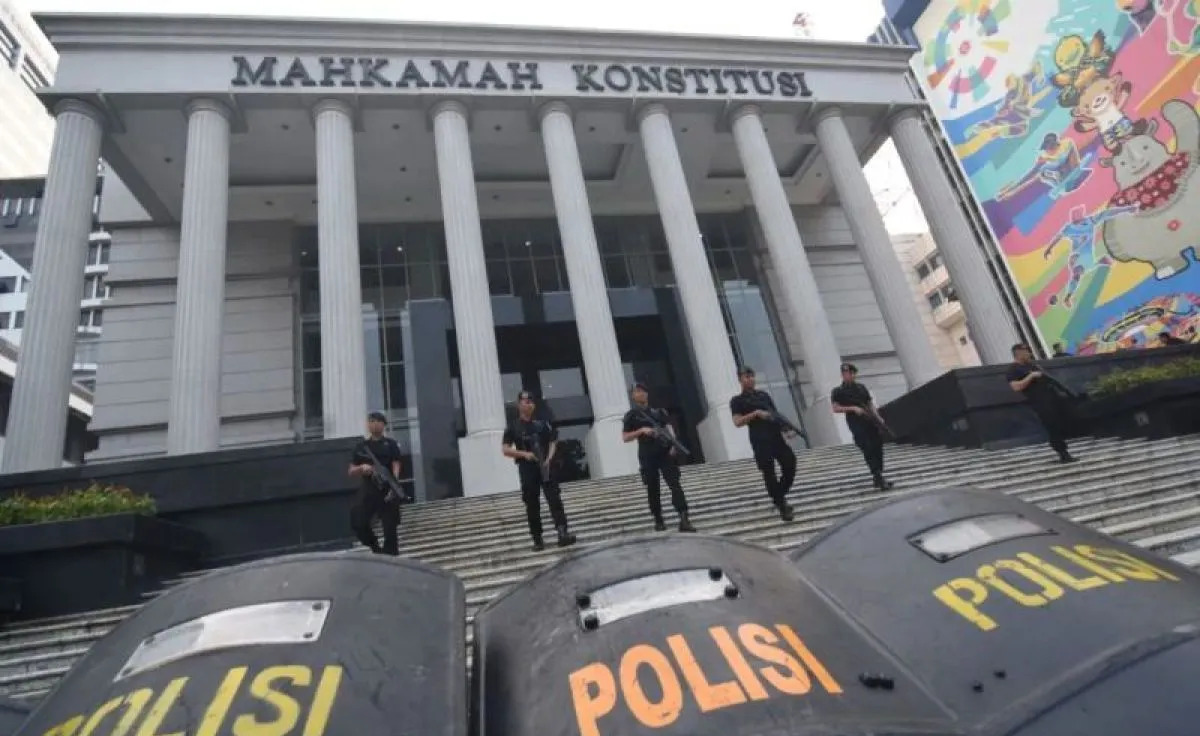
A constitutional court case regarding the tenure of Indonesia’s National Police Chief (Kapolri) at the Constitutional Court (MK) is considered a crucial opportunity to improve the institutional design of the National Police (Polri). The absence of tenure limits in Law No. 2 of 2002 is deemed to risk weakening institutional independence and triggering political dependency on the executive.
A police observer from the Institute for Security and Strategic Studies (ISESS), Bambang Rukminto, explained that following the 1998 reform, there was a strong tradition emphasizing seniority. However, this pattern shifted during President Joko Widodo’s administration with policies focused on skipping generations.
“The basic idea was indeed to skip generations because there was an assumption that the older generation held potential problems. However, the consequence is that political dependency emerges because a tenure period that extends until retirement age is very risky if one is dismissed at any time under the president’s prerogative,” said Bambang on Monday (9 March).
Bambang assessed that revising the article concerning the Kapolri’s tenure is extremely urgent to provide legal certainty and professionalism. “Ideally, the tenure limit should be three years and can be extended for one year. This limitation is actually important to provide certainty to Kapolri officials so they can ensure their programmes truly run without being haunted by uncertainty about their position,” he stressed.
Constitutional Challenge
This discussion emerged following the filing of constitutional case number 77/PUU-XXIV/2026, submitted by a student, Tri Prasetio Putra Mumpuni. The petitioner questioned Article 11 of the Police Law, which is deemed to conflict with the 1945 Constitution because it does not establish a fixed term period.
In court proceedings, Tri argued that the current mechanism creates normative uncertainty that makes the Kapolri position highly dependent on presidential discretion and political circumstances.
“This design creates normative uncertainty and opens space for the concentration of power in a single figure for a period not determined constitutionally,” said Tri Prasetio.
In his petition, the petitioner requested the Constitutional Court declare Article 11 of the Police Law conditionally constitutional. He proposed that the Kapolri’s tenure be limited to a maximum of five years and can only be extended once with the approval of the House of Representatives.
Constitutional Court Judges’ Notes
In response to the petition, the Constitutional Court judges provided critical notes, particularly regarding the legal standing of the petitioner as a civilian.
MK Chairman Suhartoyo gave the petitioner 14 days to revise the petition text, with the revision to be submitted no later than Monday, 16 March 2026.
Bambang Rukminto added that the debate at the Constitutional Court is not merely a technical legal issue. “Rather, it concerns how to balance democratic political control with police professionalism,” he concluded.