
University of Indonesia Students Create RunSight Wearable Device for Visually Impaired Runners
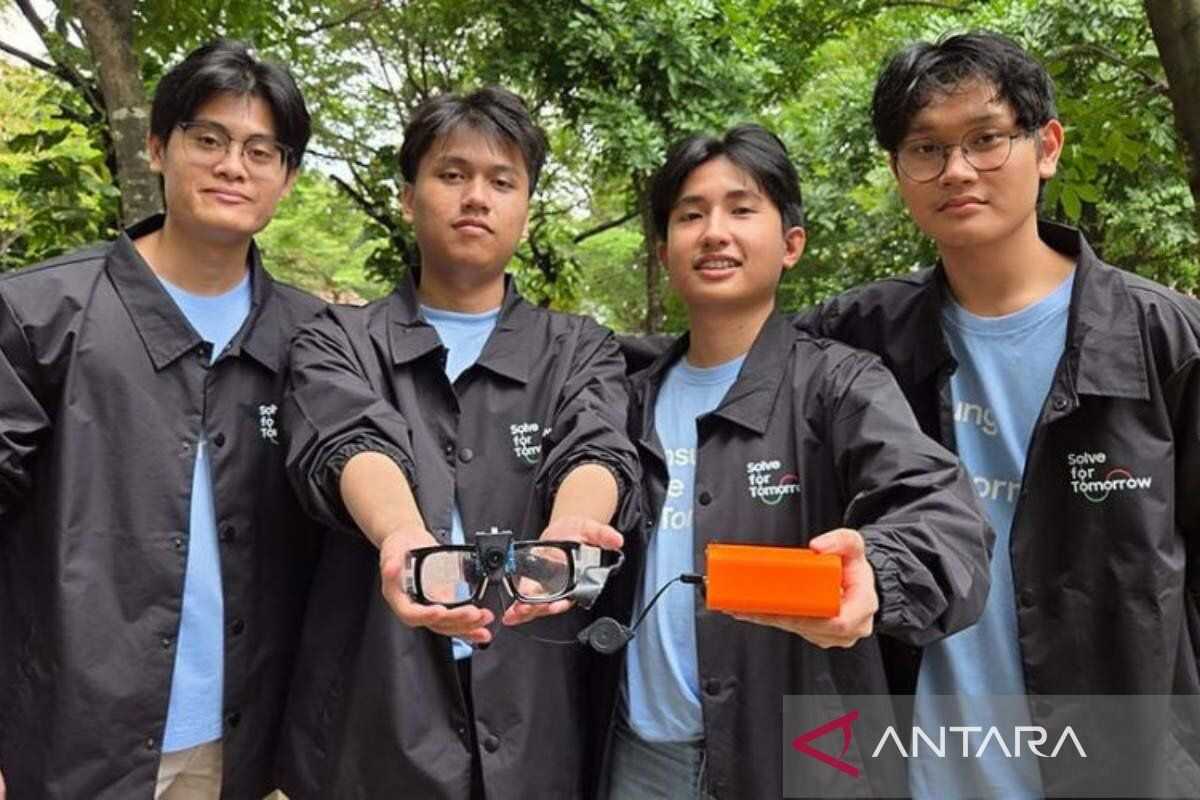
Depok (ANTARA) - A team of students from the Faculty of Computer Science (Fasilkom) at the University of Indonesia (UI) has created RunSight, an AI-powered wearable device designed to help visually impaired individuals run independently and safely.
The Labmino UI team, comprising Muhammad Fazil Tirtana, Kaindra Rizq Sachio, Anthony Edbert Feriyanto, and Ariq Maulana Malik Ibrahim, developed RunSight as an AI-based wearable device.
“We wanted to ensure the device is not only sophisticated but also lightweight and energy-efficient. The main goal is to open up more inclusive access to sports for our visually impaired friends,” said Anthony in a statement on Monday.
The idea for RunSight emerged from the experience of a friend who enjoyed exercising but developed cataracts and had difficulty seeing the lines on a running track.
The team then conducted validation and discovered that similar problems were experienced by many other visually impaired individuals. From there, the development of the solution began.
RunSight utilises sensors and an AI processing system to read the conditions of the user’s surrounding environment in real time. The device provides guidance that helps users identify pathways and avoid obstacles while running. During development, the team focused not only on the technological aspects but also considered comfort, energy efficiency, and the potential for more affordable production costs.
The Labmino team was selected as a Global Ambassador at the Samsung Solve for Tomorrow (SFT) competition, an international innovation contest that encourages young people to deliver technology-based solutions to address social challenges.
The Labmino team’s journey in Samsung Solve for Tomorrow began in May 2025 through the national screening stage with the submission of a concept paper. The team then advanced to the national semi-finals and finals before ultimately qualifying for the South East Asia and Oceania Selection and Global Selection stages at the end of 2025.
They appeared at the ceremonial event for Global Ambassadors held in Milan, Italy, from 8 to 10 February 2026.
According to Anthony, the lengthy process served as a learning space that shaped the team’s perspective on innovation.
“We learnt how to connect empathy with technology. The challenge was not just making a functional device, but ensuring the solution is truly relevant and can be implemented,” he said.
The Labmino team’s innovation made Indonesia the first-ever recipient of Global Ambassador status and one of only two countries in the South East Asia and Oceania (SEAO) region to achieve this distinction.
In recognition of this achievement, UI Rector Prof. Heri Hermansyah expressed his appreciation for the students.
“This achievement demonstrates that UI students are not only academically excellent but also capable of delivering innovations born from empathy and social concern. This is the essence of higher education — producing real solutions that have a broad impact on society,” he said.
Going forward, UI will promote a collaborative and inclusive innovation ecosystem so that more student works can contribute at the international level.
“We are proud of their courage and consistency in taking ideas from campus to the global stage. We hope this achievement will inspire the academic community to continue innovating and breaking boundaries,” said Prof. Heri.