
University of Indonesia Expert: Mojtaba Khamenei's Selection Proves Iran's Commitment to Clerical System
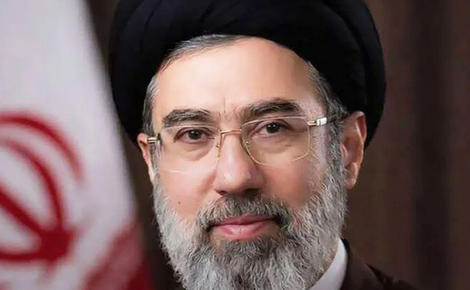
The appointment of Mojtaba Khamenei as Iran’s new Supreme Leader by the Assembly of Experts has sparked various analyses regarding Iran’s policy direction, particularly in relation to the United States and Israel.
Prof Suzie Sudarman, an international relations expert from the University of Indonesia, believes that Mojtaba Khamenei’s selection demonstrates that Iran remains committed to its political system and ideology based on clerical leadership.
According to her, this situation could potentially prolong tensions between Iran and Western nations. “Because it is clear that Donald Trump and Israel will continue to assail Iran and close the door to negotiations, Mojtaba Khamenei’s selection clearly shows that a civilisation that has established its system will ultimately confront Western civilisation that prioritises secular state leadership,” Prof Sudarman told Media Indonesia on Monday (9 March).
She explained that Iran’s leadership is founded on the concept of Wilayat al-Faqih, a system in which the highest state authority rests with a religious scholar. “Iran’s leadership is based on the concept of Wilayat al-Faqih. The highest power is held by a religious scholar (Wali al-Faqih) as Supreme Leader (Rahbar). This system places clerics above political, military, and legal structures, with authority to veto policies and appoint public officials,” she stated.
Sudarman also highlighted the propaganda aspect in the geopolitical conflict involving Iran and Israel. She believes that Israeli diplomacy and propaganda have shaped global perceptions linking Islam with terrorism. “Israeli diplomatic and propaganda efforts have triggered hatred of Islam worldwide—the notion that Islam is synonymous with terrorism. A narrative constructed by the Israeli Foreign Ministry,” she said.
She added that such propaganda could also trigger further escalation, including possible threats to Iran’s new leader. “Propaganda inflames hatred of religion and the system built on the concept of Wilayat al-Faqih, which will certainly encourage Israeli propaganda to intensify further and likely plan to assassinate Mojtaba Khamenei by deploying Zionist human intelligence operatives in Iran to attempt such a killing,” she elaborated.
She also alluded to possible United States military involvement in the conflict. “Particularly as Donald Trump has already prepared his Special Forces to enter Iranian territory,” she added.
According to Sudarman, Muslim-majority nations need to enhance public diplomacy to improve Islam’s image at the global level. “Muslim-majority nations should consistently engage in public diplomacy that can soften perceptions of Islam tarnished by Zionist propaganda,” she stated.
Regarding the possibility of Iran changing its stance towards the United States and Israel under Mojtaba Khamenei’s leadership, Prof Sudarman believes emotional factors could emerge, given that the new Iranian leader’s family has been victims of conflict. “As a member of Ayatollah Khamenei’s family who became victims of Zionist brutality, he certainly has the right to be angry, but Shia culture is fundamentally non-vindictive,” said Sudarman, referring to Ali Khamenei.
However, she emphasised that in Iran’s leadership system, the Supreme Leader bears primary responsibility for protecting the nation’s people. “The Wali al-Faqih as Supreme Leader (Rahbar) is obligated to protect his people and prevent violence from befalling the Iranian nation,” she stated.
She added that Iran’s national resilience in facing external threats is also supported by its security apparatus. “Besides this, the people’s resilience is maintained by security officials,” said Sudarman.
Sudarman also predicted that governments in Washington and Tel Aviv will not change their approach towards Iran despite the change in leadership. “Washington and Tel Aviv will continue to use rhetoric about Shia crimes and associate them with terrorism,” she said.
According to her, it is unlikely that both countries will alter the narrative they have long employed in their foreign policy. “It is highly unlikely they will change the anti-Islam discourse that has always characterised their rhetoric,” Sudarman stated.
She also called for solidarity among Muslims to reject narratives linking religion with terrorism. “It is time for Muslims, both Sunni and Shia, to make efforts to end discourse associating Islam with terrorism and to halt violations of the sovereignty of nations that have chosen the Wilayat al-Faqih system as their highest leadership (Rahbar),” she said.
Sudarman emphasised that the world requires stability and peace amid escalating tensions in the Middle East region. “The world needs peace, and as fellow inhabitants of the Muslim-majority Middle East region, it is incumbent upon us to oppose the hostile rhetoric of Western allied nations that disrespect other nations’ systems and religion,” she concluded.