
Universities Regarded as Foundation for Creative Economy Practitioners
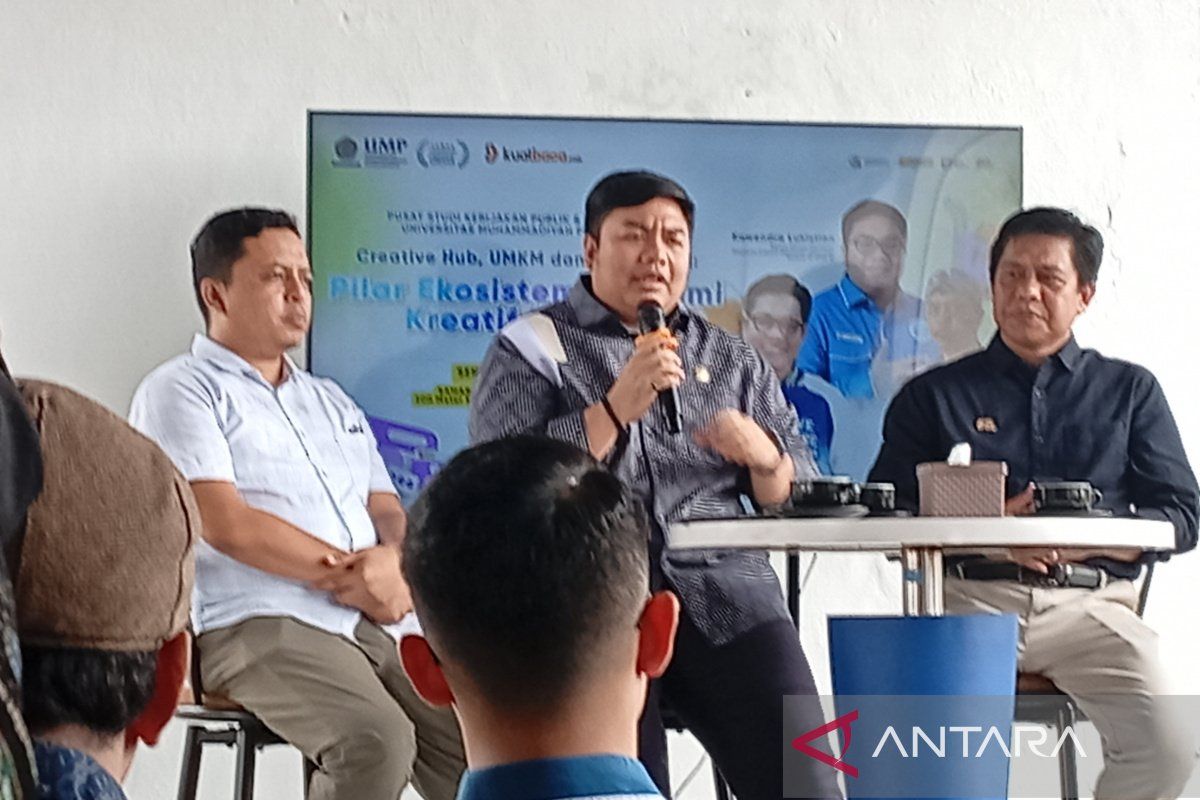
Banyumas (ANTARA) - The Chairman of the National Creative Economy Movement (Gekrafs), Kawendra Lukistian, has emphasised the vital role of universities as a foundation for the thinking and direction of creative economy practitioners, enabling them to develop in a structured manner with added value.
Speaking after a discussion entitled “Creative Hub, MSMEs, and Digitalisation: Pillars of the Modern Creative Economy Ecosystem”, organised by the Centre for Public Policy and Leadership Studies at Universitas Muhammadiyah Purwokerto (UMP) in Banyumas Regency, Central Java, on Monday afternoon, Kawendra said that universities serve as a fundamental grounding for creative economy practitioners.
“Universities become the foundation for thinking, providing creative economy practitioners with the tools so that what they do has value — not sporadic, but directed and well-organised thanks to the understanding provided by the campus,” said Kawendra, who is also a member of Commission VI of the House of Representatives.
He expressed appreciation for UMP’s initiative in opening its doors to MSME practitioners to operate within the campus environment.
According to him, universities should not merely serve as centres of education but must also function as laboratories of benefit for the wider community.
“Universities should not just be centres of education, but also laboratories of benefit. Going forward, we must encourage the growth of as many enterprises as possible,” he said.
He also urged that students’ academic processes be integrated with the creation of businesses and employment opportunities, for instance through final-year projects or theses based on entrepreneurial ventures.
“Universities have authority over the graduation process. It can be challenged — a thesis that simultaneously creates jobs becomes a graduate KPI, making it concrete,” he affirmed.
Regarding challenges facing the creative economy sector, he said that literacy and financing remain the primary obstacles. According to him, many practitioners are not yet aware that they are part of the creative economy sector.
“The obstacles we have observed are literacy and financing. Many creative economy practitioners are unaware that they are creative economy actors, but now there are financing solutions based on intellectual property, or IP financing, initiated by the government, and allocations have already been made for this year,” said Kawendra.
Meanwhile, UMP Rector Prof Jebul Suroso said the visit of the Gekrafs Chairman served as motivation for the university to strengthen the development of its creative economy and entrepreneurship ecosystem.
According to him, UMP is targeting to become a centre for national economic studies in the Banyumas region, whilst also developing a centre for economic thought and movements based on a national figure from Banyumas who is also the grandfather of President Prabowo Subianto, namely RM Margono Djojohadikusumo.
He considered the idea of encouraging graduates to become job creators highly relevant and said it would be followed up through pilot programmes across a number of study programmes.
“The idea is very creative — producing students not only as job seekers but also as job creators. We will create a pilot project, primarily in the field of economics, but education and other fields are also possible as there are many creative products from research that can be commercialised,” he said.