
United States Warns Iranian Citizens to Avoid Strait of Hormuz Ports
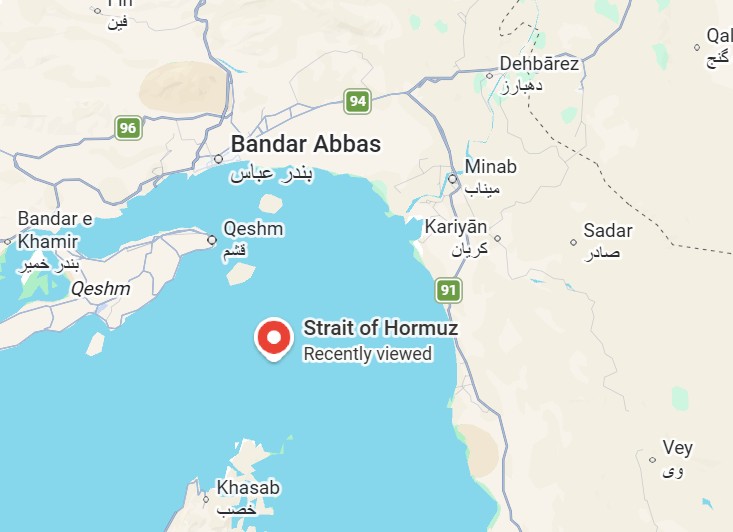
The United States has warned Iranian civilians to avoid ports in the vicinity of the Strait of Hormuz amid reports of planned new attacks. The Islamic Revolutionary Guard Corps (IRGC) has reportedly attacked two vessels transiting through this strategically vital shipping lane.
In an official statement, the United States Central Command (CENTCOM) called on port workers and commercial shipping crews to exercise caution regarding Iranian military activities.
“Iranian port workers, administrative personnel, and commercial ship crews should avoid Iranian naval vessels and military equipment,” CENTCOM stated.
The Strait of Hormuz has been reported as closed by the IRGC following the outbreak of conflict between Iran against the United States and Israel. The Iranian Navy is currently on high alert in the region to prevent ships from transiting.
The situation in the strategic shipping lane has intensified following the Iranian Revolutionary Guard launching attacks against two vessels attempting to pass through the strait. One of the targeted ships was a bulk carrier from Thailand.
In its statement, the IRGC named two attacked vessels as the Israeli-owned Express Rome, flagged to Liberia, and the container ship Mayuree Naree.
“The Israeli-owned Express Rome, flying the Liberian flag, and the container ship Mayuree Naree, were struck by Iranian projectiles and halted after ignoring warnings from IRGC naval forces,” the Revolutionary Guard stated.
IRGC Navy Commander Alireza Tangsiri also emphasised that any vessel wishing to transit the Strait of Hormuz must obtain authorisation from Iran.
“Every ship intending to pass must obtain permission from Iran,” Tangsiri said in a post on platform X.
Thailand’s government has provided explanation regarding the attack on the vessel carrying its crew members. Thailand’s Ministry of Transportation stated that 20 crew members were successfully rescued, but three others remain reported as missing.
According to the ministry, crew members evacuated the vessel using lifeboats before ultimately being rescued by Omani naval forces.
The attack from the Iranian Revolutionary Guard caused an explosion in the ship’s stern section, which subsequently triggered a fire in the engine compartment.
That area was where three crew members who remain missing were working when the incident occurred.
Global tensions over Middle Eastern shipping have economic implications for Indonesia. The International Energy Agency Chief Fatih Birol has sought to moderate concerns over a potential global oil crisis amid the conflict in the Middle East triggered by the closure of the Strait of Hormuz. Chief Economist Josua Pardede assessed that closure of the strategic Strait of Hormuz shipping lane has potential to increase pressure on the rupiah exchange rate due to rising oil prices. Coordinating Minister Airlangga Hartarto has assured that subsidised fuel prices (Pertalite and Solar) will remain stable despite the intensifying Iran-US conflict. Trade Minister Budi Santoso will summon several exporters to discuss potential supply disruptions caused by the closure of the strategic Strait of Hormuz shipping lane.
Geopolitical tensions in the Middle East are beginning to have direct impact on global energy supply chains. PT Pertamina International Shipping (PIS) has confirmed that two of its four vessels have successfully departed the Middle East region.
The United States has exercised its veto against a UN Security Council resolution draft submitted by Russia concerning calls for a ceasefire in the Middle East region. Spain’s government has permanently withdrawn its ambassador from Israel after diplomatic relations between the two countries deteriorated due to the conflict in Iran and Israel’s aggression in the Gaza Strip. United States President Donald Trump has again launched harsh criticism against Spain’s government. Spain’s government officially announced the withdrawal of its ambassador from Israel on a permanent basis on Tuesday 10 March.