
United States Relocates Thousands of Marines and Amphibious Assault Ships from Japan to Middle East
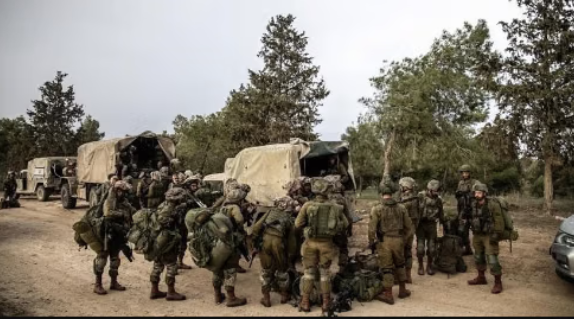
The United States military has begun relocating at least one amphibious assault ship and more than 2,000 Marine personnel from a base in Japan towards the Middle East. This major step was taken as military confrontation between the US-Israel alliance and Iran continues, on Friday.
According to reports from Fox News, the amphibious assault ship USS Tripoli, which is based in Sasebo, Nagasaki Prefecture, is estimated to arrive at its destination within one to two weeks. Together with two other warships, Tripoli forms a single Amphibious Ready Group.
In addition to the naval fleet, the US military is also dispatching the 31st Marine Expeditionary Unit, which is based in Okinawa. This deployment marks a major shift in military power that directly reduces the number of US personnel in the Indo-Pacific region.
The escalating tensions have not only relocated troops but also strategic defence systems. The Washington Post and South Korean media have reported that some missile defence systems initially deployed to counter North Korean threats are now being relocated from South Korea to the Middle East.
As the war enters its third week, US President Donald Trump has vowed to continue escalating military operations against Iran. When asked by journalists about the duration of this operation on Friday, Trump gave a brief response:
“This deployment will continue for as long as necessary,” Trump said.
Via social media, Trump also claimed that US forces had “completely destroyed” every military target on Kharg Island, a vital point for Iran’s crude oil exports. However, he issued a stern warning regarding energy infrastructure and global shipping routes.
“I have chosen NOT to destroy the oil infrastructure on the island. However, if Iran, or anyone else, does something to disrupt the free and safe passage of ships through the Strait of Hormuz, I will immediately reconsider this decision,” Trump wrote.
Washington’s move to relocate combat assets from the Persian Gulf to the Indo-Pacific has begun to trigger national security concerns amongst American allies in Asia. The reduction in Pacific forces occurs precisely as Iran escalates the intensity of its attacks in the Strait of Hormuz, a channel that serves as the lifeblood for 20 per cent of the world’s crude oil supply.