
United States Investigates Indonesian Products; Purbaya: It Is Routine
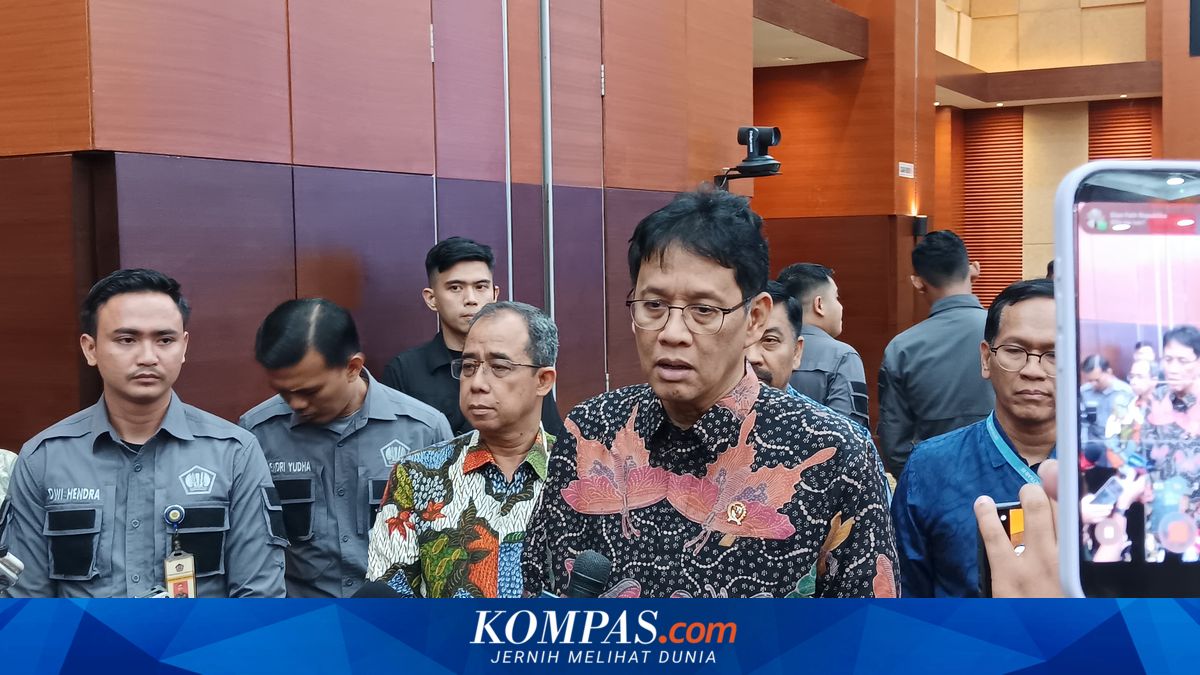
Jakarta — Finance Minister Purbaya Yudhi Sadewa has assessed that investigations conducted by the United States government against several countries, including Indonesia, do not necessarily threaten the nation’s export prospects.
Purbaya views the trade investigation as a standard practice within the dynamics of international trade relations.
“I think it is fine; investigations are a routine matter,” said Purbaya when met at the Ministry of Finance on Friday (13 March 2026).
He explained that Indonesian products retain competitive advantage in the US market because of relatively lower production costs, particularly regarding labour.
“If we compare ourselves with America, our goods are cheaper than American goods because our labour is cheaper. So we have relative advantage compared to America,” he said.
This cost production advantage, Purbaya continued, has also led Indonesia to frequently record trade surpluses with the United States.
Nevertheless, Purbaya cautioned that potential pressure on Indonesian exports could emerge if the US government decides to raise import tariffs for countries that maintain trade surpluses.
However, as long as the tariff policy is applied equally to all exporting nations, the impact is estimated to be not particularly significant for Indonesia.
“But if we are subjected to higher tariffs, for example differentiated up to 10 per cent, it would be difficult for us. However, we will pursue other efficiency efforts if necessary,” he said.
Purbaya assessed that overall, Indonesia’s trade prospects with the United States remain relatively secure despite this investigation step. “The outlook should not be too bleak going forward, even with the investigation from US Trade,” he concluded.
Previously, the administration of US President Donald Trump announced a new trade investigation targeting China, Mexico, the European Union, and more than a dozen other countries, including Indonesia.
This measure was taken to replace Trump’s reciprocal tariff policy, which was recently declared illegal by the US Supreme Court.
The investigation will be conducted under Section 301 of the Trade Act of 1974. US Trade Representative Jamieson Greer conveyed this information to journalists during a press conference.
This provision permits the US to impose tariffs on imported goods from other countries deemed to be engaged in unfair trade practices.