
United States and India Set to Enter Indonesia for Critical Mineral Development Sought Globally
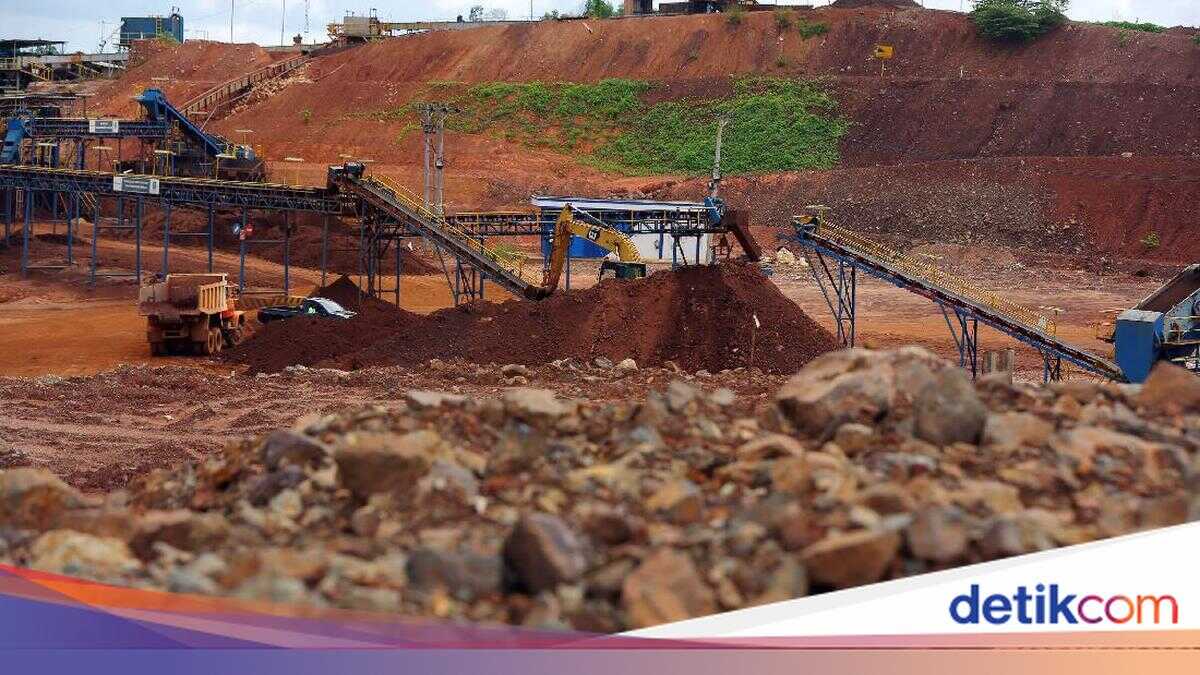
Indonesia’s Ministry of Energy and Mineral Resources has disclosed that India will be involved in the development of critical minerals in Indonesia, resources that are coveted globally.
This was communicated by Deputy Minister of Energy and Mineral Resources Yuliot Tanjung following his meeting with Sandeep Poundrik, Secretary of the Ministry of Steel of the Government of India some time ago.
Yuliot stated that this step aims to strengthen national energy resilience whilst opening up opportunities for sustainable investment that provides long-term economic benefits.
During the meeting, discussions covered plans for drafting a Memorandum of Understanding (MoU) as an umbrella for cooperation between the two countries. Once both parties agree, it will be signed at ministerial level.
“We discussed many aspects. One of the things they asked was how to enhance cooperation which would be embodied in the form of an agreement or an MoU for cooperation,” said Yuliot when met at the Ministry of Energy and Mineral Resources office in Jakarta on Friday (27 February 2026).
Yuliot stated that in the MoU, the Indian government will encourage companies from its country to invest in Indonesia, particularly in the metal industry sector.
“So the cooperation is that from India, they will also encourage Indian companies to make investments in Indonesia, especially in the metal industry,” said Yuliot.
Additionally, both countries will explore the continued development of the metal industry into equipment and capital goods that can be jointly produced.
“Furthermore, on the utilisation side, there is also continued downstream processing of the metal industry into equipment or capital goods that could be jointly developed,” he said.
The final discussion point, according to Yuliot, concerned cooperation in the development of capital goods in the form of research and innovation that is more efficient in its utilisation.
“India will submit a draft MoU which we will then consult on with the Ministry of Foreign Affairs regarding the framework of the MoU to be discussed and will be followed up with signing between ministers, the Minister of Energy and Mineral Resources and India’s Minister of Steel,” he explained.
Agreement with the United States
Previously, the Indonesian Government also agreed to establish critical mineral trade cooperation with the United States. This aligns with the reciprocal tariff trade agreement (Agreements on Reciprocal Trade/ART) officially signed by President Prabowo Subianto and US President Donald Trump on Thursday (19 February) at Washington D.C.
Minister of Energy and Mineral Resources Bahlil Lahadalia affirmed that for Indonesia, this cooperation is part of a national strategy to ensure critical minerals are not traded in raw form.
According to him, through the agreement the government can ensure foreign investment remains focused on developing domestic processing industries, thereby not altering the direction of national downstream processing policy.
“Regarding critical minerals, we have agreed to facilitate American entrepreneurs to invest, whilst respecting the regulations applicable in our country,” said Bahlil in a written statement on Saturday (21 February 2026).
Bahlil firmly stated there is no change in policy regarding raw mineral exports, as the Indonesian government remains committed to implementing the national downstream processing programme and has no plans to open the tap for exporting raw materials.
“So, let’s say they build a smelter in Indonesia for nickel, we will encourage it, we will provide the broadest possible space, and the same applies with other countries. So, don’t interpret this as us opening exports of raw materials. What is meant here is that after they conduct refining, then the results can be exported. Let’s be clear about this, so there is no misinterpretation,” he stressed.
Furthermore, he cited an example of Indonesia-US critical mineral cooperation already underway, namely the investment conducted by Freeport Indonesia which built a copper smelter facility with investment value of nearly US$4 billion and is one of the largest in the world.
Two Models of Cooperation
According to him, a similar pattern can be applied to the development of other critical minerals such as nickel, rare earth metals, and gold; in which, in its implementation, Bahlil stated the government is offering two investment schemes for US companies.
First by directly offering US companies the opportunity to carry out exploration, and secondly through partnership or joint venture (JV) with Indonesian State-Owned Enterprises (SOEs).
“Once they are already producing and building a smelter or downstream processing facility, then they have the right to export to America,” he added.
Beyond that, Bahlil stated that Indonesia not only conveys that Indonesia adheres to the principle of active free economy. Thus the government will continue to provide equal investment space to all countries to cooperate in the development of critical minerals.
According to him, the government’s policy is not exclusive and is not solely directed at one particular country, including the US. Indonesia remains consistent in implementing the principle of cooperation that is open, fair, and mutually beneficial with all global strategic partners.
“We provide space equally with other countries as well, so equitable treatment (equal treatment) only,” concluded Bahlil.