
United Arab Emirates: Ceasefire Alone Is Not Enough to Resolve Iran Conflict
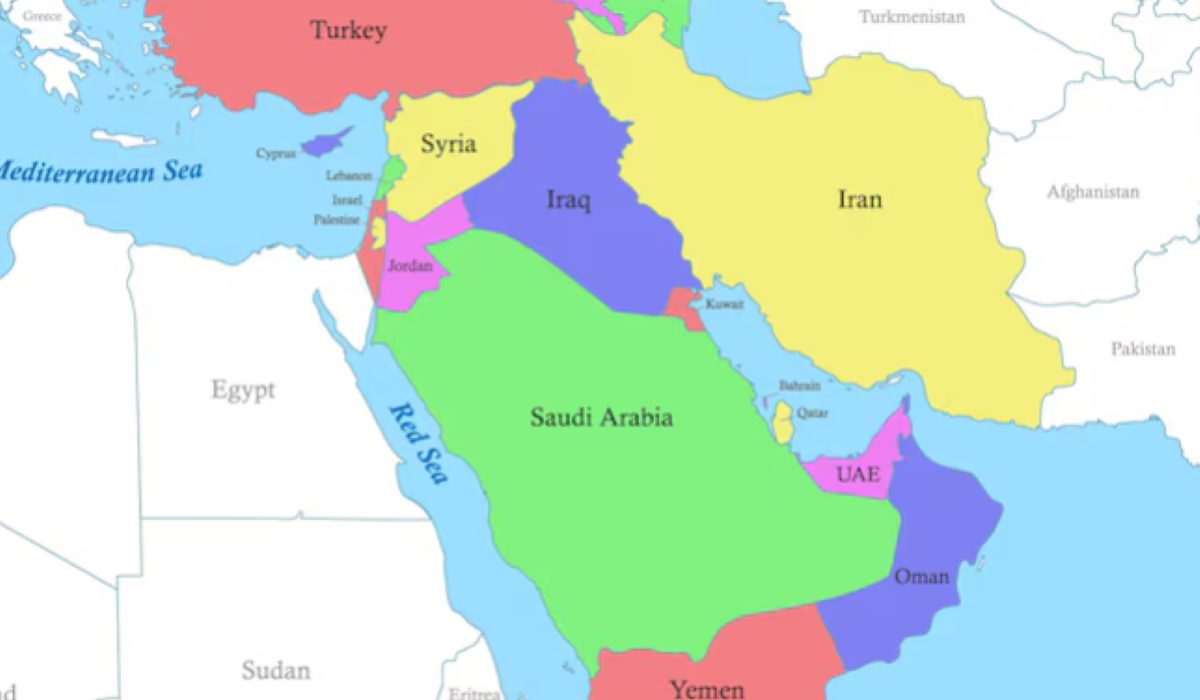
A ceasefire in the Iran war alone is not enough as a solution; what is needed is a broader security architecture for the region, including a weapons system and regional behaviour, as well as stable security mechanisms for maritime navigation in the Strait of Hormuz. This was stated by a high-ranking UAE official, Anwar Gargash, to Euronews on Tuesday (7/4).
“Although the UAE is not yet ready to act as a maritime power, they will join US-led or international efforts to secure navigation in that vital global waterway,” said the UAE’s diplomatic adviser.
In a briefing with Euronews in Abu Dhabi, Gargash provided one of the clearest assessments of how the UAE navigates the rising regional tensions, warning of long-term geopolitical consequences while highlighting the country’s resilience and strategic position.
Beyond immediate security issues, Gargash stressed that any resolution to the current conflict must address the underlying structural risks rather than providing a temporary pause in hostilities.
“From our perspective, we do not want to see further escalation, but we also do not want a ceasefire that does not address some of the major issues that will create a far more dangerous environment in this region,” Gargash told Euronews.
“We also want to see an end to this conflict, but the end of this conflict should not also create sustained instability in this region,” the diplomatic adviser added.
His sharpest comments were directed at Iran’s leadership, distinguishing between the country and its government system. “We do not want hostility with Iran, but with this regime, there is no trust.”
“This regime is fighting for its own regime. This regime is not fighting for its country. No normal regime would accept the destruction they see just to prove they are fighting,” he said.
In formulating the UAE’s concrete position on the current military and diplomatic clashes, Gargash said that any solution for the future must include Iran’s neighbouring countries that were massively attacked by the Tehran regime last month. The UAE received the largest volume of Iranian missile and drone attacks.
As an important acknowledgment, Gargash included nuclear issues in the list of challenges shaping the future outcome. “Nuclear, missiles, and drones are still raining down on us and other countries.”
“Then, if Iran also wants to see a non-aggression agreement, that agreement must be extended to everyone. This is not just US-Israel action against Iran, but also Iran’s aggression against its neighbours. When Iran talks about reparations, that also applies here,” Gargash added.
Its strategic implications, he warned, are likely to reshape alliances rather than reduce them, with additional emphasis on Israel’s influence in the Gulf.
“I believe Iran’s strategy will actually strengthen America’s role in the Gulf going forward, not reduce America’s role. We will also see Israel’s influence become more prominent in the Gulf, not less,” Gargash told Euronews.
In a clear message to the Iranian regime regarding Tehran’s demands for Gulf countries to eliminate the US presence, Gargash emphasised, “Our main security partner is the United States and we will strengthen our relationship with the United States.”
“America’s stance in supporting us and helping our capabilities in air defence has been extraordinary.”
In addition to US support, the official also highlighted the level of international support received by the country. He pointed to a network of partners that strengthen its defence posture. “We are very, very grateful to many countries that are helping us, many countries that support us.”
“France has been a steadfast partner for us. France’s stance has been very good,” Gargash stressed.
The global crisis of the Strait of Hormuz blockade remains a top priority. Gargash outlined the UAE’s response to growing speculation about Gulf countries’ options to intervene to open the world’s most important energy route blockade.
Although the UAE does not position itself as a unilateral security actor, they signal readiness to operate within a broader coalition framework.
“We are not ready to act as a maritime power, but we will join American-led or international efforts to secure navigation in the Strait of Hormuz. We are ready to play our role,” he said.
He added that maritime security must be part of a broader diplomatic resolution. “This issue (Hormuz) must be an integral part of any conflict resolution, with clear agreements on it,” he said.
“For us, the Strait of Hormuz cannot be held hostage by one country,” Gargash said. He described the issue as one that far transcends regional politics.
“It is very important for the global economy and global trade. It is a very important issue for everyone. The Strait of Hormuz cannot be held hostage by any country,” Gargash said.
He affirmed that the country is resilient in the face of the developing crisis and described the current situation as something long anticipated but rarely expected to materialise.
“If you asked me over the past 20 years what the worst-case scenario is that the UAE is unlikely to face, I would say a full Iranian attack on the UAE. And this is what we are really seeing,” said Gargash.
“This is the worst-case scenario. Now, when the worst-case scenario happens, we are handling it very well and we are very resilient. We have a lot of resources.