
United Against Dengue Alliance Launched to Tackle Dengue Fever Challenge
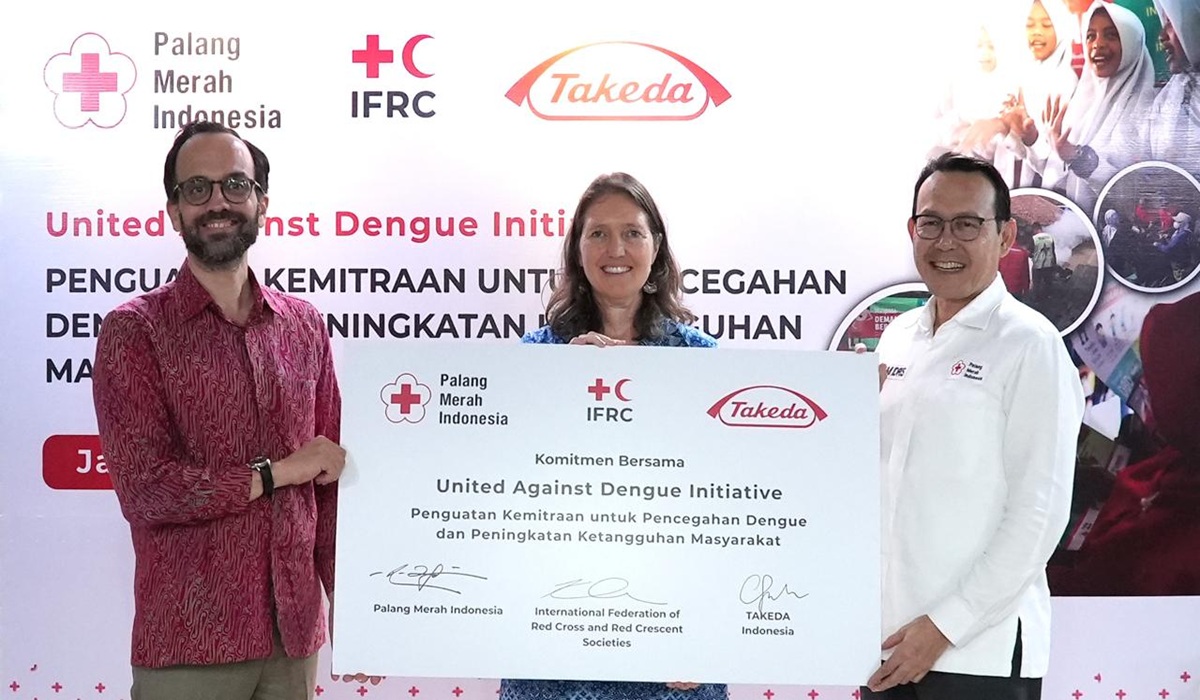
Dengue fever (dengue haemorrhagic fever) remains a serious challenge to public health and economic stability in Indonesia. In response to this situation, Takeda, in partnership with the International Federation of Red Cross and Red Crescent Societies (IFRC) and the Indonesian Red Cross (PMI), officially launched the United Against Dengue (UAD) alliance in Jakarta on Thursday, 12 March.
This partnership aims to strengthen prevention, preparedness, and community resilience through concrete community-based action. Indonesia has distinguished itself as the first country to activate this regional collaboration at the national level since it was first initiated at the Asia-Pacific level in June 2025.
The urgency of this step is reflected in World Health Organization (WHO) data, which recorded 14.6 million dengue cases and 12,000 deaths globally in 2024. In Indonesia, BPJS Kesehatan reported more than 1 million dengue-related hospital admissions in the same year, with an economic burden reaching nearly Rp 3 trillion.
President Director of PT Takeda Innovative Medicines, Andreas Gutknecht, emphasised the importance of public-private synergy in achieving Indonesia’s government target of zero deaths from dengue by 2030.
“Through the United Against Dengue alliance, we want to promote strengthening prevention efforts through education that reaches various elements of society and communities in Indonesia, together with relevant stakeholders. We hope this joint commitment can strengthen action at the community level, amongst the population, in facing the dengue threat that exists year-round in Indonesia,” said Andreas.
Head of IFRC Delegation for Indonesia, Kathryn Clarkson, added that the extensive network of Red Crescent volunteers will be at the forefront in increasing awareness and preparedness at the grassroots level.
In line with this, Chair of the Health and Social Affairs Division of PMI’s Central Board, Prof. Dr. dr. Fachmi Idris, M.Kes., affirmed that this initiative supports the national strategy of Indonesia’s Ministry of Health.
“PMI believes in the importance of comprehensive multi-stakeholder collaboration to provide optimal benefits for affected populations,” said Fachmi.
The alliance operates on three strategic pillars: Educate, Advocate, and Support.
Through these pillars, United Against Dengue is committed to empowering individuals and families to become more self-reliant in protecting themselves and their environment from the danger of Aedes aegypti mosquito bites.
The launch event was also attended by representatives from various ministries, the Meteorological, Climatological and Geophysical Agency, and WHO Indonesia, demonstrating strong cross-sectoral support for efforts to eliminate dengue deaths in the country.
Age groups aged 15-44 years account for 42 per cent of total dengue cases, whilst 41 per cent of deaths are found in children aged 5-14 years. The case fatality rate (CFR) for dengue has decreased significantly from 0.9 per cent in 2021 to 0.4 per cent in 2025.
The Ministry of Health has implemented Wolbachia technology to suppress the spread of dengue fever. Southeast Asia has long been the global epicentre of dengue transmission, with data showing nearly 400,000 cases reported in the region throughout 2025.