
Unique! "Cheese Bank" Saves the Industry, Assets Exceed Rp6.5 Trillion
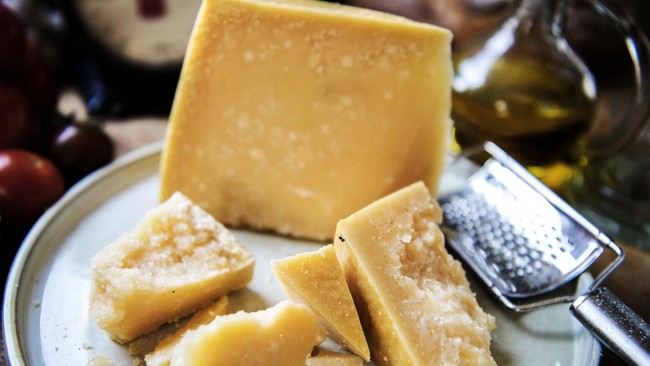
The “cheese bank” has proven to be an economic saviour for local communities. This is evident in the Emilia-Romagna region of northern Italy. Citing CNN International, reports detail how vast warehouses store hundreds of thousands of wheels of Parmigiano Reggiano cheese, ageing slowly while “saving” economic value. Behind towering wooden racks, these cheeses are not merely food items but financial assets worth trillions of rupiah. For some, the site resembles a “cheese cathedral”. But for Italian dairy farmers and producers, these warehouses are a lifeline for their cash flow. Parmigiano Reggiano is one of the world’s most strictly regulated food products. The cheese can only be made in a limited area using three main ingredients: milk, salt, and rennet. Its maturation process takes a minimum of 12 months, with many wheels reaching 24 to 40 months. The challenge is that production costs—such as animal feed, energy, and worker wages—continue daily, while revenue arrives only after a year. This is where the “cheese bank” system plays a crucial role. “In Italy, around 4 million wheels of Parmigiano Reggiano are produced, and we store 500,000 of them… customers can use those wheels as collateral to obtain financing,” explained Giancarlo Ravanetti, head of the cheese warehousing business at Credem Bank. He added that the warehouse handles about 2.3 million wheels annually, with stored assets valued at €325 million, or approximately Rp6.54 trillion. The cheese is scanned, recorded in a digital system, and equipped with a “passport” detailing its origin and production date. It is then stored under strictly controlled conditions of temperature, humidity, and airflow. Warehouse staff regularly inspect each wheel to ensure there are no cracks or defects. At 12 months of age, the cheese is tested by the Parmigiano Reggiano Consortium using a traditional method: striking it with a hammer to detect internal flaws. Only perfectly quality cheese receives the official stamp. “This seal assures consumers that the product is authentic and of high quality,” said consortium spokesperson Fabrizio Raimondi. The Parmigiano Reggiano ecosystem involves around 300 producers and over 2,000 dairy farmers, employing a total of about 50,000 workers. The industry generates annual turnover exceeding €4 billion, equivalent to Rp80.82 trillion. However, the system faces pressures. Paolo Ganzerli from Granterre, one of Italy’s largest dairy groups, noted that production costs have surged sharply in recent years. “Animal feed costs, energy, transportation—all have risen rapidly,” he said. “Without this cheese-based financing system, the Parmigiano Reggiano industry could not survive.” These cost increases have also driven up selling prices. In 2025, 12-month-old cheese reaches €13.22 per kg, while 24-month-old cheese hits €15.59 per kg. As a result, domestic consumption in Italy has fallen by up to 10%. On the other hand, the export market is growing. For the first time, exports account for more than 50% of global sales. Demand is rising in various countries, including the UK, Sweden, Canada, and the United States, although the US market is now clouded by uncertainty due to import tariffs of up to 25%. “There is regulatory uncertainty; many market players are holding back on purchases,” said Raimondi. Amid these challenges, innovation continues. Blockchain technology now allows cheese wheels to be pledged as collateral even while stored at producer facilities, expanding financing capacity. The consortium is also promoting tourism, aiming to increase visitors from 85,000 to 300,000 by 2029. Ultimately, Parmigiano Reggiano is more than just cheese. It is a symbol of balance between tradition, quality, and financial innovation.