
UNICEF Raises Issues on Food and Child Development in Indonesia
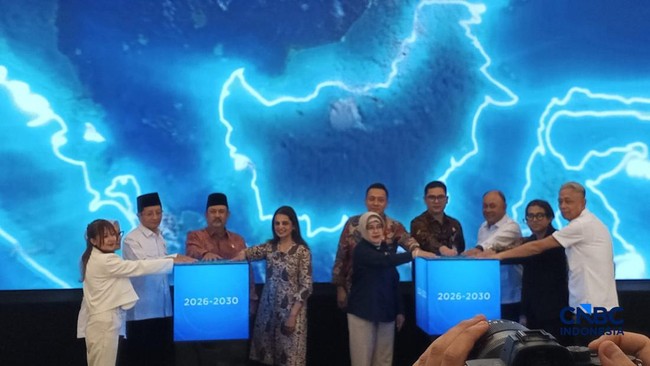
UNICEF has provided evaluation notes on the previous Country Programme Action Plan (CPAP) implementation to the Indonesian government. These notes also serve as the basis for forming the CPAP 2026-2030, titled “Together for Every Indonesian Child”. CPAP is the continuation of long-standing cooperation between the Indonesian government and UNICEF. The total budget for this programme is US$131 million or Rp2.5 trillion. UNICEF Indonesia Representative Maniza Zaman stated that the first note is shifting from pilot programmes to system strengthening. “Strengthening the capacity of systems and institutions so that health, education, water and sanitation, child protection, social protection, nutrition, and food services become more effective, resilient, and inclusive,” she said during her speech at the launch of CPAP 2026-2030 at the Bappenas Office in Jakarta on Monday (20/4/2026). The second is shifting from data as an end to evidence-based decision-making. “Prioritising the strengthening of Indonesia’s data ecosystem so that policies and investments are continuously based on timely, detailed, and actionable evidence,” Maniza added. Meanwhile, the third note is leveraging Indonesia’s decentralisation strengths for children’s benefit. Maniza emphasised that the presence of representatives from 13 provinces serves as a reminder that decentralisation can bring decision-making and services closer to communities, families, and children. “This CPAP positions provinces and regencies/cities as the core of programme implementation,” she said. She stated that the combination of national and provincial-focused approaches will strengthen planning, budgeting, and accountability for children in the regions. “UNICEF will collaborate with technical ministries and the Ministry of Home Affairs to ensure that national policies are translated into quality and equitable services for children throughout Indonesia.” The next note is shifting from inclusion as a principle to measurable inclusion outcomes. This involves embedding gender equality, disability inclusion, and equity in all sectors so that children in vulnerable situations are not only reached but prioritised. The fifth is a stronger emphasis on climate resilience. The CPAP enhances climate resilience not as a standalone issue, but as an integral part of child-focused systems. The final note is shifting from financing gaps to smarter investments. “Building clear evidence so that public spending is more adequate, efficient, fair, and impactful, including supporting innovative financing mechanisms and partnerships with the private sector,” Maniza added.