
Unhas and Japan's FHU Collaborate on Health Innovation and Human Resources
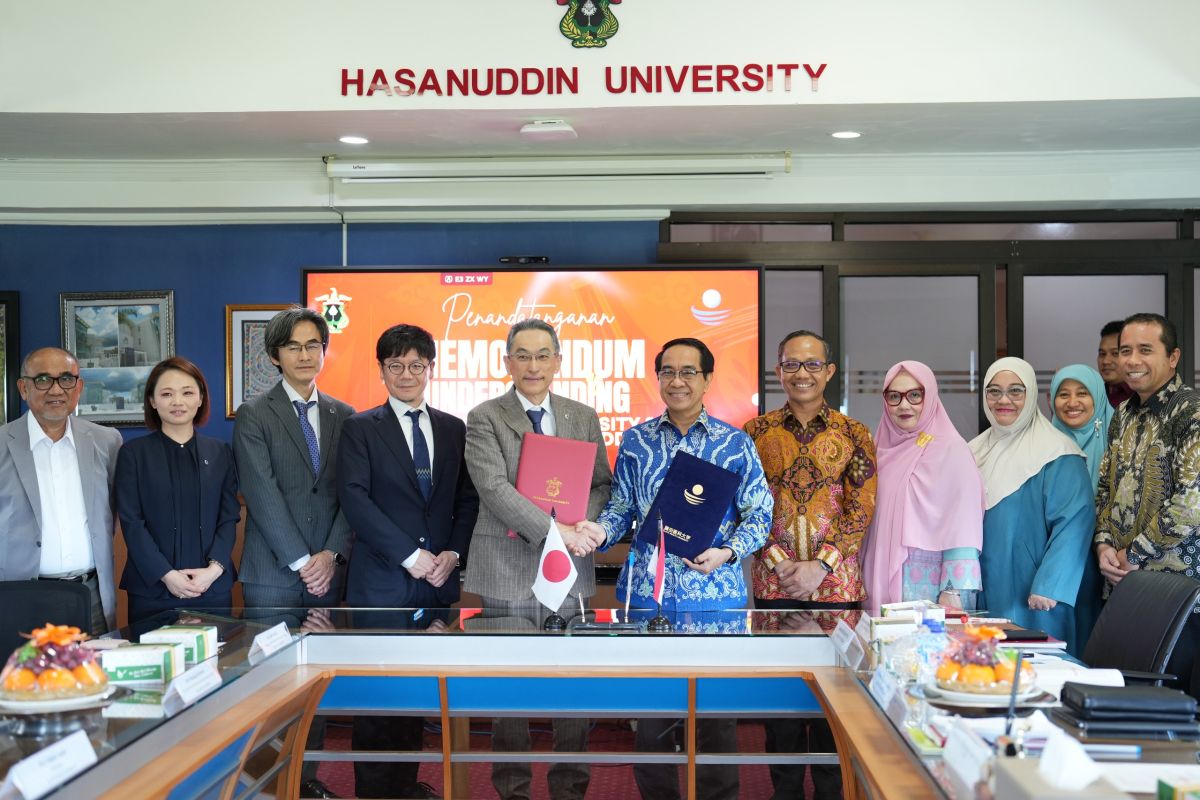
Makassar (ANTARA) - Universitas Hasanuddin (Unhas) and Fujita Health University (FHU) Japan are strengthening their collaboration on research into health innovations and competitive human resources amid increasingly complex global challenges. Unhas Rector Prof Dr Jamaluddin Jompa (JJ) in Makassar on Wednesday emphasised that this cooperation is part of the institution’s strategy to address national development challenges. According to him, the role of higher education institutions is crucial in bolstering the nation’s capacity through innovation and global partnerships. Furthermore, Prof JJ explained that Unhas continues to develop various initiatives to support Indonesia’s development direction, including contributions to the development of the Nusantara Capital in Kalimantan. In this regard, he stated that international collaboration is seen as key to accelerating the transfer of relevant knowledge and technology. “Strengthening the health sector is currently a major challenge. We need superior human resources and an adaptive health system. This is where learning from global partners like Japan is important,” he said. The Rector views Japan as a strategic partner with strengths in science and technology development, particularly in health. Unhas sees great opportunities to adopt best practices and promote joint innovations. Through the MoU, both parties agreed to develop various collaborative programmes, from faculty, researcher, and student exchanges to the implementation of academic programmes such as double degrees and strengthened joint research as strategic agendas moving forward. Meanwhile, FHU President Prof Nakao Iwata conveyed that his institution has superior capacity in science and technology ready for collaboration. He emphasised the importance of inter-institutional synergy in driving innovations with broad impact. “We see great potential in this collaboration. By combining research and technology strengths, we are confident in producing innovations that provide real benefits to global society,” said Prof Iwata.