
Unhas and Fukuoka Institute of Technology collaborate on flood management research in Makassar
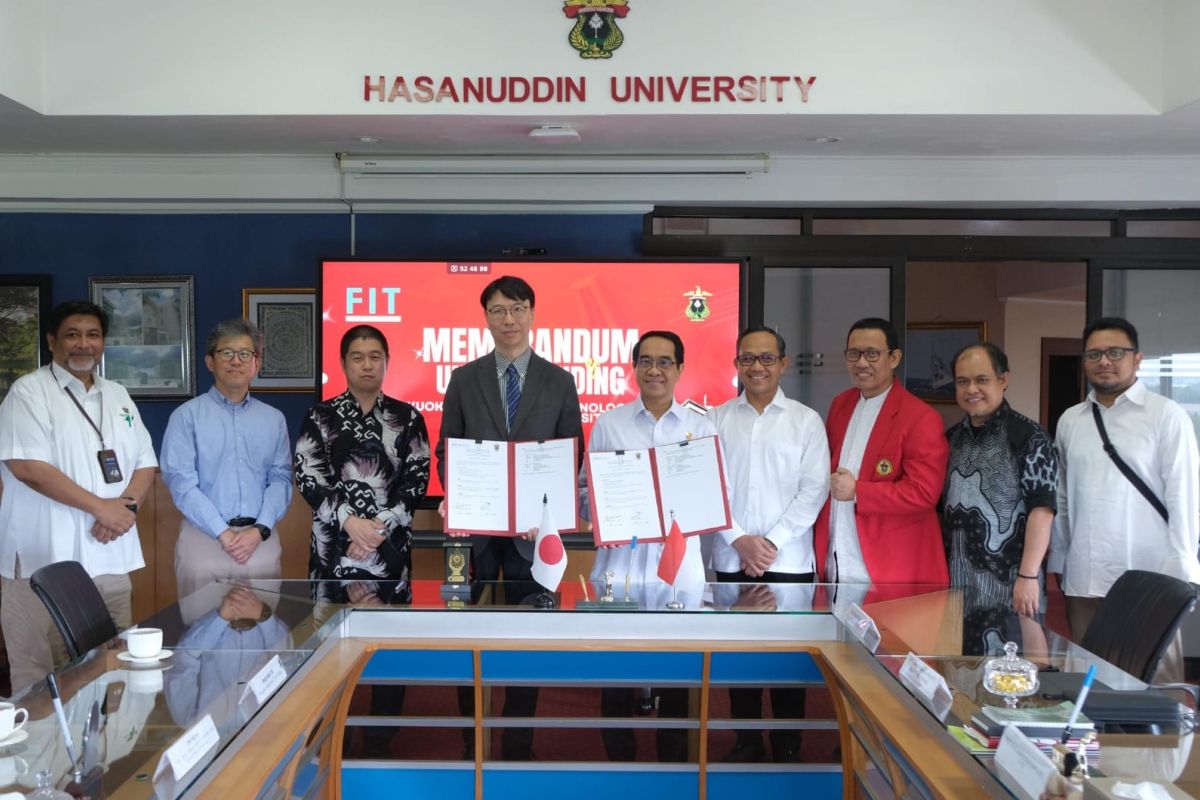
Makassar — Hasanuddin University (Unhas) has entered into an international partnership with Fukuoka Institute of Technology (FIT) in Japan concerning the three pillars of higher education, including efforts to address flooding in Makassar.
Beyond flood management, the collaboration between the two institutions also focuses on strengthening research capacity, academic mobility, and cross-border knowledge exchange.
Unhas, it is stated, is open to expanding global partnerships to enhance the quality of education and research. The various achievements attained by Unhas reflect a commitment to continued development whilst expanding its contribution and impact on society.
“The collaboration with FIT has the potential to develop more broadly in the future, including through research-based innovative education programmes. One opportunity that can be developed is a research-based double degree programme,” said Prof JJ.
Furthermore, Prof JJ also emphasised the importance of strengthening collaboration with the industrial sector as part of developing a higher education ecosystem that is adaptive to global needs. This partnership is expected to open opportunities for collaboration with industries in both Japan and Indonesia.
On the same occasion, Dean of the Faculty of Socio-Environmental Studies at FIT, Prof Yang-Joong Yun, stated that Indonesia is a strategic partner of Japan, including in strengthening higher education cooperation. The strong diplomatic relationship between the two countries forms an important foundation for developing sustainable academic collaboration.
Prof Yang-Joong Yun hopes that this cooperation can open space for knowledge exchange, technological innovation, and academic experience that is beneficial for both institutions.
Within the scope of cooperation, both universities have agreed to develop various collaborative programmes.
These programmes include exchange of undergraduate and postgraduate students, exchange of lecturers, researchers and academic staff, as well as implementation of joint research activities focusing on strategic environmental issues, including flood management in Makassar, as an academic contribution in supporting sustainable urban development solutions.