
UNG Students Introduce Complete Silage Feed to Develop Cattle Farming
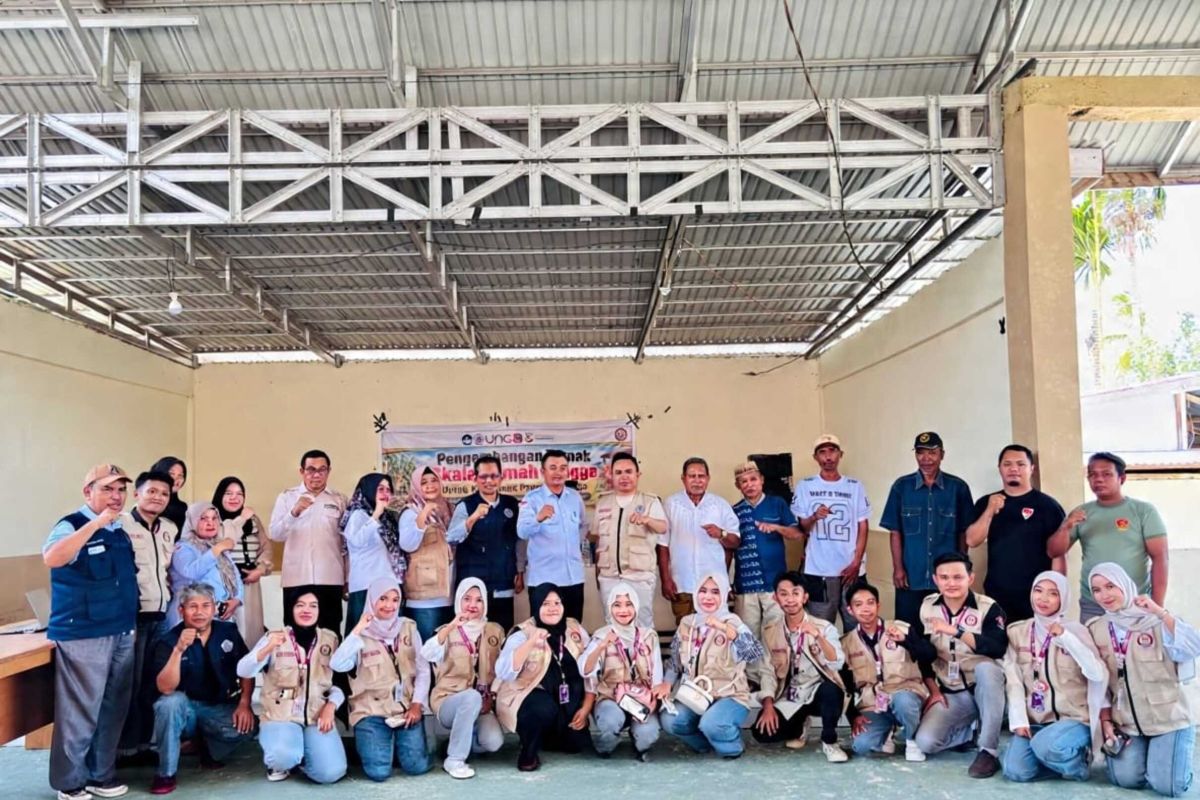
Gorontalo (ANTARA) - Students participating in the second thematic Community Service Programme (KKN) from Universitas Negeri Gorontalo (UNG) are introducing silage, a complete feed, to the community of Batuloreng Village, Gorontalo Regency, Gorontalo Province, to develop household-scale cattle farming.
Field Supervisor Dr Srisukmawati Zainudin stated in Gorontalo Regency on Wednesday that this programme is directed towards family food security through community empowerment in the village.
“The KKN students are educating corn farmer groups and cattle breeders on how to produce silage,” she said.
The use of silage helps maintain feed availability, particularly during periods when fresh feed or green forage is limited.
The material is processed and mixed with other necessary ingredients, using predetermined measurements and compositions.
“The production process is carried out directly so that participants and the community do not only gain theoretical understanding but also see and practise the feed processing method,” said Srisukmawati.
Once produced, the silage undergoes a storage or fermentation process before it can be utilised as livestock feed.
The prepared silage is scheduled to be opened and used as cattle feed on 16 September 2026, in accordance with the predetermined timeline.
The KKN students are encouraging the local community to develop household-scale cattle farming by utilising agricultural potential to support livestock feed requirements.
The Head of Batuloreng Village, Bongomeme Awin K Poiyo, stated that the presence of the KKN students is very helpful to the community.
“Education through the household-scale livestock programme and the production of livestock feed using the village’s agricultural potential is believed to impact the economy of the community and this village,” said Awin.
He expressed hope that the community could develop this programme into an activity capable of generating income and growing the economy of Batuloreng Village.
“Personally and on behalf of the government, I would like to thank UNG, specifically the Dean of the Faculty of Agriculture UNG, Muhammad Mukhtar, the supervising lecturers, and the KKN students. This activity has a positive impact on advancing the village and improving community welfare,” he said.