
Unfamiliar Startup Creates Chips Directly from Human Brain Cells
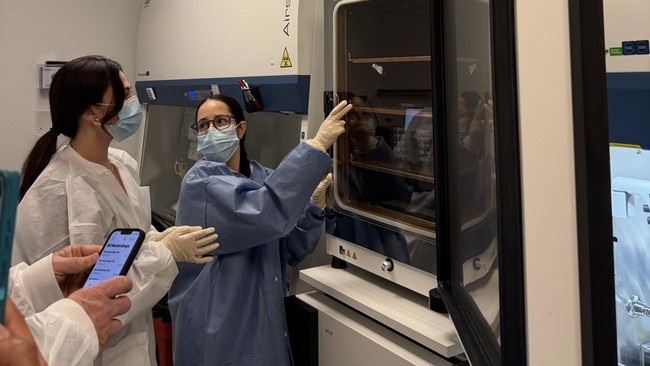
The rapid development of artificial intelligence (AI) technology brings various risks, from job losses for humans, easier spread of disinformation, to the emotional impacts accompanying it. On one side, tech giants are reluctant to hold back from launching cutting-edge AI products, promising easier, more effective, and efficient lives in the future. Not only that, several crises have already emerged due to AI. Activists highlight the massive water and electricity consumption needed to run AI infrastructure, up to potential environmental damage and threats to human survival. Additionally, the chip memory shortage crisis has already caused price surges for consumer electronics devices like mobile phones and laptops. Amid this turmoil, a San Francisco-based startup is attempting to offer a solution to the AI energy crisis by using human brain cells. The Biological Computing Company, or TBC, is a startup that emerged in February 2026 with initial funding of US$25 million (Rp428 billion). TBC is pioneering an alternative to traditional silicon, using human brain cells as the basis to enhance generative AI algorithms and infrastructure. At the helm of TBC are former neurosurgery experts, Dr. Alex Ksendsovsky and Dr. Jon Pomeraniec. According to a report by The Deep View, which was invited to visit TBC’s laboratory in Mission Bay, they met the startup’s team of 23 people, ranging from computer vision experts and AI developers to computational physicists and experienced biologists. Many of them come from major tech companies like Meta, Apple, and Amazon. Wearing lab coats, masks, and latex gloves, the Deep View team had the opportunity to view those chips up close, each containing between 100,000 and 500,000 human nerve cells. Based on The Deep View report, quoted on Monday (13/4/2026), TBC takes real-world data, such as images and videos, and encodes that data into the human brain chips. This information is then transformed into a richer representation, which is used to strengthen AI algorithms. The company initially used brain cells extracted from mice, but Ksendsovsky said that TBC is transitioning from that [to human brains]. Those chips have a lifespan of one year and produce waste that needs to be cleaned every few days. Ksendsovsky said that this technology returns to the roots of AI. Early AI computational models modelled nerve cells in the human brain. However, as AI developed, the technology became very non-biological and caused silicon to become “rigid”. This forces AI development to use forced and power-intensive methods. This is where TBC’s chips may have their greatest advantage, according to Ksendsovsky. Brain cells, in general, require less energy than silicon chips to run AI. In its research, TBC found that models trained on biological neural responses achieve peak performance three times faster, require fewer training iterations, and potentially reduce computational and energy needs by up to three times. For now, the company is not selling those chips but using the technology to build and strengthen algorithms that utilise neurological signals, particularly for visual AI, including generative video, game rendering, and computer vision. Ksendsovsky said his company is in discussions with foundational AI model labs, cybersecurity companies, and data curation firms. Nevertheless, he did not mention the names of potential partners. “We are building products. We want to show people that there are real results that can be monetised right now. What we are building is very unique and far beyond expectations, so I think the world just needs a little time to see and understand it,” said Ksendsovsky. Ultimately, TBC hopes AI development shifts to real-time computing, where these biological chips are part of the inference loop. It targets this method becoming widespread in five to ten years. However, much needs to be done to achieve it, including automating the collection of waste produced by these cells and finding ways to extend their lifespan. “In reality, there are many fundamental things that need to be understood and built to reach that point,” he said. According to The Deep View’s view, TBC’s thesis for now does sound far-fetched. However, AI, which was once considered science fiction, has now become commonplace, so its rapid development has created a series of problems, one of which relates to energy use. Therefore, leading figures in the AI field are striving to create technologies that once also seemed out of reach, like fusion energy and space-based data centres utilising solar energy. According to The Deep View, crisis is a consequence of discovery, and AI certainly creates crises.