
Unexpected! IHSG Recovers Faster Than China and Singapore Stock Markets
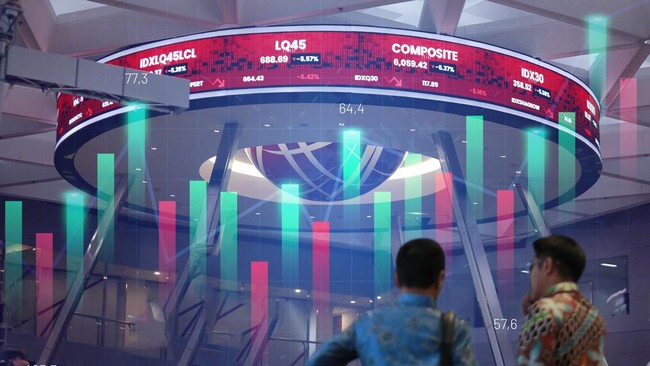
Geopolitical tensions involving the United States, Iran, and Israel continue to overshadow global capital market movements, particularly in Asia. The escalation peaking from February to the early second quarter of 2026 has raised serious concerns about the stability of maritime trade routes, especially the Strait of Hormuz. This strategic route serves as the lifeline for global energy distribution, where any potential disruption directly impacts crude oil price fluctuations. For Asian countries highly dependent on energy imports, this uncertainty creates a risk-off sentiment in stock markets. This dynamic has also prompted strategy adjustments in several Asian countries, which are beginning to secure domestic supplies through alternative energy sources like coal, as a mitigation measure against oil price volatility and potential logistical disruptions. Slow Regional Index Response Post-Correction The external pressures are evident in the measured performance of major Asian stock exchanges, which are struggling to recover substantially from their lows. Based on trading data up to the close on 14 April 2026, most regional indices still show a sluggish recovery pace. Malaysia’s stock exchange, via the KLSE index, recorded the most lagging recovery performance in the region. Since plunging to its lowest level on 9 March 2026, the index has only managed to rise by 0.83% over a 36-calendar-day period. A similar consolidation trend is also seen in Singapore’s STI index, which took more than a month to achieve a recovery in the range of 5%. Ongoing Volatility in Early Second Quarter Entering April, selling pressure in the regular market has not fully subsided. The IHSG and CSI300 indices were recorded as forming their latest lows on 7 April 2026, an indication that investor sensitivity remains highly vulnerable to every development from the Middle East. Although the IHSG managed to post a fairly quick technical rebound of 10.11% in the last seven trading days, the index’s overall room for movement is still constrained. Market participants appear to remain conservative and are holding back from large-scale accumulation until there is clarity on conflict resolution and its impact on the regional macroeconomy. CNBC Indonesia calculated how quickly major Asian exchanges recovered from their downturns, including Indonesia’s IHSG, Malaysia’s KLSE, Hong Kong’s HIS, Singapore’s STI, China’s CSI300 (Shanghai & Shenzhen), India’s SENSEX, Japan’s NIKKEI 225, and South Korea’s KOSPI.