
UNESCO Tests Ijen Geopark Status, These Are the Crucial Improvement Notes
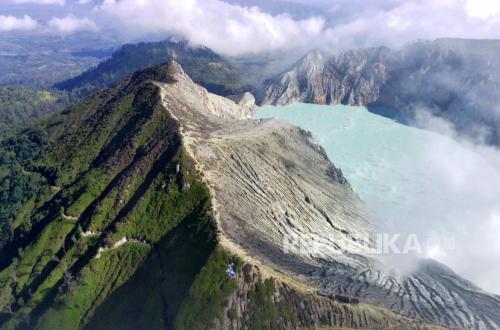
Behind the stunning blue crater landscape and its reputation as a world-class geowisata destination, the Ijen Geopark is now facing an important test. Its status as part of the UNESCO Global Geopark (UGG) network is not permanent. This year, the area must go through a revalidation process that will determine whether it is retained, improved, or even revoked.
East Java Governor Khofifah Indar Parawansa is giving serious attention to this process. She is encouraging all stakeholders to prepare every stage of the revalidation thoroughly so that the Ijen Geopark can regain its green card status from UNESCO.
Banyuwangi Regent Ipuk Fiestiandani revealed that she, along with the Bondowoso Regent, had met directly with Governor Khofifah to discuss preparations for the UNESCO team’s assessment. The meeting emphasised the importance of cross-regional coordination in maintaining international geopark standards.
“The Governor instructed that all processes be prepared well before the UGG assessor conducts a direct review,” said Ipuk.
Revalidation is a comprehensive evaluation that must be carried out every four years by UNESCO. The results will determine the geopark’s status, from green card (retained), yellow card (improvements within two years), to red card, which means revocation from the global network.
According to Ipuk, the green card status is not just a symbol of international prestige. More than that, it serves as a gateway to increased tourist visits, incoming investments, and strengthening the local economy that relies on the tourism and cultural sectors.
However, to maintain this status, the Ijen Geopark must meet several improvement notes provided by UNESCO. The Head of the Ijen Geopark Management Agency, Abdillah Baraas, mentioned several crucial aspects that are the focus of attention.
Among them is strengthening geological research and mapping, which is the main foundation of the geopark. In addition, UNESCO is also encouraging the addition of educational information panels at various points in the area so that scientific and educational values can be optimally conveyed to visitors.
Not only geological aspects, but strengthening local cultural heritage is also a highlight. A geopark is not just about natural landscapes, but also the interconnectedness between humans, culture, and the environment that shapes the area’s identity.
Furthermore, the activity of the management body in organising national and international-scale events is considered an important indicator. These activities show that the geopark is not stagnant, but continues to live and develop within the global network.