
Unej Students Design EntoSphere to Prevent Extinction of Rare Insects
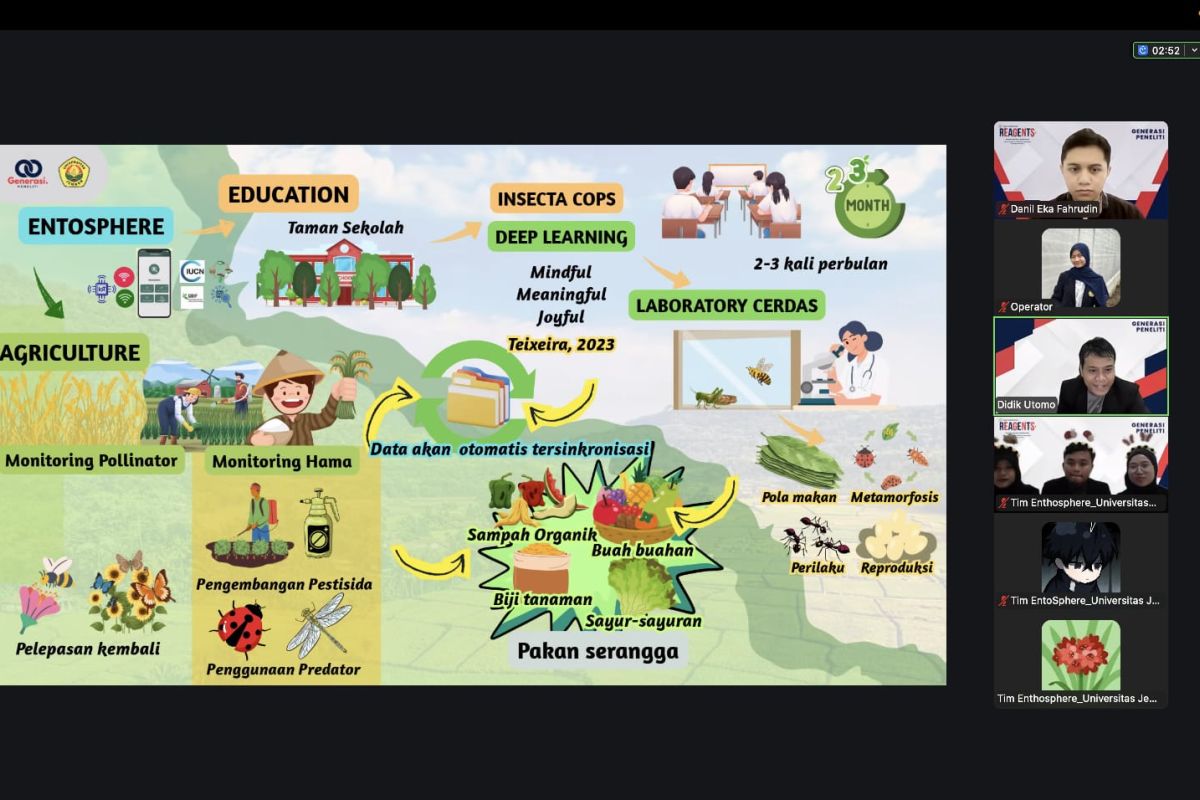
Jember, East Java — Three Biology Education students from the Faculty of Teacher Training and Education at Universitas Jember (Unej) have designed an innovation called EntoSphere, a concept for an intelligent digital-based insect laboratory aimed at preventing the extinction of rare insects whilst preserving the natural environment.
The three students are Nadzar Thariqy Achsan, Melsanda Aprilina, and Fahilah Ayu Safitri. The innovation serves as an educational solution to address concerns about declining insect populations, whilst creating an application-focused approach to biology education in ecosystem preservation.
“Our concern for insect conservation stems from the low public awareness of the crucial role insects play in maintaining ecological balance,” said Nadzar Thariqy Achsan in Jember on Thursday.
EntoSphere is not merely a conventional enclosure, but rather an interactive laboratory that integrates artificial intelligence (AI) technology and automated sensors (Internet of Things). The concept uses temperature sensors and specialised cameras to monitor insects without disrupting their natural activities.
“The proposed AI technology is capable of recognising species types and automatically analysing insect activity patterns,” he explained.
He elaborated that the integration of such technology enables systematic and real-time collection of natural data, making insect population monitoring more accurate and standardised.
If implemented in schools, the EntoSphere concept would engage students in enjoyable learning through the Insecta Cops programme. Here, students are encouraged to analyse the relationship between environment and insect behaviour based on actual field data.
“This approach strengthens scientific literacy, analytical ability, and multidisciplinary integration between biology, technology, and data analysis, ensuring that the learning process extends beyond conceptual understanding to evidence-based and hands-on experience,” he said.
He expressed hope that the idea would motivate other students to continue innovating and appreciate the institutional support that provides students with space to develop creative ideas.
“A supportive environment is crucial in fostering the courage to try and compete,” he said.
He also motivated other students not to hesitate in starting and not to fear failure, as the process of attempting, learning, and persisting is ultimately what leads to achievement.