
Unej Researcher Develops Method for Detecting Digital Image Forgery
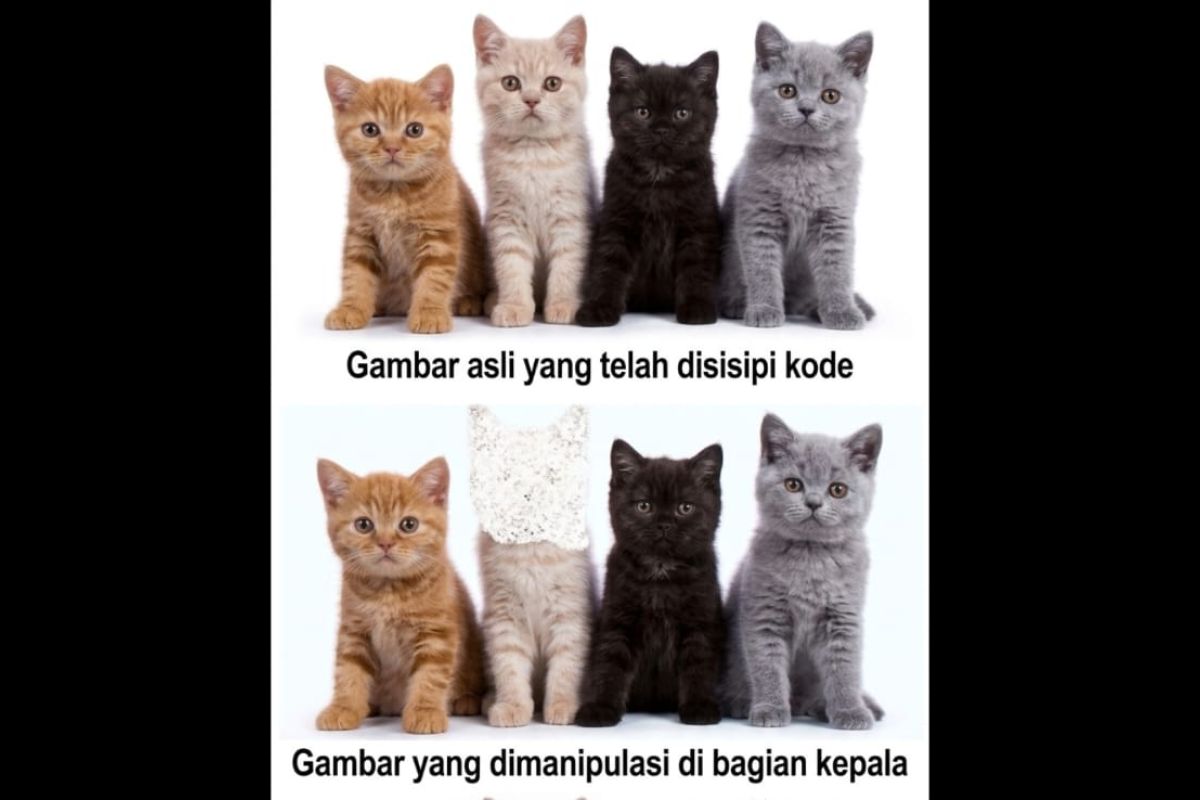
Jember, East Java - A researcher and professor at the Faculty of Mathematics and Natural Sciences at the University of Jember (Unej), Prof Kiswara Agung Santoso, has developed a method for detecting digital image forgery that utilises the simple mathematical concept known as a magic square. “The method works like a hidden watermark that can detect and clearly indicate the parts of the image that have been manipulated,” he said in a written statement in Jember Regency, East Java, on Tuesday. In the digital era, image manipulation has become increasingly easy, with various photo editing applications available on mobile devices and computers, allowing anyone to alter images in seconds, and the results often appear highly convincing, making them difficult to distinguish from original images. This situation prompted him to seek an authentication method that not only detects whether an image has been modified but also clearly shows which parts have been altered. “The inspiration came from photos on social media. For example, attaching someone’s head to another person’s body, making it look as if it’s real. From there, the question arose: is there a way to show which parts have actually been manipulated,” he said. From this thinking, Kiswara developed an image authentication method that utilises steganography techniques, which is a way to hide ‘secret codes’ within an image without damaging its appearance. The code is built using the concept of a 3×3 magic square, an arrangement of numbers in a square where the sum on each row, column, and diagonal is always the same. This mathematical balance is then used as a kind of ‘digital fingerprint’ for the original image. “To the naked eye, the difference between the original image and the secured image is almost impossible to distinguish by the human eye,” he stated. When the image’s authenticity is checked, the system examines whether the hidden number pattern in each square still complies with the magic square rules. If there is any change, no matter how small, including brightness adjustments, the pattern will be disrupted. The system then automatically marks the manipulated area in white, allowing users to immediately see clearly which parts of the image have been altered. To ensure the method’s performance, Prof Kiswara and his team conducted simulations of extreme manipulations, where replacing the head or body of an object in a photo with another object resulted in the system accurately marking the manipulation area in white. Even changes as small as one pixel can be detected by the system. “The principle is that every pixel in the image is interconnected. Through the magic square concept, the sum of values in rows, columns, and diagonals must be the same. When a part does not meet that pattern, that’s where indications of manipulation can be found,” he said. The method, initially published at the international conference IC-MaGeStiC, has now been officially registered as Intellectual Property (HKI) in the name of the Unej researcher. “I want to emphasise that mathematics does not just stop as theory in the classroom, but has tremendous potential to solve real problems in society,” he stated.