
Unej Lecturer Researches Prehistoric Plants in Ijen Geopark
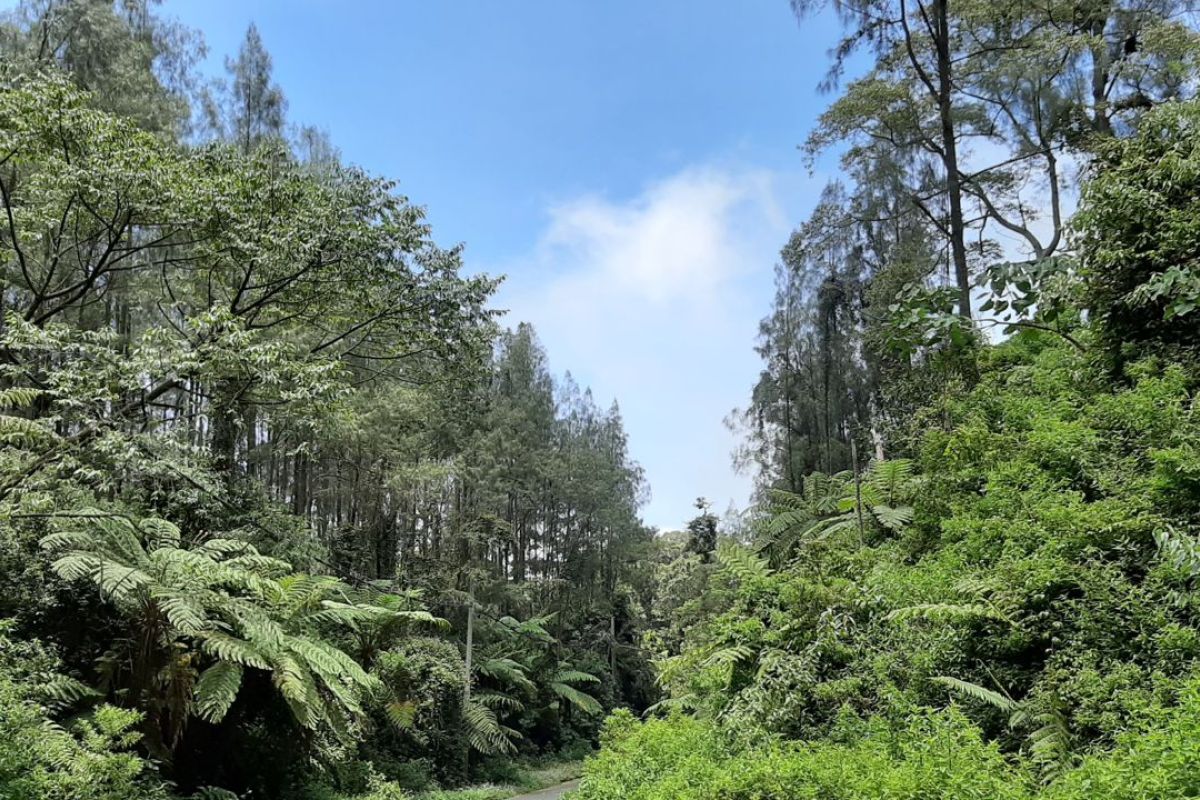
Jember, East Java - A lecturer from the Biology Study Programme at the Faculty of Mathematics and Natural Sciences, University of Jember (Unej), is researching prehistoric plants in the Ijen Geopark, particularly in the Erek-erek Geoforest area in Banyuwangi Regency, East Java, which boasts extraordinary natural resources.
Fern plants from the genus Cyathea are considered prehistoric plants because they are estimated to have existed on Earth since 65 million years ago, and these plants are found in the Erek-erek Geoforest area in Banyuwangi.
“We have found two types of tree ferns in the Erek-erek Geoforest area, namely Cyathea contaminans and Cyathea orientalis,” said one of the lecturers and researchers from the Faculty of Mathematics and Natural Sciences at Unej, Prof. Hari Sulistyowati, in Jember on Wednesday.
According to her, the tree ferns grow abundantly in the Erek-erek Geoforest, located at an elevation of between 1,600 and 1,700 metres above sea level, which falls within the Perhutani Western Banyuwangi Region.
She stated that the preservation of the forest in the Erek-erek area is also due to its topography, as the region is fortified by the landscape of Mount Rante.
“We suspect that this landscape protected the Erek-erek area from the ancient eruption of Mount Ijen in the past. It is no wonder that its condition remains well-preserved, much like thousands of years ago,” she said.
Hari and her team were amazed by the natural conditions when they began their research in the Erek-erek Geoforest, feeling as though they had entered a forest from the dinosaur era.
“The presence of tree ferns, which are ancient plants, along with their supporting environment, is certainly fascinating to study. Currently, experts from the Biology Department of FMIPA Unej continue to research this,” she said.
“It is hoped that the research results will enrich the knowledge base regarding tree ferns, which are living fossils because their form has hardly changed since prehistoric times,” she added.
The Unej lecturer is also researching other natural resources in the Erek-erek Geoforest, from the environment and plants to the animals present, because they are truly extraordinary and can serve as sources of knowledge and opportunities for further research.
It is no surprise, then, that the Erek-erek Geoforest area is classified as a High Conservation Value (HCV) or High Conservation Value Area (KBKT). KBKT is a concept for identifying areas with significant biological, ecological, social, or cultural values.
HCV is used to protect biodiversity, ecosystem services, and community needs. Its importance means that all parties must contribute to its preservation.
“Therefore, the condition of the Erek-erek Geoforest must be protected together, as it is an invaluable treasure for the Tapal Kuda region,” she said.