
Unej and Perhutani collaborate on research and food security in Jember
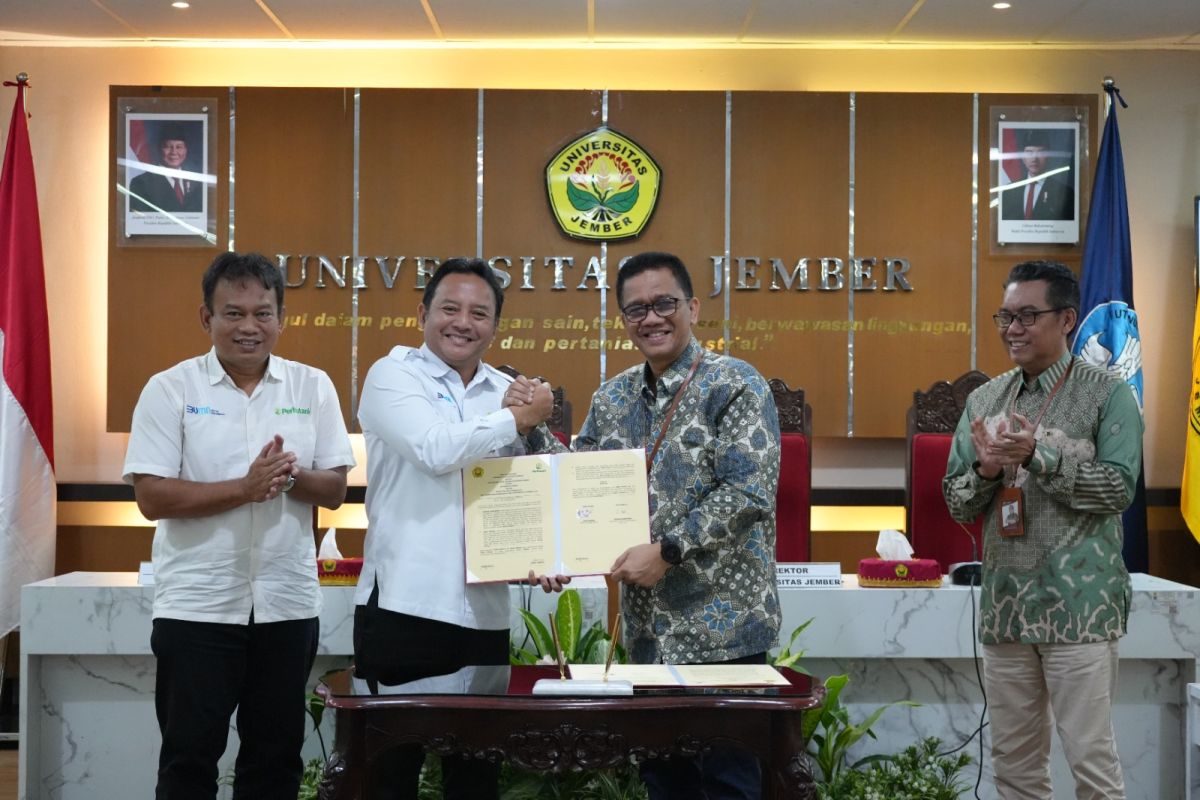
Jember, East Java — Jember University (Unej) and Perum Perhutani East Java Regional Division have established a collaboration for research and food security in Jember Regency, as the regency is home to the most comprehensive forests in the province, stretching from highland ecosystems to coastal areas.
Both parties have officially agreed to a strategic partnership through the signing of a Memorandum of Understanding (MoU) attended by Unej Rector Iwan Taruna and Perum Perhutani East Java Regional Division Head Wawan Triwibowo at the Unej Rectorate on Thursday.
“The forests in Jember are comprehensive, ranging from highlands to the seaside, all are present here. This could serve as a forestry laboratory for the education sector,” said Wawan Triwibowo, Head of Perum Perhutani East Java Regional Division, at the Unej campus.
“The real challenges at present, such as climate change and poor forest conditions in riverine areas, are significant. Perhutani has noted that only approximately 680 hectares of the region truly remain as pristine and healthy forest out of the total millions of hectares in existence, as the remainder has experienced degradation and conversion into maize farmland by local communities,” he said.
In implementation, Perhutani will provide forest areas as field activity locations for students and technical guidance support in the field, whilst the university will prepare academic support, supervisors, and funding for student activities involved in the programme.
The cooperation agreement is valid for two years, from 12 March 2026 to 11 March 2028, and will be implemented through various research programmes, field practices, internships, and other scientific activities that support sustainable forest management and enhancement of student competencies.
With this collaboration, it is hoped that the synergy between the academic world and state forest managers can further strengthen the development of scientific knowledge, conservation of biodiversity, and community empowerment in the surrounding forest areas.
Meanwhile, Unej Rector Iwan Taruna welcomed the development and stated that the university has a moral and academic responsibility to contribute to sustainable natural resource management and emphasised that current forest management must shift from merely focusing on production towards the preservation of development that has genuine impact.
“The university wants to ensure it can facilitate communities through collaboration that has direct impact. Through this cooperation that is open to all faculties, we want to optimise forests as a source of livelihood, especially at a time when the nation is focused on food security,” he said.