
Understanding What CNG Is and Its Differences from LPG
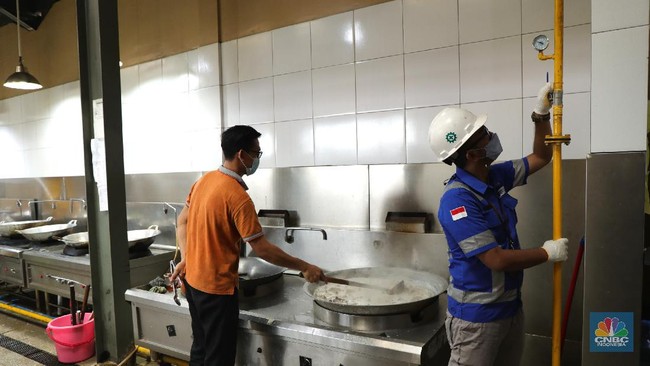
Jakarta, CNBC Indonesia - The Ministry of Energy and Mineral Resources (ESDM) is promoting the creation of alternative energy to replace Liquefied Petroleum Gas (LPG) for household needs. That energy is compressed natural gas or Compressed Natural Gas (CNG).
Currently, the Ministry of ESDM is conducting trials for the use of CNG with a smaller capacity of 3 kilograms. The use of CNG has actually already been implemented for the transportation, hospitality, and restaurant sectors with larger sizes of 12 kg to 20 kg or so.
The promotion of CNG use is also to support the government’s efforts to curb the extremely large LPG imports. Understandably, domestic LPG needs reach 8.6 million tonnes per year, but the government can only produce 1.6-1.7 million tonnes domestically, meaning the rest still relies on imports. If calculated, the portion of domestic LPG imports reaches 80-84% of domestic needs.
So, what is CNG? See the following review.
Definition and Specifications of CNG
Referring to the definition from Presidential Regulation No. 64 of 2012 on the Provision, Distribution, and Pricing of Gas Fuel for Road Transportation, CNG is a gas sourced from earth gas with methane (C1) elements.
That gas is compressed and stored in special pressure cylinders to make it easier to transport, store, and use as vehicle fuel.
Citing the official website of PT PGN (PGAS), natural gas itself consists of a mixture of elements such as hydrocarbons comprising methane (C1), ethane (C2), propane (C3), and butane (C4). CNG itself consists of 95% methane content.
Given the diversity of natural gas elements, their processing and utilisation also vary. Natural gas can be processed into LPG, Liquefied Natural Gas (LNG), including into CNG.
Understanding CNG is often accompanied by an understanding of LPG and Liquefied Natural Gas (LNG). However, it should be noted that CNG, LPG, and LNG are three different things.
The main difference between CNG, LPG, and LNG lies in their physical state and storage pressure. CNG is stored in gaseous form at high pressure, while LPG is in liquid form at moderate pressure and temperature. LNG, on the other hand, is transported in liquid form at very low temperatures.
Advantages
Citing the official website of PT PGN, CNG has several advantages in its utilisation, some of which include:
Low Emissions: CNG produces lower emissions compared to conventional fuels, helping to reduce air pollution.
Stable Prices: CNG prices tend to be more stable compared to other fossil fuels because natural gas is less subject to oil market fluctuations.
Sustainable Energy Source: CNG is obtained from abundant natural gas sources, making it a sustainable and environmentally friendly option.
In addition, the Indonesian Liquefied & Compressed Natural Gas Companies Association (APLCNGI) once revealed several advantages of using CNG as an alternative replacement for LPG for public needs.
APLCNGI Chairman Dian Kuncoro explained that Indonesia currently has far more abundant earth gas reserves compared to crude oil reserves. According to him, CNG offers distribution flexibility because it can reach remote areas that are difficult to access by conventional gas pipeline networks.
“Speaking about the utilisation of earth gas for households, one of the effective and efficient ways that already exists is indeed through pipeline clusters. And that can serve areas far from pipelines,” he said at a discussion event by ASPEBINDO, quoted Friday (8/5/2026).
In addition, another advantage from the gas storage technology side is shifting to using composite or carbon materials. Innovations in CNG cylinders have much lighter weight and stronger durability compared to the Type 1 iron cylinders that have been used in the gas industry so far.
The use of CNG for the household sector can also be carried out through a pipeline clustering model that has been implemented in several areas such as Yogyakarta and Sleman. That scheme allows the public to enjoy gas flow without having to fully rely on the availability of the national transmission pipeline infrastructure.
Furthermore, the use of CNG also has economic advantages in terms of more stable business economics.
Disadvantages
From the various advantages of CNG that have been described, this type of gas is not without its drawbacks. Citing the PT PGN website, CNG disadvantages include:
Limited Infrastructure: CNG refilling infrastructure is still limited in some areas, limiting its accessibility.
Storage Space: CNG requires sufficient storage space, especially for motor vehicles, because natural gas needs to be compressed at high pressure.
Potential Risks
Citing research in the Journal of Safety Science and Resilience released on the Science Direct website in September 2024 titled “Compressed Natural Gas (CNG) as a fuel and the associated risks: A quantitative analysis in the scenario of a developing country”, it is mentioned that CNG still has several potential risks in its use.
From the four categories of potential risks studied, namely system/infrastructure risks, human error, economic risks, and environmental risks, the risks of using CNG are generally considered low.
However, the research shows that unsafe CNG refilling station designs can be a significant risk from the system/infrastructure potential risk category. The research indicates this is the risk with the highest value.
Designing CNG stations is an expensive process, with costs between $675,000 and $1,000,000, depending on size and application, especially in developing countries like Pakistan. These costs include machinery and installation costs.
To save costs and achieve economies of scale, CNG station owners often neglect safety components