
Understanding Trump's New Nickname in the US-Iran War Era: TACO
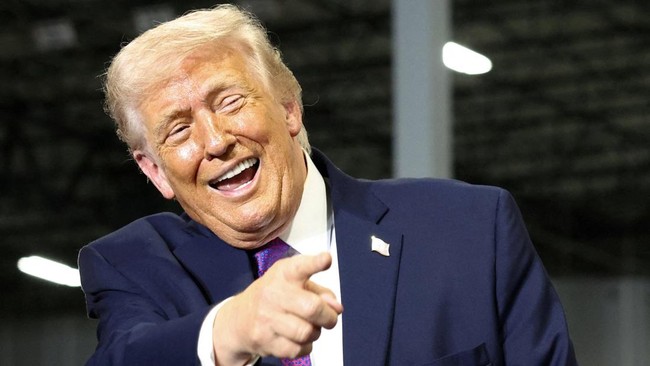
The conflict between the United States (US) and Iran, which heated up for around 40 days, ended with a temporary ceasefire, while also giving rise to the nickname TACO for US President Donald Trump, an acronym for “Trump Always Chickens Out” or “Trump always backs down.”
Citing CNN International on Wednesday (8/4/2026), the term emerged following Trump’s decision, which had previously threatened major escalation against Iran, but instead announced a two-way ceasefire in the final minutes.
“That day began with threats of massive destruction, but ended with the world trying to understand Trump’s decision to back down,” read the depiction of the unfolding situation, quoted on Wednesday (8/4/2026).
Trump had previously warned that Iran’s “entire civilisation” could be destroyed, before ultimately claiming victory and announcing the postponement of military escalation via the Truth Social platform.
“Two-sided ceasefire!” Trump wrote. He also stated that Iran had agreed to open the Strait of Hormuz in a “full, immediate, and safe” manner.
However, that claim was immediately refuted by Tehran. Iran’s Foreign Minister Abbas Araghchi emphasised that his country still controlled access to that strategic route.
“For two weeks, safe passage through the Strait of Hormuz will be possible through coordination with Iran’s Armed Forces,” he wrote.
This narrative discrepancy triggered global confusion, particularly because the Strait of Hormuz is a vital route for world oil distribution. The uncertainty briefly shook markets before calming down following news of the ceasefire.
The TACO Nickname and Credibility
Amid these dynamics, the term TACO came under the spotlight. Critics assessed Trump’s pattern of frequently issuing maximalist threats and then backing down as repetitive.
If Iran truly maintains control over the Strait of Hormuz during the ceasefire, this is seen as reinforcing the perception that Trump lacks a strong bargaining position.
However, on the other side, Trump’s supporters view this move as a negotiation strategy. They believe the extreme pressure exerted by Trump successfully pushed Iran to the negotiating table.
The polemic does not stop there. Trump’s statement mentioning the possibility of mass destruction of Iranian civilians drew widespread condemnation from various parties in the US.
White House spokesperson Karoline Leavitt once said, “Only the President knows the situation and what he will do.” This statement sparked concerns about the concentration of power in the president’s hands without adequate oversight.
Republican Senator Lisa Murkowski sharply criticised the rhetoric. “Rhetoric like this is an insult to the ideals that our nation has promoted for nearly 250 years,” she wrote.
Meanwhile, Democratic Senator Jack Reed assessed that Trump had “become a fanatic like the leaders of the regime in Tehran.”
Global Risks and Constitutional Questions
Behind the easing of the conflict, several analysts believe this interim outcome leaves long-term risks.
If Iran gains greater influence over the Strait of Hormuz, the country could potentially have significant leverage over the global economy, given that route’s crucial role in world energy distribution.
Additionally, Trump’s decision that nearly dragged the US into a major conflict without congressional approval has triggered serious constitutional questions regarding the checks and balances mechanism.
Although Trump’s backdown is seen as preventing potential humanitarian disaster, his leadership style, deemed impulsive and unpredictable, is now under global scrutiny.
The TACO nickname thus becomes a symbol of criticism of that approach, whether as a high-risk negotiation strategy or a sign of inconsistency in US foreign policy.