
Understanding the Mudik Phenomenon: A Historical Footprint from the Majapahit Era to Digital Modernity
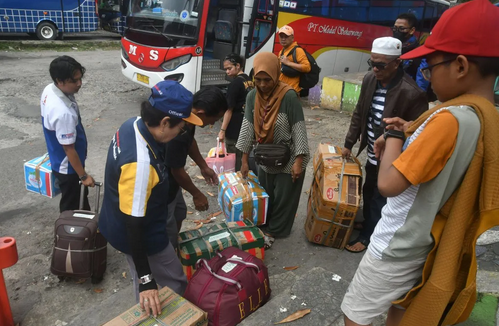
Mudik is not merely seasonal migration or an annual ritual to relieve longing. In Indonesia, mudik is a complex social institution involving millions of people, trillions of rupiah circulating in the economy, and a collective memory that has endured for centuries. The phenomenon has become an inseparable part of the nation’s identity, which upholds values of family ties and origins.
The traces of mudik can be traced back to the heyday of the Majapahit Kingdom and the Mataram Islam. Historians note that officials assigned to distant territories were required to return to the royal centre at certain times. The aim was to face the King (sowan) and to cleanse ancestral graves in the hometown.
This tradition later experienced acculturation as Islam spread across the archipelago. Eid al-Fitr, emphasising purification and mutual forgiveness, became the most opportune moment to carry out this mass ‘return to roots’ ritual.
There is an interesting debate about the origin of the word ‘mudik’. Linguistically, there are two main theories often cited:
From an economic perspective, mudik is the most effective wealth redistribution phenomenon in Indonesia. Money gathered by migrants in big cities over the year is brought home and spent in their home regions. This creates an extraordinary surge in household consumption in rural areas.
Sectors most positively affected include:
- When did mudik begin to become a massive urban phenomenon?
This phenomenon exploded in the 1970s when Jakarta became a magnet for urbanisation. Since then, the government began paying particular attention to regulating mudik traffic flows.
- What is the philosophical meaning of mudik?
Mudik signifies ‘returning to roots’ or returning to origin. It is humanity’s effort to rediscover its identity after a year contending with worldly routines away from home.
- Why is mudik in Indonesia unique compared to other countries?
Its uniqueness lies in the duration of leave, the number of participants reaching hundreds of millions, and the tradition of ‘sungkeman’, deeply imbued with Eastern cultural values.
Entering 2026, the face of mudik has changed substantially thanks to technology. The Intelligent Transport System (ITS) now helps travellers monitor road congestion in real time via AI. Contactless toll payments and integrated ticketing make journeys more efficient.
However, one thing that cannot be replaced by technology — even the most advanced holograms or 3D video calls — is physical presence. The touch of a parent’s hand during sungkeman, the aroma of home-cooked meals, and the warmth of conversations on the village terrace remain the main magnet attracting millions of people to continue mudik every year.
In conclusion, mudik is a blend of historic past, present economic needs, and future hopes. It will continue as long as humans have a ‘home’ to return to.
Copyright @ 2026 Media Group - mediaindonesia. All Rights Reserved