
Understanding the differences between LPG, CNG and LNG
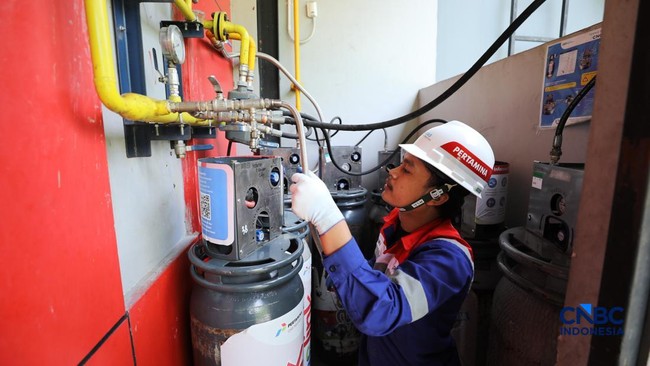
Jakarta, CNBC Indonesia — The Ministry of Energy and Mineral Resources (ESDM) has begun promoting the use of natural gas as an alternative energy to reduce dependence on imported LPG. However, amid these efforts many people remain confused about the differences between LPG, Compressed Natural Gas (CNG) and Liquefied Natural Gas (LNG). Director General of Oil and Gas (Dirjen Migas) Laode Sulaeman of the Ministry of ESDM explained that the three energy types have distinct characteristics—from content and form to distribution methods. ‘So if LNG and CNG have the same content, both predominantly C1 with a small amount of C2. But LPG is C3 and C4. Our fields are few that produce LPG,’ Laode said in a Podcast event quoted on Tuesday (19 May 2026). According to Laode, LPG gas is dominated by propane (C3) and butane (C4), thus normally in liquid form. Meanwhile CNG and LNG are dominated by methane (C1) and consequently naturally present as gas. ‘So LPG is C3, C4; its phase is liquid, we have only a little, so in 1993 and 1994 we began to think about it; although its implementation would be after 2000 to replace kerosene with LPG,’ he said. ‘Beyond composition, the main difference between CNG, LPG and LNG lies in their physical state and storage pressure. CNG is stored as gas under high pressure, whereas LPG is stored as a liquid at moderate pressure and temperature. LNG, by contrast, is transported as a liquid at very low temperatures.’ As is known, Energy and Mineral Resources Minister Bahlil Lahadalia revealed the government is studying the development of 3-kilogram CNG as an alternative to subsidised LPG. According to Bahlil, this step is taken to reduce Indonesia’s dependence on LPG imports that continue to burden the country’s foreign exchange. ‘This CNG for 3 kilograms is still being exercised and tested on its cylinders. This CNG is expected as part of seeking one of the alternatives to substituting our large import dependence,’ Bahlil said after a ceremony at the Ministry of ESDM on Thursday (7 May 2026). Bahlil explained that to meet domestic consumption, Indonesia’s LPG imports currently reach around 8.6 million tonnes per year. This situation forces the government to spend a sizeable amount of foreign exchange each year. ‘Imagine we import 8.6 million tonnes per year for consumption. At the same time, our foreign exchange each year is only to buy LPG, around Rp 130 to Rp 140 trillion. Moreover if world oil prices are as they are now, that would surely be bigger. And our subsidy is around Rp 80 to Rp 87 trillion,’ he said.