
Understanding the combination of Well-C technique and Laser Hemorrhoidoplasty (LHP) to treat haemorrhoids, says Dr Tony Sukentro
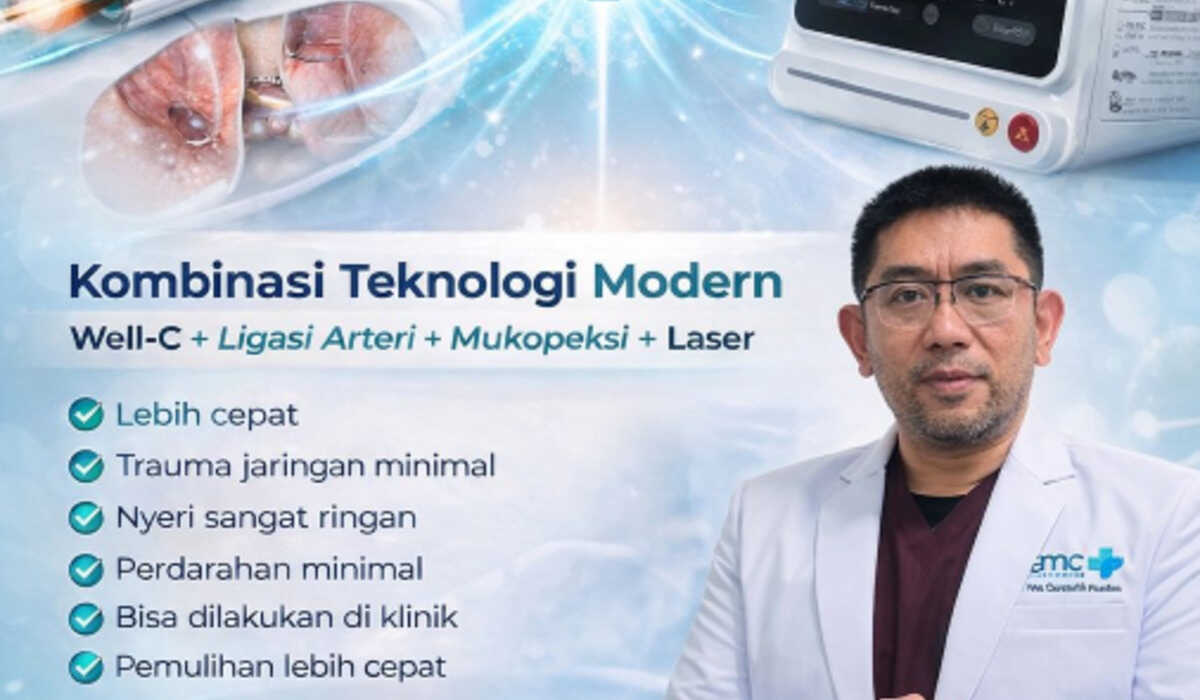
Treating haemorrhoids quickly, with minimal trauma and a short recovery, is a priority for patients. The method now available in the medical field for treating haemorrhoids with these advantages is the combination of Well-C technique and Laser Hemorrhoidoplasty (LHP).
This innovation in proctology (the health of the anus and rectum) was introduced by one of Indonesia’s leading surgeons, Dr Tony Sukentro, SpB, FICS, FISCP, FINACS. The method offers a fast, low-trauma haemorrhoid procedure with short recovery without the need for spinal anaesthesia (a form of regional anaesthesia) typically employed in large hospitals.
Dr Sukentro, who has more than 17 years of experience, explained that the innovation stemmed from clinical needs in the field. Often, surgical procedures are hindered by anaesthetic facilities, while patients require urgent treatment.
‘The combination of Well-C and Laser LHP allows the procedure to be performed more quickly and effectively, even in clinics with local anaesthesia or light sedation,’ he said in a written statement on Thursday, 5 March.
The Well-C technique is a surgical approach that prioritises the physiology of the anal canal. Unlike conventional surgery that often leaves large incisions, Well-C focuses on the basic principles. After the core Well-C principle is applied, the next stage is the use of laser energy. The laser energy works by destroying small blood vessels and reducing the volume of haemorrhoidal tissue from within without large incisions.
‘Because the laser operates from within the tissue, the risk of bleeding becomes very small and postoperative pain is minimal. Patients can go home and resume activities more quickly,’ he added.
Advances in medical technology are bringing breakthroughs in the treatment of haemorrhoids and fistulas using laser-based, pain-minimising methods.