
Understanding the Bantargebang Integrated Waste Management System and Its Impact on the Ecosystem
Headline
Indonesia suspends discussion on the Peace Council.
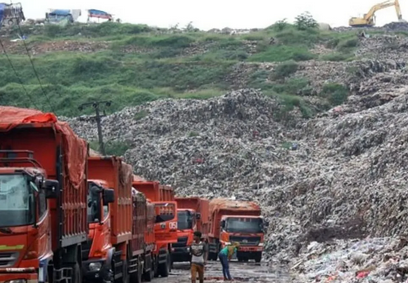
The Bantargebang Integrated Waste Management Facility (IWMF) is no longer merely a final disposal point. As 2026 begins, this 110.3-hectare facility stands at a crucial crossroads. With garbage heaps reaching more than 50 metres in height, equivalent to a 16-storey building, Bantargebang has become a laboratory for the country’s largest waste-management technology.
By early 2026, the Bantargebang IWMF received an average of 7,500 to 8,000 tonnes of waste per day from Jakarta.
The total capacity of 70 million tonnes is believed to be more than 80% full.
The Jakarta Provincial Government and Bekasi City Government have agreed to extend the waste-management cooperation contract by another five years (2026-2031).
To extend the lifespan of the site, Bantargebang relies on two main technologies that underpin modern waste management:
Although waste industrialisation is underway, social aspects remain a primary concern.
The distribution of compensation funds, or ‘odor-compensation payments’ for residents of the three affected kelurahan (Cikiwul, Ciketing Udik, and Sumur Batu) continues to be integrated with efforts to improve environmental quality.
The focus in 2026 is to provide access to clean water through collaboration between PAM Jaya and PDAM Tirta Patriot to address leachate contamination.
Physically, the Bantargebang site is already very constrained.
Optimization is currently achieved through landfill mining (pumping out old waste) to process into RDF, creating space for incoming waste.
Jakarta has begun operating in-city waste processing facilities (such as RDF Rorotan) and strengthened upstream waste-reduction programs through a neighbourhood-level ‘sort waste’ movement at the RW level.
Waste is burned at high temperatures using incineration technology.
The heat generated is used to drive a steam turbine, subsequently producing electricity.
The Bantargebang IWMF in 2026 is a stark portrait of the urban ecological challenge.
The facility’s sustainability depends on balancing high-end technology downstream with Jakarta’s public awareness to reduce waste at source.
Without synergy between the two, the Bantargebang garbage mountain will continue to be an environmental time bomb for the surrounding area.
Copyright @ 2026 Media Group - mediaindonesia. All Rights Reserved