
Understanding Iran's Shahed Drone, the 'Poor Man's Cruise Missile' Against the US and Israel
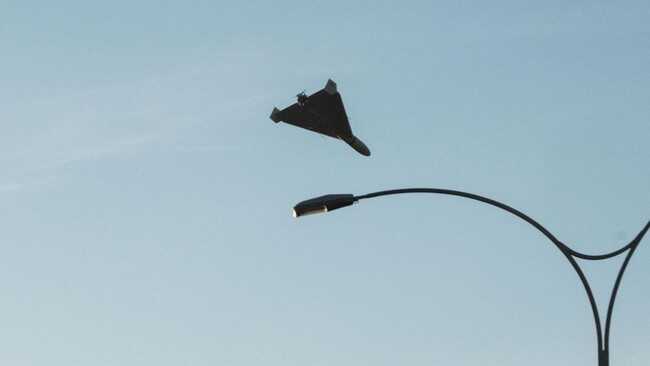
Iran’s ‘kamikaze’ Shahed drones have become Tehran’s flagship weapon against the United States (US) and Israel. After a military strike on Tehran by US President Donald Trump and Prime Minister Benjamin Netanyahu on February 28, the drone, which until now was used by Russia in fighting in Ukraine, retaliated by bombing Tel Aviv and several US military bases in the Middle East.
Yes, Shahed has become part of modern world warfare. Although at first glance the Shahed may appear unremarkable compared with other advanced weapons technologies, analysts sometimes refer to it as a ‘cheap cruise missile’, yet Shahed has repeatedly slipped past US defences such as Patriot missiles and struck its targets.
For example, the UAE Ministry of Defence said that 941 Iranian drones attempted to attack the country. A total of 65 fell within its territory, damaging ports, airports, hotels and data centres.
Analysts say the key to its effectiveness lies in the volume. The drone is relatively cheap and easy to mass-produce, especially compared with the sophisticated systems used to counter it. These factors make the drone ideal for mass strikes, potentially burdening air defences.
‘Shahed-136, among unmanned aerial systems, has allowed countries like Russia and Iran to impose disproportionate costs easily,’ said Patrycja Bazylczyk, a defence analyst at the Missile Defense Project at the Center for Strategic and International Studies in Washington, DC, in a CNBC International report on Friday (6/3/2026). ‘They force enemies to waste expensive interceptors on cheap drones, project power, and create a continual psychological burden on civilian populations,’ she added.
Cheap Drones: A US government report describes the Shahed-136 as a one-way unmanned strike aircraft produced by Iranian entities linked to the Islamic Revolutionary Guard Corps (IRGC). Compared with ballistic missiles, the drone flies at low altitude.
Public estimates put the cost of each Shahed at between US$20,000 (Rp 336 million) and US$50,000 (Rp 840 million). This contrasts with ballistic missiles and cruise missiles, which can cost millions of dollars per unit.
‘Essentially the Shahed acts as a ’cruise missile for the poor’ — offering a way to strike and disrupt an enemy at low cost,’ said Behnam Ben Taleblu, senior Iran programme director at the Foundation for Defence of Democracies.
‘For Iran, which faces international sanctions and restrictions on obtaining advanced weaponry, that cost advantage is highly significant,’ he added.
Meanwhile, air defence systems used by Gulf states and Israel can cost between US$3 million (Rp 50.4 billion) and US$12 million (Rp 201.6 billion) per interceptor. The price gap poses a serious problem for Iran’s enemies, with air defence systems possessing limited numbers of interceptors, and each intercepted target representing a costly asset expended.
Hence several analysts agree that in a war of attrition, drones could be used by Tehran to weaken air defences, even opening the door to more damaging strikes. ‘The logic is to use drones early while saving ballistic missiles for the long term,’ said Bazylczyk of CSIS.
Gulf states at risk of exhausting interceptors: The US has long sought to disrupt Shahed-136 production, and recently imposed new sanctions targeting suspected components suppliers in Turkey and the UAE. However, Shahed drone production by Russia shows that such systems can be produced at scale during wartime and amid targeted sanctions.
US officials claim Iran has launched more than 2,000 drones in the conflict up to Wednesday. Iran is believed to hold large inventories and could possibly produce hundreds more each week, according to military experts cited by The National.
‘Gulf states are at risk of exhausting their interceptors unless they are more careful about when they fire them,’ said Middle East security analyst Joze Pelayo of the Atlantic Council. ‘Shortages are not imminent, but they remain an urgent issue,’ he added. ‘Attacks on multiple fronts by Iran’s allies such as Hizbollah and the Houthis could deplete stockpiles within days,’ he added.
Shahed draws global attention: Shahed-136 was first introduced around 2021 and drew global attention after Russia began deploying weapons supplied by Iran during its invasion of Ukraine in 2022. The Kremlin has since received thousands of drones and started producing them based on Iran’s blueprint, highlighting a design that is replicable and scalable.
Some analysts argue that Iran has learned from Russia’s broad battlefield experience with drones, including modifications such as anti-jamming antennas, electronic-warfare-resistant navigation, and new warheads. These typically carry 30–50 kg of explosive and have substantial destructive power, especially when deployed in large numbers, with advanced variants capable of ranges up to 1,200 miles.
Michael Connell, a Middle East specialist at the Centre for Naval Analyses, says Shahed-136 has proven so effective that the US has reverse-engineered and deployed its own version on the battlefield against Iranian targets. In last weekend’s strike on Iran, United States Central Command confirmed that it had used Shahed-modelled drones for the first time in combat.