
Understanding Iran's Forbidden Island "Kharg" That Trump Bombed
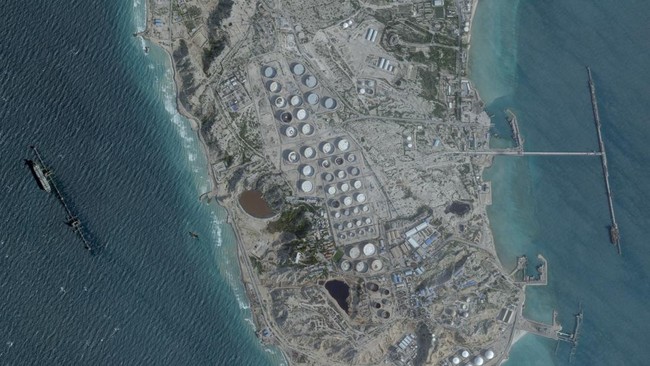
Kharg Island: Iran’s Forbidden Petroleum Hub
US President Donald Trump announced on Friday that he has bombed Iran’s oil hub at Kharg Island. In a post on Truth Social, he stated that the island, which handles almost all of Iran’s crude oil exports, has been “completely destroyed” in “one of the most devastating bomb attacks in Middle Eastern history”.
The President also uploaded video footage on the same social media platform showing attacks on Kharg’s airport facilities and runways. A US military official stated that the strike was “large-scale” but avoided the island’s oil infrastructure.
“Targets included sea mine storage facilities, missile storage bunkers, and other military infrastructure,” the official told CNN International.
This represents the latest development in the US-Israel war against Iran, which began on 28 February and resulted in the death of Iran’s Supreme Leader, Ayatollah Ali Khamenei. The US Navy is also set to begin escorting tankers through the Strait of Hormuz—waters through which 20% of global oil passes and which Iran has closed—in retaliation for US strikes, leading to a spike in global oil prices.
What Is Kharg Island?
According to AFP, Kharg Island is remarkably small, measuring only 20 kilometres across. The island is a coral atoll approximately one-third the size of Manhattan. Located some 25 kilometres off Iran’s coast in the Persian Gulf, local residents know it as the “Forbidden Island” due to strict military controls.
The Heart of Iran’s Oil Economy
The island has long been crucial to Iran’s economy. A CIA document from 1984 stated that the facility was “the most vital in Iran’s oil system and its continued operation is essential to Iran’s economic welfare”. Israeli opposition leader Yair Lapid recently stated that destroying the terminal would “cripple Iran’s economy” and could even “topple the regime”.
Every day, millions of barrels of crude oil flow to the island from Iran’s major fields, including Ahvaz, Marun, and Gachsaran. Oil is distributed via pipelines to the island. Satellite imagery shows the island features long docking facilities that extend into sufficiently deep waters to accommodate even the largest oil tankers, making it a vital distribution hub. The island processes 90% of Iran’s crude oil exports.
According to data from US investment bank JP Morgan, cited by Reuters, in the weeks preceding the US-Israel strikes on Iran, exports from Kharg had increased to near record levels. Storage capacity at Kharg is estimated at approximately 30 million barrels, with some 18 million barrels of crude oil currently stored there, according to global trading analysts Kpler. Since the war began, the island has been loading tankers “continuously”, according to TankerTrackers, an analysis based on satellite imagery, coastline photography, and shipping data.
Iran itself supplies approximately 4.5% of global oil. The country pumps 3.3 million barrels of crude oil and 1.3 million barrels of condensate and other liquids daily.
Consequences of the Strike
Iran has stated that any attack on its oil and energy infrastructure will result in retaliatory strikes against regional facilities owned by US-friendly oil companies. “This has evolved from simply ‘destroy the military, destroy the regime’ but now we are trying to destroy the economic lifeblood of this country, potentially,” said former US Army Brigadier General Mark Kimmitt.
Kimmitt suggested the US was using the island as leverage to ensure Iran allows ships to pass through the Strait of Hormuz, whose closure has caused crude oil prices to surge. If oil infrastructure becomes a target, Kimmitt warned, “it is clear that Iran will attack other infrastructure in the Middle East”.
Iran could escalate further by making good on its threats. So far, Iran has attacked oil storage tanks belonging to US allies Oman and Bahrain, and has targeted oil tankers and cargo ships in the Persian Gulf. Iran’s military, the Islamic Revolutionary Guard Corps (IRGC), has also threatened to set fire to oil and gas infrastructure in the region if Iranian energy sites are attacked.