
Understanding Iran's Advanced Missiles Capable of Reaching All U.S. Bases and Israeli Territory
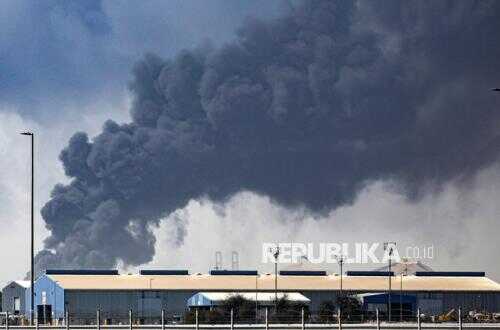
Tehran — The death of Supreme Leader Ayatollah Ali Khamenei in a joint airstrike by the United States and Israel on Saturday (28 February 2026) has transformed Iran’s military doctrine from mere deterrence to resistance for the Republic’s survival. President Masoud Pezeshkian stressed that exacting revenge for Khamenei’s death is a ‘duty and a legitimate right’ for Tehran.
Unlike the short war in June 2025, Tehran now views confrontation with the US-Israel alliance as a life-or-death battle. Without a modern air force, Iran relies on the largest missile arsenal in the Middle East as the backbone of its offensive. Here are the details of Iran’s missile capability as cited by Republika from Al Jazeera.
The hammer blow of ballistic missiles. Defence analysts say Iran’s missiles are designed to reach strategic targets without needing combat aircraft. Iran’s ballistic missiles have a range of 2,000 to 2,500 kilometres. The range of these missiles would be able to hit all of Israel and US bases in the Gulf, though not enough to reach the United States mainland.
Short-range missiles (150-800 km): Variants Fateh (Zolfaghar, Qiam-1) are used for rapid strikes against nearby military bases such as Ain al-Asad in Iraq. Their ability to be launched in large numbers (volleys) shortens the warning time for opponents’ air defences.
Medium-range missiles (1,500-2,000 km): Including Shahab-3, Sejjil, and Kheibar Shekan. Sejjil becomes a serious threat because it uses solid fuel, allowing much faster launch readiness compared with liquid-fuel missiles.