
Understanding Godzilla El Niño and Its Impact on Forest and Land Fires in 2026
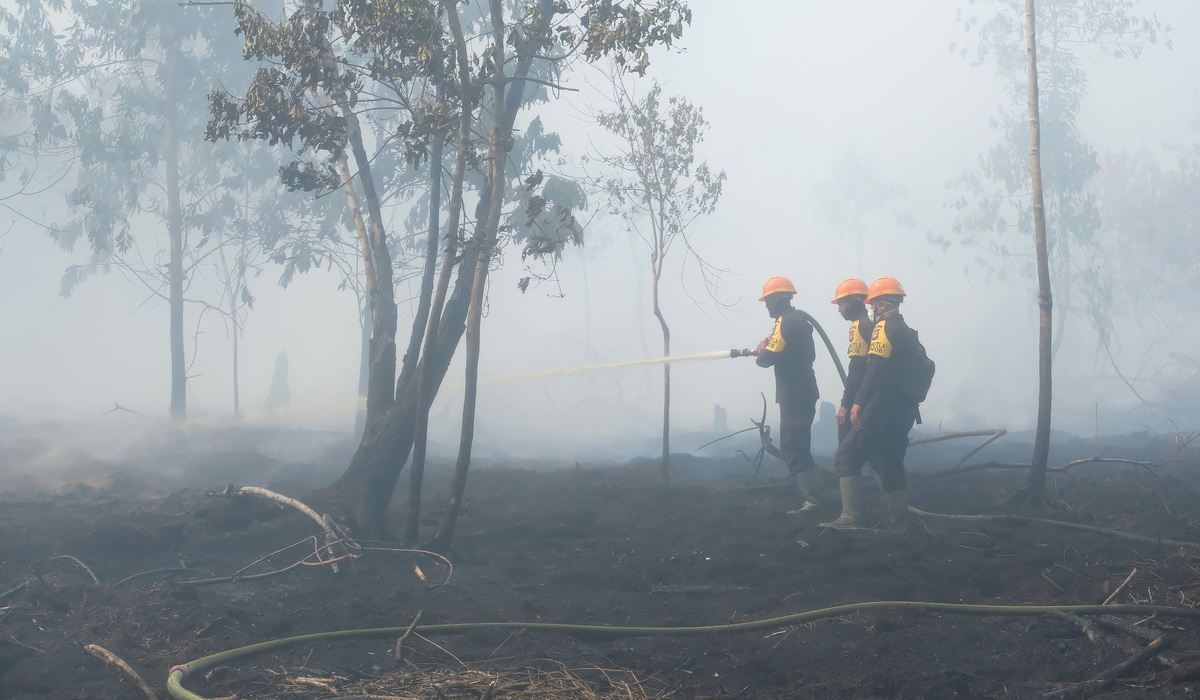
The extreme climate phenomenon known as “Godzilla El Niño” is predicted to significantly increase the risk of forest and land fires (karhutla) in Indonesia in 2026. This condition is triggered by anomalously hot sea surface temperatures in the Pacific Ocean, causing a drastic decline in rainfall across Indonesian regions throughout the 2026 dry season.
The term “Godzilla El Niño” was first popularised by NASA climate experts to describe an unusually strong and atypical intensity of El Niño. Unlike moderate El Niño events, the “Godzilla” category refers to sea surface warming in the equatorial Pacific zone that exceeds normal thresholds over an extended duration. This phenomenon massively disrupts global atmospheric circulation patterns.
In Indonesia, the primary impact of this event is a dry season that is far drier and longer than usual. This results in reduced groundwater availability and the drying out of vegetation in peatlands and mineral forests.
Regarding the potential for karhutla in 2026, meteorological experts warn that if Godzilla El Niño occurs, the vulnerability of high-risk areas such as Riau, Jambi, South Sumatra, and Kalimantan will multiply several times over. Dry land becomes highly flammable, even from minor ignition sources.
To date, specific data on the intensity of El Niño for the second quarter of 2026 remains under intensive monitoring by national and international meteorological agencies. Information on the certainty of this phenomenon’s strength is being further validated.
The government and relevant authorities are urged to strengthen mitigation measures from the outset. Although climate prediction technology is advancing, weather uncertainty persists. Therefore, vigilance against potential surges in karhutla hotspots due to Godzilla El Niño must be a priority in this year’s national environmental protection agenda.
The National Disaster Management Agency (BNPB) is enhancing national preparedness to face the potential for forest and land fires (karhutla) in 2026.
The Meteorology, Climatology, and Geophysics Agency (BMKG) is conducting weather modification in Riau and Natuna to prevent karhutla. Rainfall has increased by up to 36% as an early mitigation step for the dry season.
Hotspots for karhutla in 2026 have risen nearly threefold to 700 points. The area of burnt land has also surged twentyfold, with the government urging regions to be on alert.
The threat of forest and land fires (karhutla) looms over Indonesia again in 2026 with the emergence of the extreme climate phenomenon called Godzilla El Niño.
The Ministry of Agriculture (Kementan) assures that Indonesia is prepared to face the potential impacts of El Niño, supported by food stocks at the highest levels in history.
The BMKG warns that the Godzilla El Niño phenomenon will trigger extreme dry conditions in Jambi starting in May 2026. Be alert to drought and karhutla in peatlands due to low rainfall.