
Understanding cocktail party deafness, a sign of hearing loss in elderly people
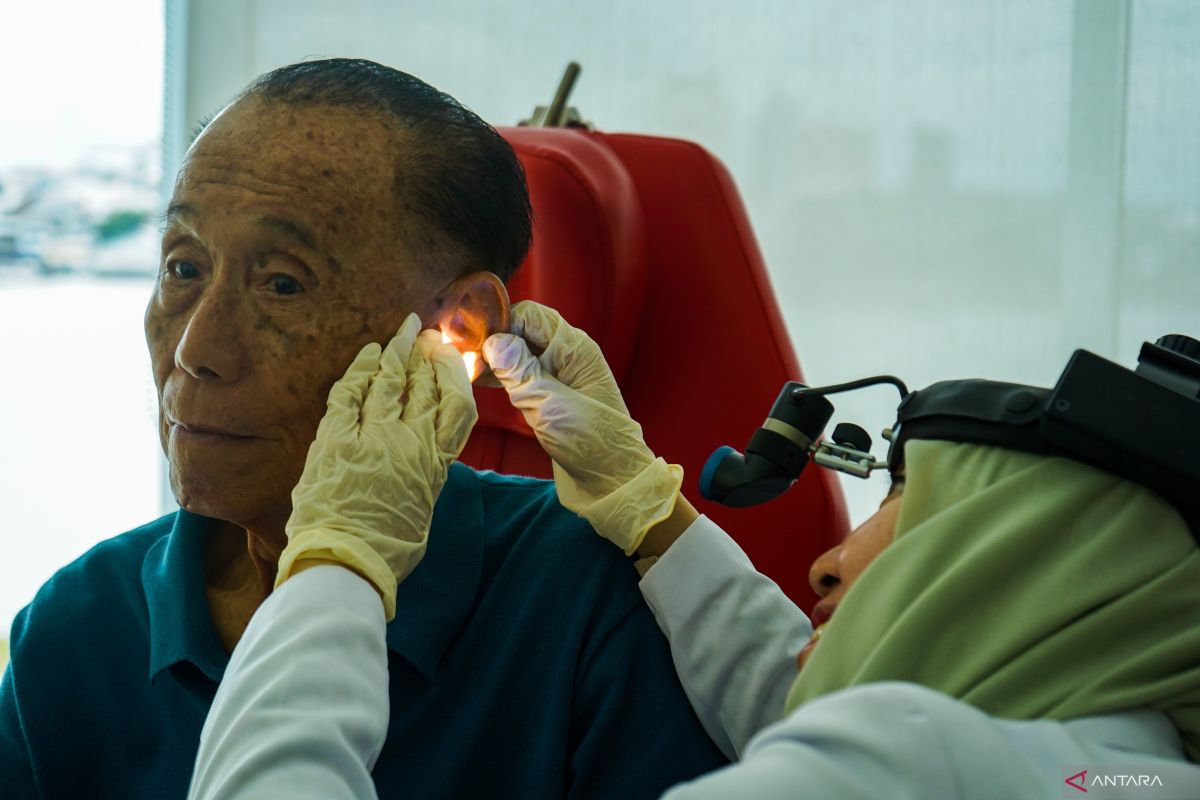
Jakarta - Professor Dr Jenny Bashirudin, an ear, nose and throat specialist and head and neck surgeon from the National General Hospital Dr Cipto Mangunkusumo (RSCM) in Jakarta, has explained that hearing loss in elderly people is characterised, among other symptoms, by “cocktail party deafness.”
“Usually in a crowded place, the elderly person finds they cannot hear. This is called cocktail party deafness,” said the specialist from RSCM during an online discussion forum on Monday.
“So when it is noisy and there are many people, they begin to hear unclearly, or when attending a meeting they also start to hear unclearly and feel uncomfortable,” she said during the discussion broadcast live on the RSCM Kencana Instagram account.
Beyond cocktail party deafness, she noted that elderly people with hearing loss typically complain of hearing ringing in their ears even when there is no sound source nearby. This sensation, called tinnitus, indicates damage to the cochlea, the spiral-shaped part of the inner ear, according to Dr Jenny.
Elderly individuals with impaired hearing typically watch television at high volume and frequently ask conversation partners to repeat themselves during communication.
“All of these should serve as indicators to check how hearing function is working, so that we know, because if hearing loss is detected early, it can be managed,” said Dr Jenny, a member of the Indonesian Association of Ear, Nose and Throat Specialists and Head and Neck Surgeons (PERHATI-KL).
She explained that hearing loss in elderly people can occur due to degenerative processes that affect the function of the hearing bones and cochlea. Problems in the cochlea can make it difficult for elderly individuals to hear and communicate, thereby reducing their quality of life.
Screening to detect and manage hearing loss in elderly people early is important to maintain hearing function for daily communication needs.
The World Health Organisation estimates that more than 400 million individuals worldwide experience hearing loss. The incidence of hearing loss increases with age, with its prevalence nearly doubling every ten years of a person’s life.
Treatment and management of hearing loss in elderly people is based on comprehensive diagnostic evaluation and assurance that all additional causes have been addressed. Specific treatment of hearing loss depends on diagnosis of the most likely underlying cause, according to a scientific paper on hearing loss in elderly people written by Dylan Z Erwin and Philip Chen.