
Underpass more realistic for reducing accident risks at level crossings
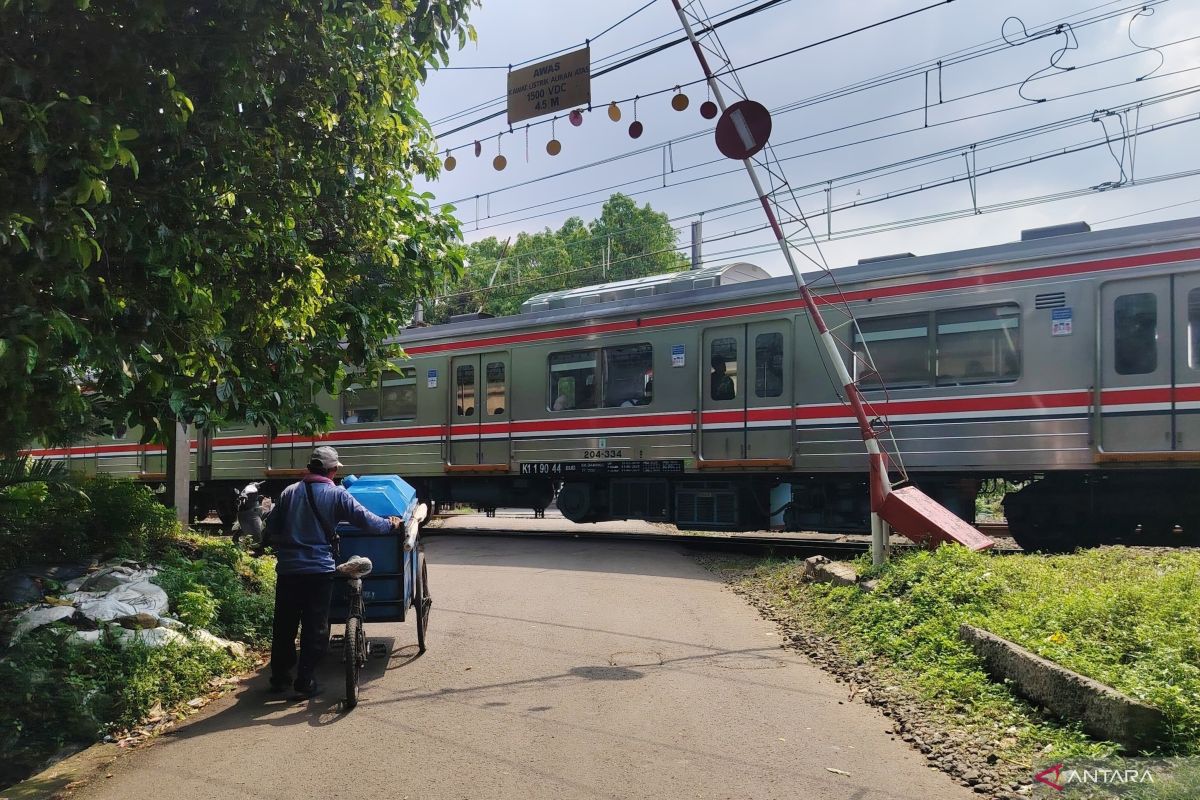
Jakarta (ANTARA) - Transportation expert Ki Darmaningtyas believes that constructing underpasses is more realistic than flyovers for reducing accident risks at level crossings. “If there is funding, underpasses might be better,” Darmaningtyas said when contacted in Jakarta on Monday. According to him, building flyovers requires significant costs, making it difficult to implement widely. As an alternative, he suggests constructing underpasses, which are deemed more feasible in terms of financing and implementation. “The government does need to add more crossing points for those level crossings,” he stated. Besides infrastructure factors, Darmaningtyas once again reminded of the importance of public awareness in using crossings safely. According to him, physical development must be accompanied by education so that the public does not violate rules. He assesses that the existence of illegal crossings is not entirely the government’s responsibility, as many emerge due to community access needs or area development. Thus, Darmaningtyas emphasised that a combination of underpass construction, supervision, and public education is key to reducing accident risks at level crossings. Based on data from the Directorate General of Railways under the Ministry of Transportation in 2026, there were 40 accidents at level crossings. The majority of incidents (57.5 percent) occurred at crossings without barriers, with 23 cases, while the other 17 cases (42.5 percent) happened at crossings with barriers. The main trigger for accidents was dominated by drivers forcing through (34 cases), followed by stalled vehicles (4 cases), and delayed barrier closure (3 cases). The impact of these accidents was very fatal, claiming 25 lives (61 percent), as well as causing 5 serious injuries (12 percent) and 11 minor injuries (27 percent). The vehicles involved included 22 cars (55 percent) and 18 motorcycles (45 percent). Furthermore, the causes of stalling incidents at crossings were (1) cars stopping with engine failure on the crossing, (2) motorcycle rear wheels getting stuck due to carrying heavy loads of goods, such as chickens, (3) cars experiencing engine trouble while on the tracks, and (4) low-deck trucks getting stuck because the gradient elevation at the crossing did not match the truck.