
Under the Dome, a Pulse Beats: Tourism and Islamic Economics in West Nusa Tenggara
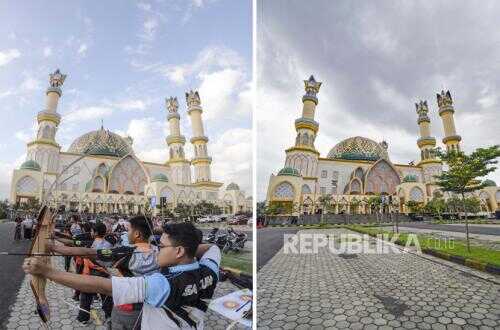
REPUBLIKA.CO.ID, JAKARTA – In the eastern reaches of Indonesia, as the morning sun bathes the white dome of the Hubbul Wathan Mosque, its shadow falls not only on the marble floor where worshippers prostrate. The shadow stretches far, touching the pulse of the economy of a province.
At the Islamic Centre in Mataram, it is not just the call to prayer that echoes, but also whispers about a new direction for development. The mosque here has transformed into a metaphor: a new centre of gravity, where local values meet global ambitions.
West Nusa Tenggara, a province woven from a thousand and one natural and cultural wonders, is undergoing a quiet but certain transformation. Almost a decade ago, it began to establish itself as a living laboratory for the Islamic economy.
Since Bank NTB transformed into Bank NTB Syariah in 2018, the financial pulse of the region has changed. The flow of rupiah within the Islamic banking system, reaching Rp24.85 trillion as of August 2025, is evidence of this.
However, behind the growing figures, there is a small caveat: 86.79 per cent of financing still circulates in the consumer sector. The Islamic economy still mainly supports lifestyles, and has not yet fully become the heart that pumps blood into all the productive muscles of the region. It is still like a beautiful garden that has not yet yielded abundant fruit.
This is where a new story begins to be written. The NTB Provincial Government, at a forum in Mataram in early 2026, chose a different path. They no longer want to simply pursue numerical growth, but to sow the seeds of sustainability.
The Islamic economy, tourism, and the creative economy are no longer three separate entities, but three that are closely linked. The vision is clear: to make NTB a national centre for the Islamic economy, based on sustainable tourism. It is no longer about how many tourists come, but about how deep the positive impact they leave behind.
A Tourism Landscape that Embraces Islamic Principles
Imagine stepping into a village at the foot of Mount Rinjani. Entrance tickets to tourist destinations are no longer just a piece of paper, but an electronic notification on a mobile phone. When paying for coffee on the terrace of a homestay or buying woven songket in a village gallery, all transactions flow silently through the Islamic banking system. Money no longer flies to central accounts, but circulates, settles, and empowers at the local level. This is the new face of halal tourism in NTB. The concept of “halal”, which was perhaps only understood as a prohibition (alcohol, non-halal food), is now being expanded into an ecosystem. It is a statement of attitude about fairness: how every rupiah from tourism should return to support the communities that are the hosts.