
Under Rp100,000, UliMus Expands into Modern Retail and Supports Autism Inclusion
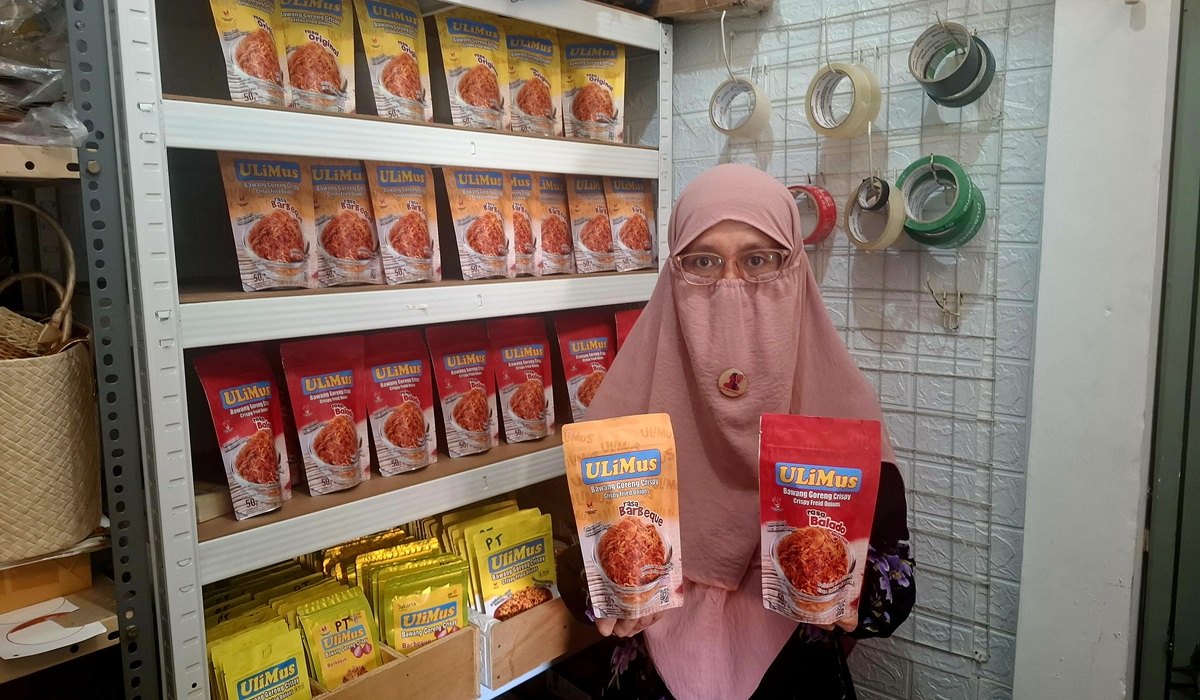
The COVID-19 pandemic marked a turning point in the business journey of Romauli Sri Astuti Sitorus. Amid stagnant sales of the abayas she previously sold, the 47-year-old, known as Uli, began a new venture from her home kitchen in Petojo Selatan, Gambir, Central Jakarta. With startup capital of less than Rp100,000, she launched a crispy fried shallot business named UliMus. From this home-based business, Uli successfully entered modern retail markets while creating opportunities for autistic individuals to participate in her operations. “During the pandemic, everything was affected. I used to sell abayas, but for a whole year not a single piece was sold,” she recalled during an interview at UliMus’ production house on Thursday (28 May). Uli’s business idea began when her son studying at a boarding school in Parung, Bogor, disliked fried shallots. This prompted her to find ways to make him enjoy the snack. “So I challenged myself to make fried shallots he would like,” she said. From there, Uli experimented with various flavours, leading to the creation of barbecue-flavoured fried shallots. Each visit to her son’s boarding school, she brought her creations to share. The product received positive responses not only from her son but also other students. This enthusiasm inspired Uli to see potential for expanding and selling her product more widely. The business was named UliMus, a combination of Uli and her husband Mustofa’s names. This identity has since grown. The business was launched in 2020 with relatively small capital. At the time, shallot prices were affordable, so initial production costs were under Rp100,000. Her products were sold in small packages for around Rp10,000 each to help supplement her son’s boarding school allowance. “Initial capital was under Rp100,000. I sold small packs for Rp10,000, and the sales were enough to top up my son’s pocket money,” she said. From these simple sales, Uli began to see profits. Even in the early days, she managed to earn around Rp600,000 in profit and recoup her startup costs. Over time, product prices were adjusted in line with rising raw material costs. Currently, UliMus products are sold from Rp25,000 for 50g packs, while in modern retail outlets prices reach up to Rp35,000. Flavours include barbecue, balado, and original. The products are now available at modern retail chains such as Hero in Taman Anggrek Mall and Sarinah. UliMus also plans to expand distribution to dozens of Indomaret outlets in Central Jakarta soon. Uli’s business took a pivotal turn in 2023 when she joined Rumah BUMN, an initiative by PT Bank Rakyat Indonesia (BRI) Jakarta. There, she received training in financial literacy, product development, and operational management. The most significant benefit was not technical knowledge but a shift in business mindset. “I want this business to last beyond a year or two; it must grow significantly and benefit society,” she stressed. Uli admitted she previously focused solely on sales. After participating in mentoring programs, she began understanding the importance of sustainable business vision. “Our mindset needed to change to keep evolving. If an SME’s mindset remains static, the business will stay stagnant,” she said. One of the most impactful programmes was Rujak Kupas (Ruang Kupas UMKM Tuntas), a coaching clinic helping entrepreneurs define their business direction and goals. “What we ‘peel’ is ourselves as business owners. How to build this business for the future. My key is focusing on what I do,” she stressed. Beyond training, Rumah BUMN also provided market access and introduced UMKMs to modern retail opportunities. According to Uli, the mentoring continues even after training ends. “They don’t just leave you. They continue guiding and monitoring,” she said. The mentoring gradually impacted UliMus’ growth. Previously earning Rp1-1.5 million monthly, her revenue now reaches Rp5-7 million per month. During last year’s Eid period, her revenue even hit Rp25 million in a single month. In addition to online sales via marketplaces, Uli actively participates in various UMKM bazaars and exhibitions. Uli recounted a memorable experience at the 2024 Nusantara UMKM Bazaar at Soekarno-Hatta Airport, organised by Rumah BUMN Jakarta. She was surprised many buyers were foreign nationals. “We never expected so many foreign buyers—from Thailand, India, even Japan,” she said. UliMus products were also purchased by consumers from Japan and Singapore at exhibitions in Jakarta. The largest overseas sale was around Rp2 million for seven kilograms of products. An Indonesian diaspora living in Australia even visited her production house and bought products worth around AU$100. To develop her current products, Uli spent nine months experimenting and researching until she found a recipe that met customer tastes. Se