
Unclear Petition Causes Roy Suryo-Tifa-Rismon Sianipar Lawsuit to Fail at Constitutional Court
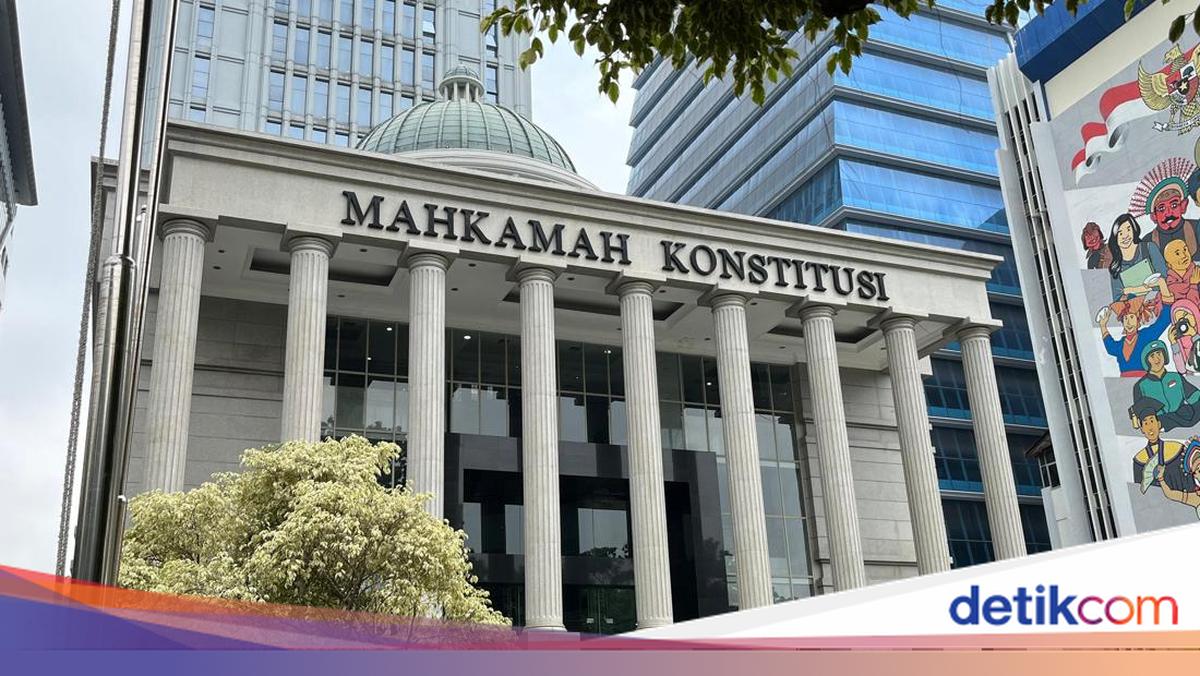
The Constitutional Court (MK) has rejected a petition challenging several provisions of Law Number 1 of 2023 concerning the Criminal Code (KUHP) and Law Number 1 of 2024 amending the Electronic Information and Transaction Law (UU ITE). The lawsuit brought by Roy Suryo, Tifauzia Tyassuma, and Rismon Sianipar has failed.
The Constitutional Court’s judgment hearing on Case Number 50/PUU-XXIV/2026 took place at the Constitutional Court building in Central Jakarta on Monday, 16 March 2026. The hearing was chaired by Constitutional Court Chief Justice Suhartoyo, alongside other constitutional judges.
Chief Justice Suhartoyo stated that petitum items 2 through 6 lacked clear explanation in the explanatory section regarding the petitioners’ reasons for requesting that the norm be exempted only for academics, researchers, or activists, whilst remaining applicable to other subjects within the scope of the contested norm.
The Constitutional Court noted that the interpretation sought in petitum items 2 through 6 specifically benefited only the petitioners’ interests. However, if the norm were interpreted as requested, Suhartoyo explained, that interpretation would apply universally or erga omnes (to all).
“Additionally, there is no argumentation on the constitutionality of the contested norm that explains why that norm would be problematic only for academics, researchers, or activists,” Chief Justice Suhartoyo stated whilst reading the court’s legal reasoning, as cited from the MK website.
The Constitutional Court also noted that petitum items 7 through 9, which sought to link the norm to other norms using the word ‘juncto’ to declare them unconstitutional and lacking binding legal force conditionally, were problematic.
“Such petitum is irregular and its purpose cannot be understood—whether it intends to test both of the norms connected by juncto. If so, it should have been formulated in a separate petitum, as in petitum items 2 through 6, which cite a single norm to be tested in one petitum. Therefore, the formulation of petitum items 7 through 9 creates difficulty for the Court in understanding the true intent of what the petitioners are requesting,” Suhartoyo stated.
The Constitutional Court declared that the petition was unclear or ambiguous. Although the MK has the authority to adjudicate the petition, because it was unclear, the court declined to further consider the petitioners’ request.
Petition Number 50/PUU-XXIV/2026 was filed by Tifauzia Tyassuma, Roy Suryo Notodiprojo, and Rismon Hasiholan. The petitioners challenged the constitutionality of several provisions in Law Number 1 of 2023 concerning the Criminal Code and the ITE Law. These included Article 310 paragraph (1), Article 311 paragraph (1) of the Criminal Code; Article 433 paragraph (1) and Article 434 paragraph (1) of the new Criminal Code, as well as Article 27A, Article 28 paragraph (2), Article 32 paragraphs (1) and (2), and Article 35 of the ITE Law.
During the first hearing at the Constitutional Court on Tuesday, 10 February 2026, Refly Harun, representing the petitioners, argued that all of these provisions violated Articles 28D paragraph (1), 28E paragraph (3), and 28F of the 1945 Constitution. He highlighted concerns about the application of Articles 310 and 311 of the Criminal Code, which are frequently used to silence criticism, particularly against current and former officials.