
Unair Expert Reveals Origins and Dangers of Sailfin Catfish in Jakarta
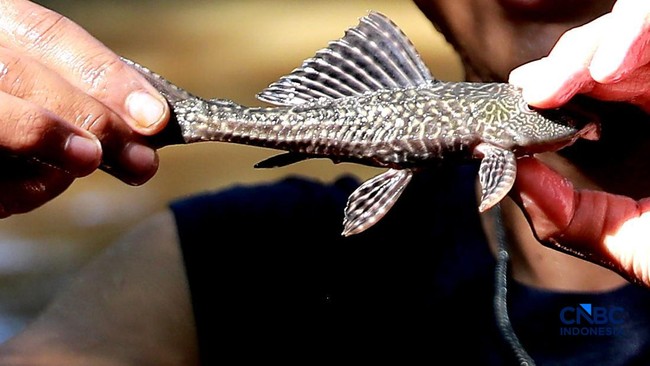
The recent phenomenon of culling sailfin catfish has become widespread in several areas of DKI Jakarta. This action has emerged alongside the increasing population of sailfin catfish in urban rivers, which is considered to disrupt ecosystem balance.
This matter has also drawn attention from academics. A lecturer in Aquaculture from the Faculty of Fisheries and Marine Sciences at Universitas Airlangga, Veryl Hasan, stated that the presence of this fish is not limited to one particular area, as sailfin catfish can live in many types of waters.
However, this species becomes highly dominant in polluted rivers because it has high resilience to poor environmental conditions.
Veryl explained that in rivers with degraded water quality, many local fish cannot survive. In contrast, sailfin catfish not only survive but thrive rapidly.
“In short, when a river is heavily polluted, other fish die, while sailfin catfish persist. This is what makes their population appear to explode,” said Veryl, quoted from the official Universitas Airlangga website on Tuesday (21/4/2026).
He recounted that sailfin catfish originate from South America and in their natural habitat are ordinary local fish that are even safely consumed by local communities. Problems arise when this species enters Indonesian waters as an alien species without adequate natural predators.
In addition to tolerating poor environments, sailfin catfish are known as opportunistic predators. This fish exploits almost all available resources in the river, from aquatic plants to small animals. Its presence intensifies competition for food and living space for local fish.
“When outside its natural habitat, sailfin catfish can displace local fish. Because few organisms prey on it, its population grows without significant barriers,” he explained.
He added that in healthy waters, sailfin catfish populations are usually not overly dominant because they must compete with various other local fish.
To address this issue, Veryl stressed the importance of enforcing regulations prohibiting the release of alien fish into rivers.
According to him, rules must not remain mere slogans but should be followed by supervision and concrete actions in the field.
Furthermore, river water quality needs to be restored through pollution control. If river conditions improve, more local fish can survive and restore ecosystem balance.
“The key is not just catching sailfin catfish, but also improving their river habitats,” he asserted.
As an additional step, he suggested manual eradication by capturing sailfin catfish and utilising them as raw material for fishmeal to feed ornamental fish. Veryl also reminded the public not to recklessly release exotic fish into the wild.
“If unable to care for them, it’s better to sell them to responsible hobbyists or dispose of them properly, not release them into rivers,” he concluded.