
UN warns of "toxic rain" danger from attacks on Middle Eastern oil depots
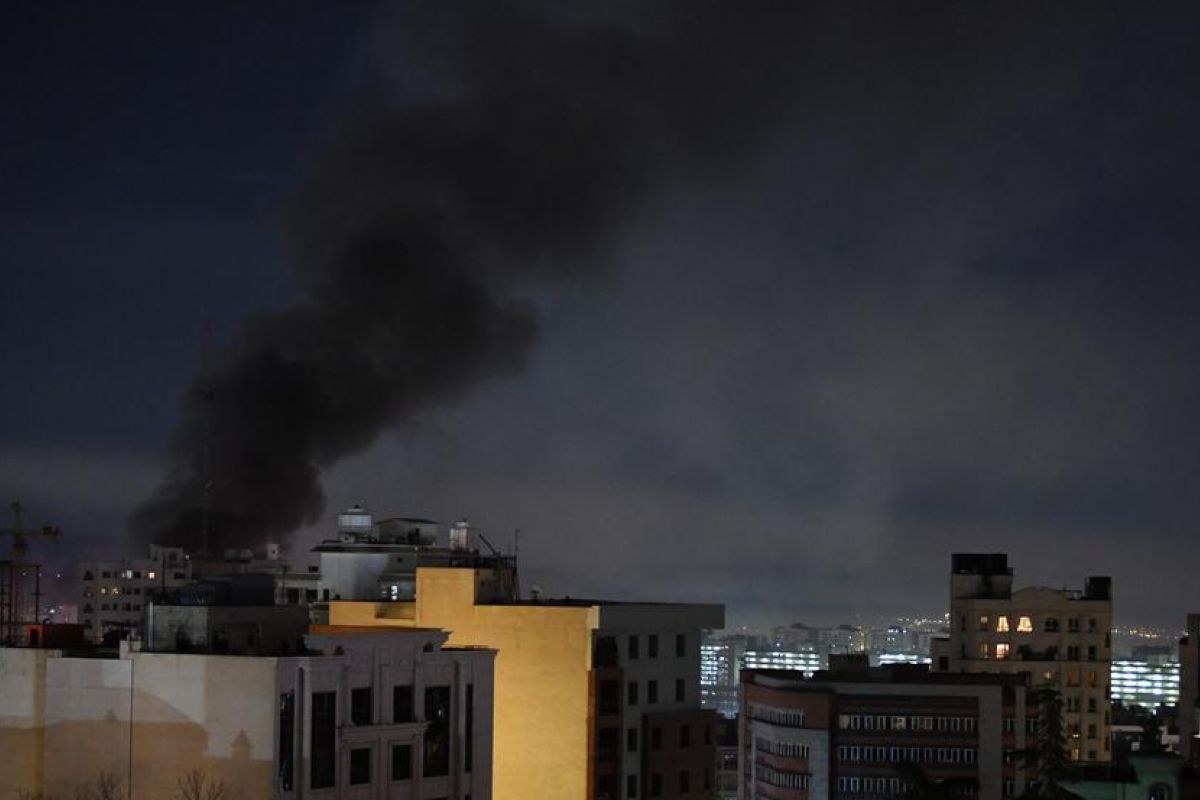
Geneva (ANTARA) - The United Nations humanitarian body stated on Tuesday (10 March) that ten days of war in the Middle East have disrupted life throughout the region and neighbouring areas, with toxic “black rain” resulting from attacks on oil depots, and disruptions to humanitarian supply chains causing widespread impact.
Speaking at a press conference in Geneva, Ravina Shamdasani, spokesperson for the UN Office of Human Rights, expressed concern regarding health and environmental impacts from Israeli and US attacks on oil depots in Iran, as toxic pollutants spread through the air.
She stated that the impact raises “serious questions as to whether the obligation of proportionality and the principle of precaution in accordance with international humanitarian law have been met” in the attacks, whilst emphasising that the targeted locations “appear not to be used exclusively for military purposes”.
Christian Lindmeier, spokesperson for the World Health Organisation (WHO), warned that the “black rain” and “acid rain” that fell on Tehran following the attacks pose a real danger to the Iranian people.
“We continue to coordinate with hospitals and relevant authorities, and Iran’s authorities have issued warnings recommending residents to remain indoors, particularly given the attacks on oil storage facilities,” he said.
Lindmeier added that reports of attacks on oil infrastructure in Bahrain and Saudi Arabia also raise concerns about wider regional pollution exposure.
The representative of the UN High Commissioner for Refugees (UNHCR) in Lebanon, Karolina Lindholm Billing, stated that more than 100,000 people have been displaced by Israeli attacks and evacuation orders in the past 24 hours, bringing the total number of people forced to leave their homes due to the conflict to nearly 700,000.
“We are seeing lines of cars along roads with people sleeping inside them,” she said. Most fled in haste with barely any possessions. They are seeking shelter in Beirut, the Mount Lebanon region, northern Lebanon, and parts of the Bekaa Valley.
Jean-Martin Bauer, director of Food Analysis and Nutrition Services for the UN World Food Programme (WFP), warned of the conflict’s impact on the Strait of Hormuz and the Bab El-Mandeb Strait off the Horn of Africa.
“Two key points in the global supply chain order are affected by restrictions and risks, so shipping companies are diverting their services,” said Bauer, adding that the need for war risk insurance for shipments has created additional costs of between $2,000 and $4,000 USD (1 USD = Rp16,879) per container in high-risk areas.