
UN Security Council Meeting on Iran Nuclear Programme Becomes Heated, US and Allies Clash with China and Russia
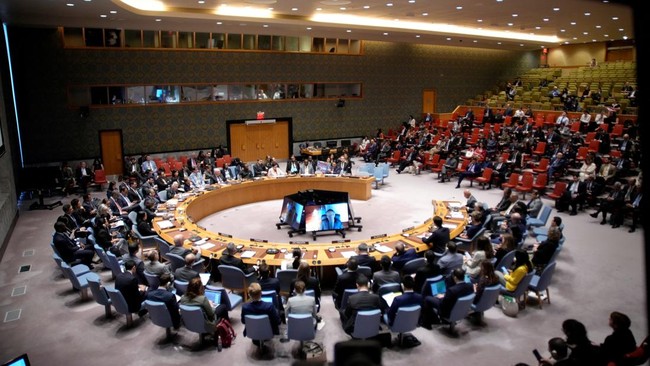
Diplomatic tensions between major powers have intensified at the United Nations as the United States and its Western allies confronted Russia and China over Iran’s nuclear programme at the Security Council. The contentious debate erupted as Washington sought to strengthen its justification for military strikes launched against Tehran two weeks earlier.
During the meeting of the 15-member Security Council, chaired by the United States this month, Russia and China attempted to block discussion of the committee tasked with overseeing and enforcing UN sanctions against Iran. However, their effort failed after the council majority rejected the proposal. The vote resulted in 11 nations opposing the move, two supporting it, and two abstaining, allowing the discussion to proceed.
US Ambassador to the UN Mike Waltz accused Russia and China of attempting to shield Iran by obstructing the work of the sanctions committee, known as the UN Security Council Resolution 1737 Committee. According to Waltz, all UN member states should comply with the embargo provisions applied to Iran.
“All United Nations member states must implement an arms embargo against Iran, prohibit transfers and trade in missile technology, and freeze relevant financial assets,” Waltz told the council, according to Reuters on Friday (13 March 2026).
He emphasised that the sanctions provisions were not arbitrary but specifically designed to address threats posed by Iran’s nuclear and missile programmes.
“The UN provisions that will be re-imposed are not arbitrary, but narrowly designed to address the threats posed by Iran’s nuclear, missile, and conventional weapons programmes as well as Iran’s continuing support for terrorism,” he said.
Waltz also alleged that Moscow and Beijing have strategic interests in maintaining relations with Tehran. He contended that both nations do not want the sanctions committee to function effectively because they wish to preserve military cooperation with Iran.
“They do not want the sanctions committee to function because they wish to protect their partner, Iran, and continue to maintain defence cooperation that is now again prohibited,” Waltz stated.
Waltz also referenced a recent report from the International Atomic Energy Agency (IAEA). According to him, the UN nuclear watchdog reiterated last week that Iran is the only non-nuclear weapons state in the world that has produced and stockpiled uranium enriched to 60 per cent.
He also stated that Iran has refused to grant the IAEA access to inspect these uranium stockpiles. However, Washington’s allegations were swiftly and firmly rejected by Russia.
Russian Ambassador to the UN Vasily Nebenzya accused the US and its allies of creating global panic over purported Iranian nuclear ambitions. He said the West has propagated a narrative unsupported by IAEA reports.
“They are fuelling hysteria about alleged Iranian plans to acquire nuclear weapons, something that has never been confirmed by IAEA reports,” Nebenzya said.
According to him, this narrative has been used as justification for launching military action against Tehran.
Similar views were expressed by China’s UN representative Fu Cong, who described Washington as the party that triggered the Iran nuclear crisis.
Fu Cong also accused the United States of using military force openly amid ongoing diplomatic processes.
He stated that Washington had “used force overtly against Iran during negotiations, rendering diplomatic efforts futile.”
Amid the debate, Washington’s Western allies remained steadfast in their support for US action.
Representatives from Britain and France on the Security Council stated that re-imposing sanctions against Iran can be justified because Tehran has failed to address international concerns regarding its nuclear programme.
The French representative even stated that the IAEA can no longer guarantee that Iran’s nuclear programme is entirely peaceful. Paris also noted that Iran’s current stockpile of nuclear material is sufficient to produce 10 nuclear weapons, a development that further heightens international concern over Tehran’s nuclear programme.
Meanwhile, Iran’s UN Ambassador Amir Saeid Iravani reiterated that his country’s nuclear programme has no military purpose. Speaking to journalists after the session, Iravani stressed that Tehran would not accept any attempts to forcibly re-impose international sanctions against Iran.
“Iran’s nuclear programme has always been entirely peaceful,” Iravani said.
President Donald Trump previously cited Iran’s nuclear programme as a primary justification for launching war against the country. Trump stated this month that Iran would possess nuclear weapons within two weeks if the United States did not attack three major Iranian nuclear facilities in June.
However, several sources have indicated that this claim is unsupported by assessments from American intelligence agencies.