
UN Says Local Renewable Energy is Key to National Security
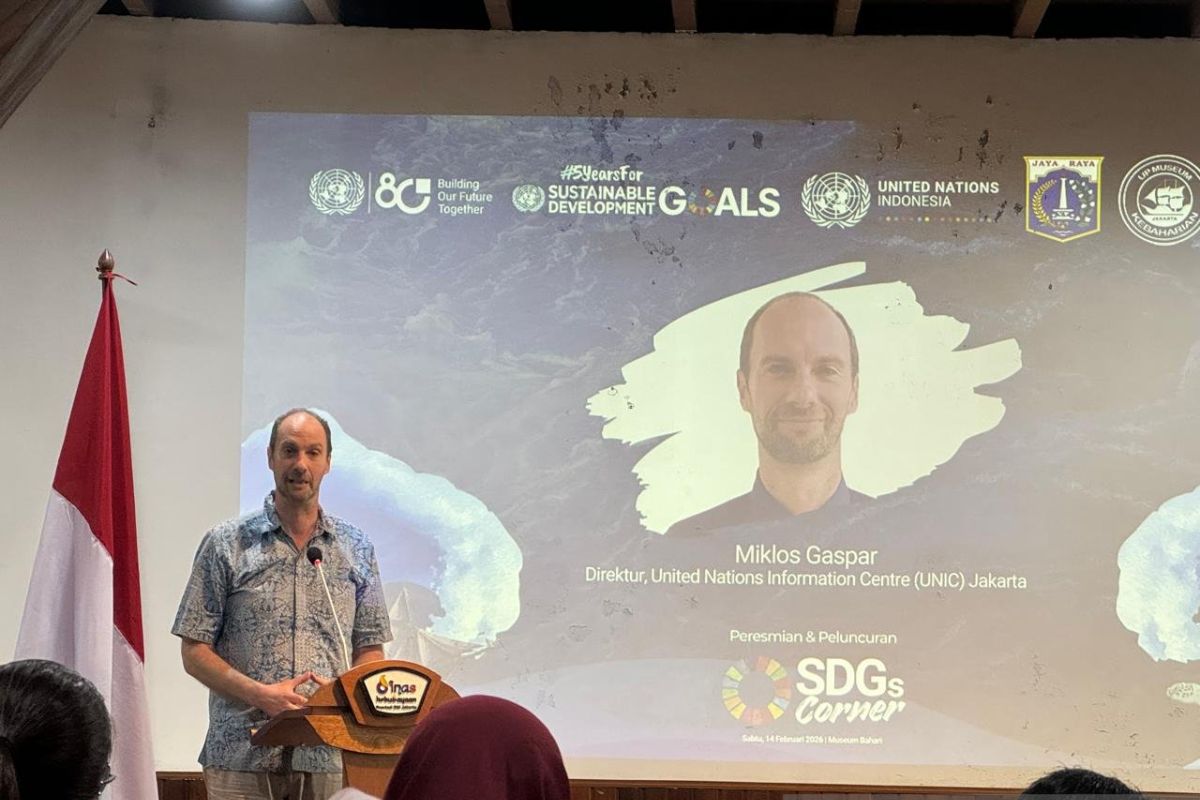
Jakarta (ANTARA) - The Director of the UN Information Centre (UNIC) in Jakarta, Miklos Gaspar, stated that developing renewable energy produced locally is the best way to build a country’s energy security.
“As repeatedly stated by the Secretary-General (of the UN), the consequences of the war in Iran on energy security are very clear. He (UN Secretary-General Antonio Guterres) said that the best defence, the best way to build energy security for a country, is through the development of renewable energy produced locally,” Gaspar said in Jakarta on Thursday.
By producing its own energy sources, Gaspar explained that a country would no longer depend on vulnerable global shipping routes, referring to the disruptions to tanker traffic in the Strait of Hormuz due to the war between the United States and Israel against Iran.
“Local renewable energy is not only climate-friendly but also strengthens energy stability and supports overall national security,” Gaspar said.
This was done by the US because it failed to reach an agreement with Iran in negotiations in Islamabad, Pakistan, on Saturday (11/4).
To date, due to this blockade, two tankers owned by a Pertamina subsidiary are still unable to pass through the Strait of Hormuz. As a result, the Indonesian Government needs to urgently find alternative energy sources to meet national energy supplies.
Regarding new renewable energy (EBT), in January 2026, the Ministry of Energy and Mineral Resources (ESDM) recorded progress in the 2025 national energy transition programme, with the EBT mix achievement reaching 15.75 per cent.
In detail, this capacity is dominated by hydropower plants (PLTA) at 7,587 MW, bioenergy at 3,148 MW, and geothermal at 2,744 MW.
In addition, contributions from other energy sources are also continuously developing, including solar power at 1,494 MW, coal gasification at 450 MW, wind at 152 MW, waste utilisation at 36 MW, and other sources at 18 MW.
The Indonesian Government will also build solar power plants (PLTS) with a capacity of 100 GW. The project includes the construction of 80 GW PLTS and 320 GWh batteries (battery energy storage system) in the Merah Putih Village Cooperatives, as well as 20 GW centralised PLTS.