
UN: Global Temperatures to Hit New Record Highs in 2026-2030
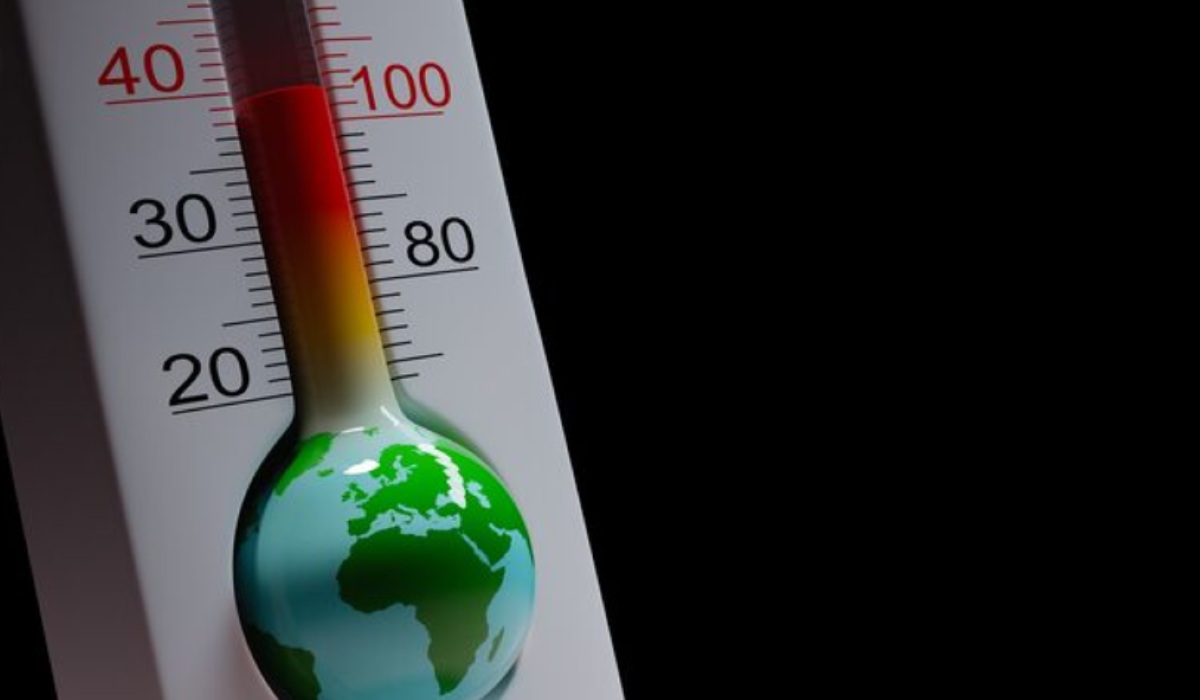
The United Nations (UN) has issued a serious warning that global average temperatures are likely to remain at or near record levels over the next five years. This warming trend is predicted to produce a new hottest year in history before 2031.
The World Meteorological Organization (WMO) stated there is an 86% chance that at least one year between 2026 and 2030 will surpass 2024 as the hottest on record. Additionally, there is a 75% probability that the five-year average temperature during this period will exceed the critical threshold of 1.5 degrees Celsius above pre-industrial levels (1850-1900).
Leon Hermanson, lead author of the WMO’s Global Annual-to-Decadal Update report, highlighted the role of the El Niño phenomenon, which is predicted to re-emerge by late 2026. “This condition increases the likelihood of 2027 becoming the next record-breaking year,” he said.
Notably, the previous El Niño contributed to 2024 being the hottest year on record, with temperatures around 1.55 degrees Celsius above the pre-industrial average. Despite the 2015 Paris Agreement targeting long-term global warming to stay below 1.5°C (over a 20-year average), the increasing frequency of annual breaches of this threshold underscores an urgent situation.
The report also issued a specific warning for the Arctic region, predicting temperatures in the northern polar region to surge by 2.8 degrees Celsius above the 1991-2020 average over the next five winters—more than triple the global anomaly.
Bill Hare, CEO of Climate Analytics, stressed that these extreme temperature projections are a direct consequence of countries’ failure to significantly reduce greenhouse gas emissions. “Our research shows that if governments act now to cut emissions as rapidly as possible, global warming can be halted by mid-century,” he stated.
Alongside rising temperatures, global rainfall patterns are expected to experience anomalies. The Sahel, northern Europe, Alaska, and Siberia are projected to become wetter, while the Amazon region is forecast to face drier conditions (drought anomalies) between 2026 and 2030.
This warning comes as much of Western Europe is currently experiencing a record-breaking heat dome, with May temperature records shattered in the UK and France, and heatwave alerts issued in major Italian cities.
The WMO reported that global CO2 levels reached a record high in 2024, accelerating global warming and threatening the world’s climate balance.
Recent studies warn that global warming is forcing rice-growing regions to confront temperatures beyond their evolutionary adaptability.
Increasing global infectious diseases are influenced by multiple factors, including climate change which heightens the risk of certain illnesses.
A Pan-European Commission has urged the World Health Organization to declare climate change a global health emergency to accelerate government mitigation and adaptation efforts.