
UMY Urges Ministry of Higher Education to Clarify Programme Closure Plans: Don't Just Follow Trends
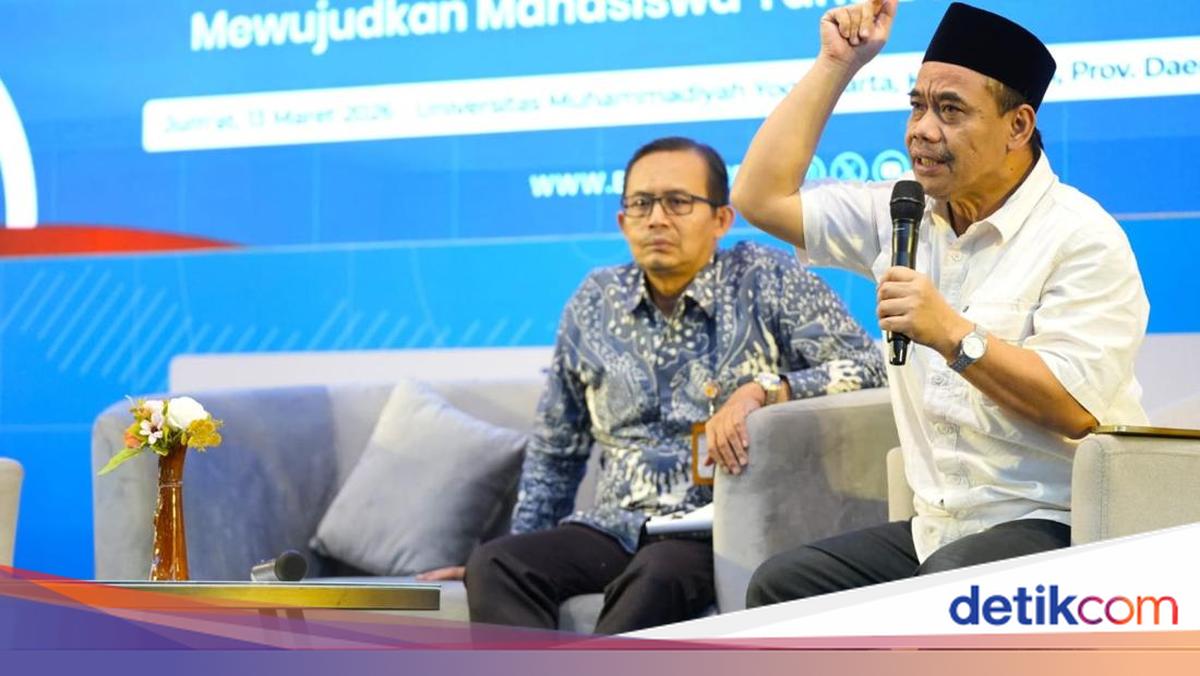
Secretary General of the Ministry of Higher Education, Science, and Technology (Kemdiktisaintek), Badri Munir Sukoco, revealed that his office plans to evaluate and close several academic programmes (prodi) due to the imbalance between the number of graduates and workforce requirements. Vice Rector for Education and Student Affairs at Universitas Muhammadiyah Yogyakarta (UMY), Prof. Dr. Zuly Qodir, M.Ag., assessed that the discourse still requires more detailed clarity.
“Some programmes like education are said to be experiencing graduate inflation, but it must be clear which education—whether primary school teachers, subject teachers, or specific fields. Because in the field, there are still many regions lacking teachers. The same applies to medicine,” stated Prof. Zuly in a written statement received by detikJogja on Monday (27/4/2026).
“If considered excessive, why is the opening of medical faculties still being encouraged? It could be that what’s needed is specialist doctors, not general practitioners, but this has not been explained firmly,” he added.
He noted that the main issue is not only in the number of programmes but also in the linkage between the curriculum and workforce needs. According to him, a multidisciplinary approach is key to keeping graduates relevant without having to close certain programmes.
He emphasised that various fields of knowledge, such as social sciences, still play an important role in supporting industry. He assessed that industry needs are not only in technical arrangements but also encompass managerial, social, and policy aspects.
“If industry is only viewed from a technical side, that is not enough. Financial management, marketing, to relations with society require contributions from social sciences. So, the problem is not about relevance or not, but how to integrate it with industry needs,” he explained.
UMY responds to this dynamic by adjusting the curriculum rather than directly closing programmes. Because this strategy is deemed more adaptive in facing changes in needs without eliminating certain fields of knowledge.
The curriculum is strengthened by involving industry practitioners and enhancing non-academic competencies so that students are better prepared for the workforce. This approach is expected to bridge the gap between higher education and industry needs.
“We adjust the curriculum to developments in the workforce and bring in practitioners so students understand field needs. In addition, students are also encouraged to develop soft skills so they are not only strong academically but also professionally ready,” revealed Prof. Zuly.
He also reminded that government policies should not solely be oriented towards short-term industry needs. Universities, in his view, have a broader role in building knowledge and civilisation.
“The government needs to firmly explain which programmes will be closed and developed. Don’t let universities just follow trends without clear direction. Higher education is not just about producing workers but also building knowledge and the nation’s future,” he asserted.
Quoted from detikEdu, Secretary General (Sekjen) of Kemdiktisaintek, Badri Munir Sukoco, said that future higher education programmes will be aligned with 8 national strategic industries, namely health, food security, digitalisation, downstreaming, defence, advanced materials and manufacturing, energy, and maritime.
“There are 8 strategic industries that need to be initiated, need to be grown, if possible their growth is above 12-15%,” said Badri at the 2026 National Population Symposium, quoted from the Kemendukbangga YouTube, on Monday (27/4).
Badri hopes that higher education institutions are willing to sort and select programmes that need to be closed. He also stated that Kemdiktisaintek expects support from the Consortium of Higher Education Institutions Concerned with Population (PTPK) to implement this plan.
He explained that based on higher education statistics, one of the fields of programmes assessed as having excess graduates (oversupply) is the education field.
“Our teacher education graduates 490,000 every year,” said Badri.
“While the need for teacher education graduates is only 20,000,” he added.
Based on the 2024 Higher Education Statistics released in October 2025, the fields of knowledge producing the most graduates remain the same as the previous year, dominated by education, economics, and social sciences.
Here are the programmes with the most graduates in Indonesia for the 2023/2024 academic year:
Teacher professional education: 162,521 students
Management: 151,679 students
Accounting: 68,015 students
Primary school teacher education: 61,756 students
Law: 54,887 students
Islamic religious education: 52,798 students
Midwifery: 36,899 students
Informatics engineering: 35,919 students
Communication studies: 33,704 students
Nursing: 32,475 students
Pharmacy: 29,183 students
Civil engineering: 27,304 students
Information systems: 25,866 students
Nursing science: 24,937 students
Midwifery professional education: 21,467 students
Psychology: 19,958 students
Law: 18,825 students
English language education: 18,139 students
Professional nurse: 16,128 students
Islamic economics: 15,077 students.