
UMY Expert on Withholding Divorce Certificate Due to Iddah Maintenance: Control Over Obligations
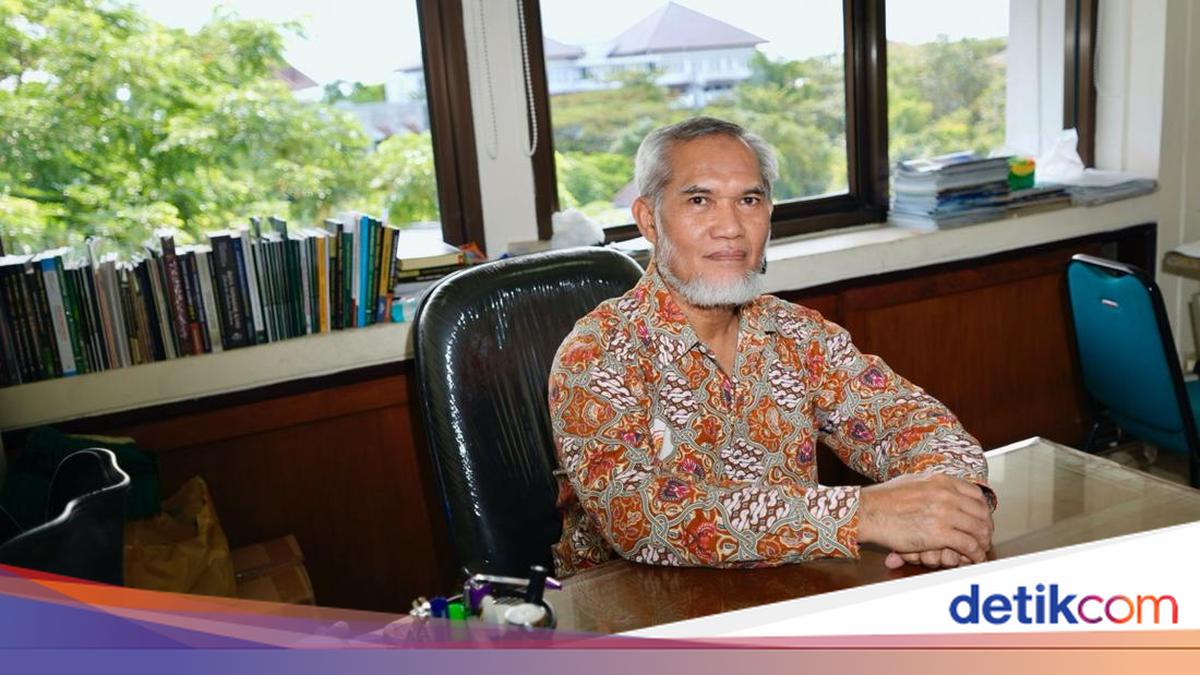
The Surabaya Religious Court (PA) has decided to withhold the divorce certificate of a former husband who has not provided iddah maintenance. A lecturer in Law at Muhammadiyah University Yogyakarta (UMY), Muchammad Ichsan, views this policy as the Surabaya PA’s control over the former husband’s obligations towards his former wife.
Ichsan considers the Surabaya PA’s step rational if it relates to the context of enforcing responsibility. He likens the policy to withholding a student’s diploma for failing to settle educational administrative obligations.
“This is a form of control to ensure the husband does not shirk his responsibilities. It should not be that after divorce, the obligations are simply abandoned,” Ichsan explained in a written statement received by detikJogja on Tuesday (21/4/2026).
In Islamic law, Ichsan explains, divorce does not immediately sever all of the husband’s obligations towards his wife. During the iddah period, for example, the husband is responsible for providing maintenance and accommodation.
“When a husband pronounces talaq, especially the first and second, there is still an iddah period in which the husband remains obligated to maintain his former wife, and there is even the possibility of reconciliation,” he stated.
He describes the iddah period as a waiting period for women after divorce, which generally lasts for three menstrual cycles. During this period, the husband must still meet his former wife’s basic needs.
In certain conditions, the divorced couple may even continue living in the same house during the iddah period. This indicates that the responsibility relationship has not fully ended.
“During the iddah period, the husband still has maintenance obligations because the relationship status has not fully terminated,” he added.
However, Ichsan warns that the policy of withholding the marriage certificate should not be applied across the board to all divorce cases. In his view, each case has a different context and must be assessed on a case-by-case basis.
In divorce cases caused by the wife’s fault, such as infidelity, he says withholding the divorce certificate could potentially harm the husband’s side.
“If all cases are treated the same, it could lead to injustice. It must be considered who is at fault and the context of the divorce,” he emphasised.
He adds that the existence of a divorce certificate is part of the state’s administrative policy from the perspective of siyasah syar’iyah, namely the regulation of public affairs not explicitly regulated in the Qur’an or hadith. In classical fiqh, divorce was sufficient with the pronouncement of talaq. However, in the modern state context, a divorce certificate is required as valid legal proof.
“The divorce certificate is a product of state administration, like an ID card or marriage certificate. It is important to ensure legal certainty,” he explained.
Furthermore, Ichsan assesses that the policy of withholding the divorce certificate can be an effective instrument to protect women’s rights post-divorce, as long as it is applied fairly and proportionately. He stresses that the main goal of the policy is to ensure justice, not to create new injustices.
“This policy is appropriate if directed at negligent husbands. However, it must still consider justice for all parties,” he concluded.