
UMY Develops Integrated Career Module to Prepare Graduates for the Workforce
Universitas Muhammadiyah Yogyakarta (UMY) is currently compiling a module and framework for an integrated career programme. This module will serve as a reference for faculties and study programmes to equip students for the working world.
The Head of the Sub-Directorate for Counselling, Welfare, and Careers at UMY, Muhammad Arif Rizqi, explained that the campus is designing the module to be ready for use by anyone, including deans and heads of study programmes who may change positions. The module has been equipped up to the level of presentation materials.
“We are compiling a module, a kind of programme framework that can serve as a reference for faculties or study programmes. Out of around 40 materials, only about 20 have been completed so far,” said Arif in a written statement received by detikJogja on Monday (27/4/2026).
Arif stated that this module is a priority so that career interventions at the study programme and faculty levels have uniform standards across the entire campus environment.
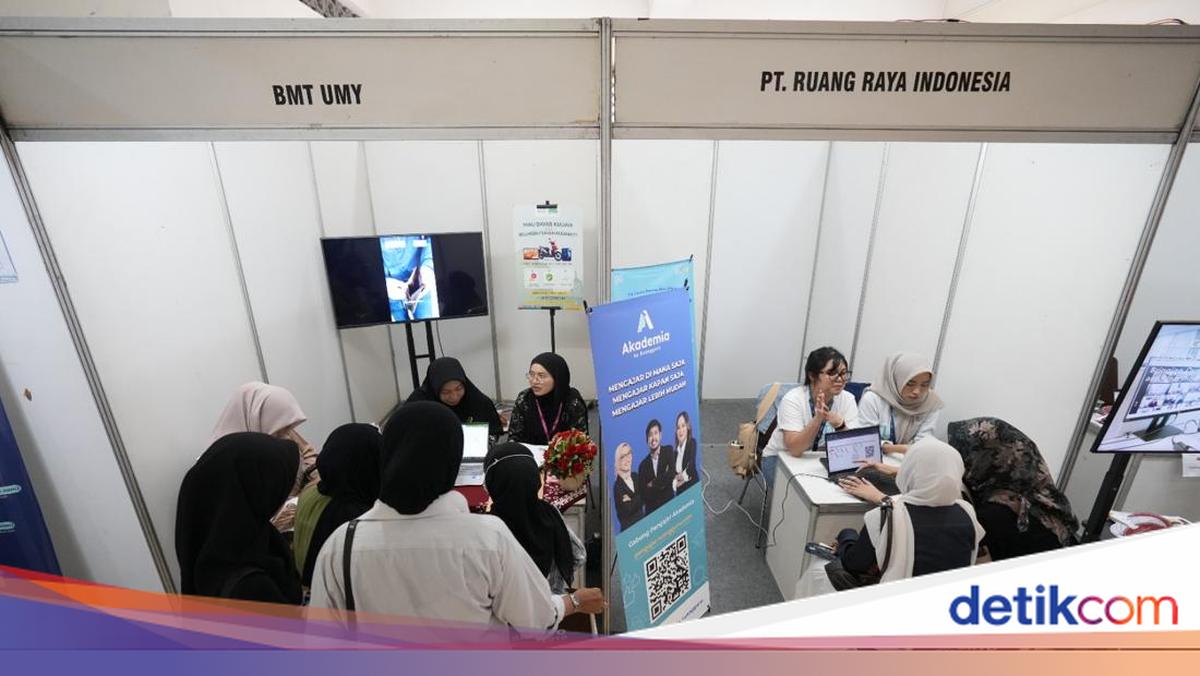
To support students’ work readiness, Arif and his team have implemented several programmes, starting from soft skills training held every two to three months, CV consultations based on the ATS (Applicant Tracking System) system through partnerships with the Kinobi platform, as well as on-campus recruitment with partners like Teleperformance up to the annual UMY Career Fair (UCF).
Arif mentioned that there are three competencies most sought after by industries in recent years. These competencies are communication, adaptability, and attitude.
These three competencies are considered much harder to develop compared to hard skills, which can still be learned on the job.
“Those related to communication, adaptability in the working world, and attitude are things that take a long process. Therefore, in the campus environment, it is indeed a major homework,” he said.
Arif also encouraged students to actively participate in organisations and competitions to build these competencies. He assessed that organisations can train communication and adaptation, while competitions build students’ mentality and resilience.
Furthermore, Arif acknowledged challenges in terms of participation. Although online services have been provided to expand reach, training conducted online actually records lower attendance compared to those held in person.
Nevertheless, Arif emphasised that they do not plan to stop the online programmes. In the future, in-person and online training will continue to be held alternately with different themes, while also preparing the career module as a medium-term foundation.
“Because each campus, as I see it, has its own distinctive policies regarding improving graduate employability. Whether it’s the training model or the programme model being compiled. We hope to have a form model that suits the characteristics and values of UMY,” he concluded.