
UMY Academic: Weakening Rupiah Could Pose a Threat to Islamic Banking
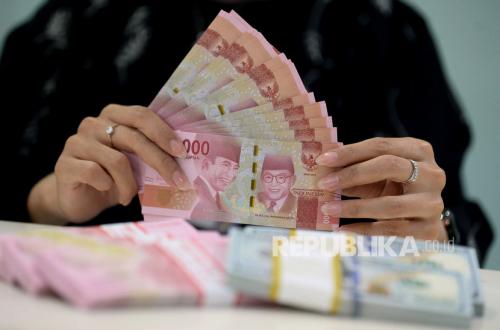
The depreciation of the Rupiah, which has breached Rp17,698 per US dollar, is seen as beginning to place serious pressure on the resilience of Indonesia’s Islamic banking sector.
An academic from Muhammadiyah University Yogyakarta (UMY) says the impact of rupiah depreciation is no longer limited to hitting the conventional banking sector, but is also starting to test financing stability and liquidity in Islamic banks.
Lecturer in the Master of Economics program at UMY, Dimas Bagus Wiranatakusuma, said the rupiah weakness triggers a domino effect via higher prices of imported goods, which then affect the real sector and the ability of businesses to meet financing obligations.
He noted that the characteristics of Islamic banking, which prioritise precaution, indeed act as an early shield.
However, the transmission of exchange rate weakness through inflation in imported goods in the real sector will still disrupt the quality of Islamic financing.
The rupiah weakness, he continued, will also directly affect business players who are the main customers of Islamic banks, especially sectors reliant on imported raw materials, production machinery, energy, and dollar-based capital goods.
Increased import costs raise production costs and compress corporate profit margins.
“In such circumstances, customers’ ability to service financing obligations to Islamic banks weakens. This is where the risk of troubled financing or non-performing financing (NPF) begins to rise,”
he said.
He said that the trade, manufacturing, textile, pharmaceutical sectors, and even import-based SMEs are the groups most vulnerable to the Rupiah’s weakness.
If this condition persists, pressure on the quality of Islamic bank financing is expected to grow further.
Nevertheless, Dimas views that Islamic banks still have an advantage over conventional banks because their exposure to foreign exchange instruments and international derivatives transactions is relatively small.
However, pressure can still emerge from liquidity side.
As Bank Indonesia maintains high interest rates to safeguard Rupiah stability, the cost of funding in the financial sector also rises.
Dimas argues that this condition still affects the Islamic banking sector even though it operates without interest-based systems.
“In times of high uncertainty, people become more cautious about placing funds. If not managed properly, liquidity pressures can also be felt by the Islamic banking industry,” he said.
On the other hand, he sees this situation could become a moment for Islamic banks to strengthen financing quality and risk management.
The principles of asset-backed financing, risk sharing, and prohibition of speculation are regarded as a crucial foundation for maintaining the stability of the Islamic financial industry.
He urges Islamic banks to focus more on supporting productive domestic sectors such as SMEs, local halal industries, agriculture, renewable energy, and foreign exchange earning sectors.
He argues that the stronger the domestic economy that is financed, the smaller the risk of Rupiah weakness affecting the stability of the Islamic banking industry.
Moreover, he believes regulators should strengthen the national Islamic finance ecosystem through the development of the shariah money market, Islamic hedging instruments, liquidity strengthening, and the integration of the halal industry with Islamic financing.
“The resilience of Islamic banking in the future will not only be determined by compliance with Sharia principles but also by the ability to build productive, resilient financing that can strengthen national economic independence in the face of global volatility,” he said.