
UMKM Upgrading: Dream or Mere Narrative?
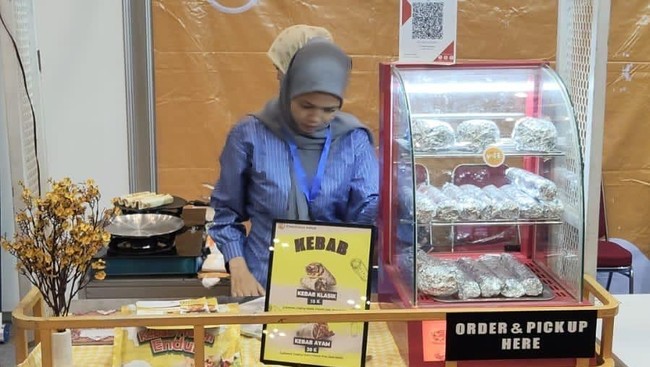
In every speech by officials, economic forums, and entrepreneurship seminars, one phrase almost always emerges: UMKM must upgrade. This phrase sounds optimistic, even normative, yet it seems to have become the sole path to Indonesia’s economic transformation.
However, behind this rhetoric, a fundamental question arises: is “upgrading” for UMKM a real, measurable process, or merely a repeated development narrative without significant structural change?
This question becomes relevant when considering UMKM’s strategic position in the national economy. The latest data shows that the number of UMKM in Indonesia has reached around 65.5 million business units, absorbing approximately 119 million workers, and contributing about 61.9% to Gross Domestic Product (GDP).
This fact is not just numbers; it is the foundation of Indonesia’s economy. However, the magnitude of this role does not necessarily align with quality and competitiveness. Herein lies the paradox of Indonesian UMKM.
UMKM are often called the “backbone of the national economy”. This claim is not exaggerated. With contributions of more than 60% to GDP and absorbing around 97% of the national workforce, UMKM serve as a pillar of socio-economic stability, especially amid global uncertainties.
Yet, this quantitative dominance harbours structural vulnerabilities. The majority of UMKM in Indonesia remain at the micro level. Data indicates that around 99.7% of UMKM are micro enterprises, while small and medium enterprises contribute only a small portion.
In other words, our UMKM structure is “fat at the bottom, thin at the top”. There are many business actors, but few that truly develop into productive, efficient, and highly competitive business entities.
This is where the concept of “upgrading” becomes crucial. Simply put, upgrading means transformation from micro to small enterprises, from small to medium, and from medium to large, with increases in productivity, business scale, market access, and added value. However, in practice, this journey is far from easy.
The narrative of “UMKM upgrading” is often assumed to be a linear process. As if every business actor only needs to be “assisted” with training, capital, or digitalisation, and will automatically develop. But the reality is not as simple as imagined.
First, the issue of productivity. Most UMKM still operate with simple technology, traditional management, and minimal innovation. Labour productivity in the UMKM sector is far lower than in large-scale businesses.
Second, access to financing. Although various financing schemes have been launched, from People’s Business Credit (KUR) to fintech, access to productive financing remains a classic obstacle. Many UMKM are not bankable due to lack of collateral, poor financial record-keeping, or overly small business scales.
Third, market access. Although digitalisation opens new opportunities, the reality is that not all UMKM can optimally utilise digital platforms. Even the export contribution of Indonesian UMKM remains around 15.7%, far behind other countries.
Fourth, institutional capacity. Many UMKM are still informal, family-based, and lack professional organisational systems. This makes it difficult for them to develop sustainably. With these various obstacles, “upgrading” is not merely a matter of intention or spirit, but a systemic issue.
In recent years, digitalisation has become the new mantra in UMKM development. The “UMKM Go Digital” programme has been intensified, marketplaces have grown rapidly, and various digital training sessions have been held.
Digitalisation indeed opens great opportunities. UMKM can reach wider markets, reduce distribution costs, and improve operational efficiency. Even some UMKM have successfully penetrated global markets through digital platforms. However, digitalisation can also become an illusion if not accompanied by structural readiness.
First, not all UMKM have adequate digital literacy. Second, competition on digital platforms is very fierce, often dominated by large players. Third, digitalisation does not automatically increase added value if the offered products are not competitive. In other words, digitalisation is a tool, not the goal. Digitalisation is only effective if supported by improvements in product quality, business management, and strategy.
The phenomenon of UMKM stagnation is also linked to Indonesia’s economic structure, which is still dominated by the informal sector with low productivity. Many UMKM are born not from opportunities, but from necessity or as a form of survival entrepreneurship. When formal employment is limited, people create their own businesses to survive.
As a result, most UMKM lack a growth orientation, merely aiming to survive. This is where we see what can be called the “UMKM middle trap” or a trap where UMKM struggle to upgrade.
The reasons UMKM find it hard to upgrade range from business scales that are too small to grow, low productivity, limited access to resources, to an unsupportive business environment. Without structural interventions, UMKM will continue to cycle in this loop.
If we look at advanced countries in East Asia such as South Korea or Taiwan, the transformation of UMKM into an industrial backbone did not happen naturally. Governments played an active role, from promoting UMKM-based industrialisation, integrating UMKM into large industry supply chains, providing incentives for innovation and exports, to building a conducive business ecosystem.
UMKM do not stand alone, but become part of an integrated economic system. Indonesia must